Le scatole per la pizza sono una fonte comune di rifiuti di cartone, ma molti si chiedono se possano essere compostate in modo sicuro. Capire quali parti sono compostabili e come gestire le scatole unte o macchiate di cibo è fondamentale per ridurre i rifiuti destinati alla discarica e promuovere pratiche ecologiche a casa o nelle aziende.
Per compostare i cartoni della pizza è necessario separare il cartone pulito dalle parti unte. Mentre le parti pulite si decompongono facilmente, quelle unte o contaminate da residui di cibo potrebbero richiedere metodi di compostaggio specifici. Imparare le tecniche corrette garantisce che i rifiuti di cartone si trasformino in compost ricco di sostanze nutritive, invece di contribuire alla contaminazione dei materiali riciclabili o al sovraccarico delle discariche.
Perché Scatola della pizza Ha importanza?
Le scatole per pizza sono molto più che semplici contenitori: svolgono un ruolo fondamentale nel mantenere le pizze fresche, sicure e presentabili. La scatola giusta protegge la pizza durante la consegna o la conservazione, mantiene il calore e garantisce un'esperienza migliore per il cliente, rendendola un elemento essenziale per le pizzerie e le attività di ristorazione.
I vantaggi di una buona scatola per pizza:
- Ritenzione del calore – Mantiene il calore, garantendo che la pizza sia ancora gustosa al momento della consegna o dell'impiattamento.
- Protezione – Protegge la pizza da eventuali danni, contaminazioni o fuoriuscite durante il trasporto.
- Convenienza – Facile da trasportare, impilare e riporre, sia per i ristoranti che per i clienti.
- Opportunità di branding – Le scatole personalizzate aiutano le aziende a mettere in risalto il proprio marchio e il proprio design.
- Opzioni ecologiche – Molte confezioni sono riciclabili o compostabili, riducendo così l'impatto ambientale.
I cartoni della pizza sono compostabili?
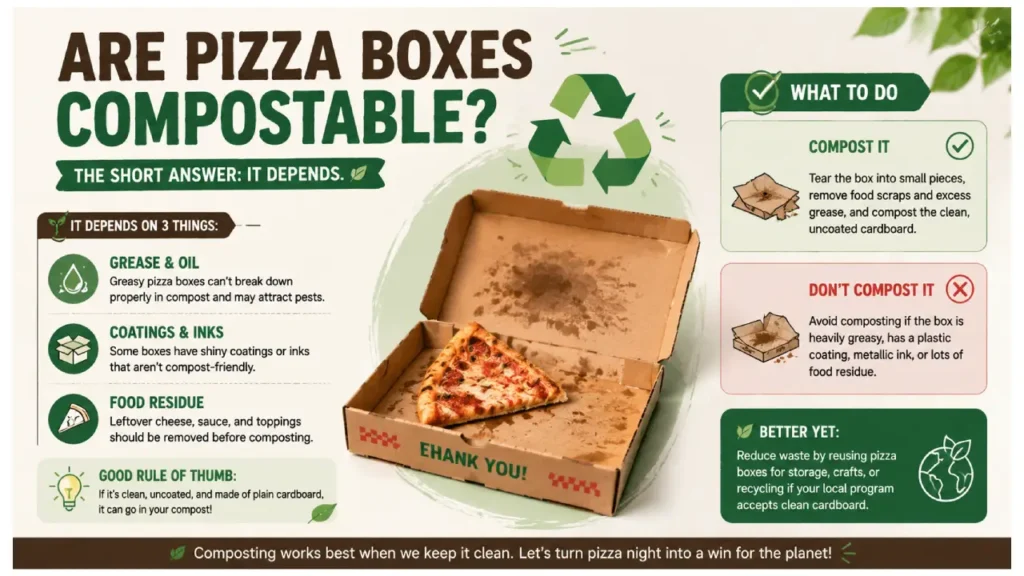
Le scatole per la pizza sono realizzate principalmente in cartone, un materiale che può decomporsi nel compost. Tuttavia, il grasso, il formaggio e gli avanzi di cibo rendono più difficile il processo di compostaggio. Capire come separare le parti pulite da quelle contaminate garantisce uno smaltimento ecologico, preservando al contempo la salute del compost.
Consigli per il compostaggio dei cartoni della pizza:
- Sezioni pulite separate – I pezzi di cartone privi di grasso o residui di cibo possono essere gettati direttamente nel cumulo di compost. Queste parti pulite si decompongono facilmente, apportando prezioso carbonio al composto e contribuendo a mantenere un compost equilibrato e ricco di sostanze nutritive per giardini e piante.
- Pulire le parti unte – Le parti molto sporche o unte vanno eliminate prima di procedere al compostaggio. Questi residui si decompongono più lentamente e possono attirare parassiti; eliminandoli, si garantisce che il compost rimanga sano, sicuro e privo di contaminazioni.
- Sminuzzare prima del compostaggio – Spezzettare il cartone in piccoli pezzi ne accelera la decomposizione. Il materiale sminuzzato si mescola bene con gli altri ingredienti del compost, consentendo all'aria e all'umidità di penetrare più efficacemente, favorendo un processo di compostaggio più rapido ed efficiente e ottenendo un terriccio di migliore qualità e ricco di sostanze nutritive.
- Equilibrio con le verdure – Mescolare il cartone sminuzzato con materiali ricchi di azoto, come gli scarti alimentari o i rifiuti da giardino. Un corretto equilibrio tra carbonio e azoto è fondamentale per la decomposizione, poiché contribuisce a mantenere il calore, l'umidità e l'attività microbica, garantendo risultati ottimali nel processo di compostaggio.
- Evitare i materiali non compostabili – Rimuovere i rivestimenti in plastica, i rivestimenti in cera o i fogli di alluminio prima di procedere al compostaggio. Questi materiali non si decompongono e possono contaminare il compost, riducendone la qualità e potenzialmente danneggiando le piante se lasciati nel cumulo.
Come assemblare le scatole per la pizza?
Il compostaggio dei cartoni della pizza è un modo efficace per riciclare i rifiuti di cartone e ottenere un terriccio ricco di sostanze nutritive. Separando le parti pulite da quelle unte e preparandole nel modo giusto, è possibile compostare i cartoni in tutta sicurezza, riducendo al minimo l'impatto ambientale. Seguire alcuni semplici passaggi garantisce una decomposizione più rapida e un compost più sano per giardini e piante.
Strumenti necessari
- Forbici o taglierino
- Trituratore o le mani per strappare
- Contenitore o cumulo per il compost
- Guanti da giardinaggio
- Flacone spruzzatore
Fase 1: Separare le ciocche pulite da quelle unte
Inizia esaminando attentamente la scatola della pizza. Rimuovi eventuali rivestimenti, fogli di alluminio o inserti di plastica, quindi separa il cartone pulito dalle parti unte o macchiate di cibo. Le parti pulite possono essere compostate direttamente, mentre quelle unte o molto sporche potrebbero dover essere rifilate o mescolate con altri materiali da compostaggio per decomporsi in modo efficiente.
Il cartone pulito apporta prezioso carbonio al tuo cumulo di compost. Le parti unte si decompongono più lentamente, quindi tagliarle in pezzi più piccoli e mescolarle con materiali ricchi di azoto, come gli scarti vegetali, accelera il processo di decomposizione. Questa preparazione accurata previene la comparsa di parassiti, mantiene l'equilibrio del compost e garantisce che la tua scatola della pizza contribuisca in modo positivo a un terreno sano e ricco di sostanze nutritive.
Fase 2: Sminuzzare o strappare il cartone
Sminuzzate o strappate in pezzi più piccoli sia le parti pulite che quelle unte e rifilate. I pezzi più piccoli aumentano la superficie esposta, consentendo ai microrganismi di agire più rapidamente, migliorando la circolazione dell'aria e favorendo la decomposizione. Questo passaggio facilita inoltre la miscelazione con altri materiali da compostaggio, creando un cumulo di compost più omogeneo che si decompone in modo efficiente nel tempo.
Sminuzzare il cartone aiuta a mantenere livelli di umidità adeguati, consentendo all'acqua di penetrare in modo uniforme. Inoltre, impedisce la formazione di grossi pezzi che si decompongono lentamente, garantendo che il compost si riscaldi a sufficienza e si decomponga in modo omogeneo. Unire il cartone sminuzzato a scarti alimentari, foglie o rifiuti da giardino accelera il riciclo dei nutrienti, favorendo la salute del terreno.
Fase 3: Mescolare con le verdure e aggiungere un po' d'acqua
Mescolare il cartone sminuzzato con materiale verde ricco di azoto, come scarti alimentari, erba tagliata o residui del giardino. Mantenere il giusto livello di umidità spruzzando leggermente con acqua; il cumulo dovrebbe risultare umido al tatto, come una spugna. Un corretto equilibrio tra carbonio e azoto garantisce un'attività microbica ottimale e un compostaggio più rapido.
Mescolare accuratamente per evitare la formazione di grumi o zone secche, che rallentano la decomposizione. Aerare periodicamente il cumulo per mantenere il flusso di ossigeno, che aiuta i microbi a decomporre efficacemente il cartone e la materia organica. Con il tempo, la combinazione di cartone e scarti vegetali crea un compost ricco, scuro e friabile, perfetto per il giardino.
Fase 4: Controllare e girare regolarmente
Rivolvi il cumulo di compost ogni due o tre giorni per garantire una decomposizione uniforme. Controlla i livelli di umidità, temperatura e odori per mantenere condizioni ottimali. Una corretta rivoltatura aiuta a decomporre più rapidamente il cartone e previene le condizioni anaerobiche che causano odori sgradevoli.
Un monitoraggio regolare consente di regolare la quantità di acqua o di materiale vegetale secondo necessità, garantendo un processo di compostaggio sano. Con una cura costante, i cartoni delle pizze e altri rifiuti organici si decomporranno in modo efficiente, producendo un compost ricco di sostanze nutritive in grado di migliorare la struttura del terreno, la fertilità e la crescita delle piante.
Perché realizzare scatole per pizza?
Il compostaggio dei cartoni della pizza trasforma i rifiuti in risorse preziose, riducendo l'impatto sulle discariche e producendo un terriccio ricco di sostanze nutritive. Trattando correttamente sia le parti pulite che quelle unte, è possibile ottenere un compost che arricchisce i giardini, migliora la struttura del terreno e favorisce pratiche sostenibili ed ecologiche sia nelle abitazioni che nelle aziende.
Vantaggi del compostaggio dei cartoni della pizza:
- Ridurre i rifiuti destinati alla discarica – Riduce il volume dei rifiuti di cartone e alimentari che finiscono nelle discariche ormai al limite della capienza, diminuendo così l'impatto ambientale e le emissioni di gas serra.
- Creare un terreno ricco di sostanze nutritive – Il compost apporta sostanze nutritive essenziali al terreno, favorendo in modo naturale la crescita delle piante, la ritenzione idrica e la salute generale del giardino.
- Sostenere le pratiche sostenibili – Promuove il riciclaggio e il compostaggio, incoraggiando comportamenti eco-responsabili nelle abitazioni, nei ristoranti e nelle aziende.
- Sminuzzare il cartone in modo efficiente – Una corretta preparazione garantisce che il cartone si decomponga rapidamente, apportando carbonio al composto e contribuendo così a un contenuto equilibrato di sostanze nutritive.
- Smaltimento sicuro delle scatole unte – Il cartone unto o macchiato di cibo, se gestito correttamente, può essere compostato senza contaminare i flussi di riciclaggio né danneggiare l'ambiente.
Conclusione
Il compostaggio dei cartoni della pizza è un modo efficace per ridurre i rifiuti e ottenere al contempo un terriccio ricco di sostanze nutritive per il giardino. Separando le parti pulite da quelle unte, è possibile compostare in modo responsabile e ridurre al minimo l'impatto ambientale. Comprendere il metodo corretto rende lo smaltimento dei cartoni della pizza sia ecologico che pratico nell'uso quotidiano.
Sia per le aziende che per gli amanti della pizza, l'utilizzo di scatole compostabili o riciclabili contribuisce a rafforzare l'impegno a favore della sostenibilità. Le nostre scatole per pizza all'ingrosso Letai Packaging sono realizzate con materiali ecologici, il che le rende adatte ai programmi di compostaggio, pur garantendo resistenza e praticità per la consegna o la conservazione.
Investire in scatole per pizza compostabili significa sostenere pratiche più ecologiche senza rinunciare alla funzionalità. Acquista all'ingrosso le scatole per pizza della nostra Letai Packaging per garantire che le tue pizze siano confezionate in modo sicuro, facilmente compostabili e rispettose dell'ambiente, a vantaggio sia della tua attività che del pianeta.

Ho affinato la mia esperienza nella creazione di soluzioni di imballaggio di alta qualità, apportando innovazione ed efficienza al settore. Sono appassionato di risultati eccezionali e di contribuire a pratiche di imballaggio sostenibili.
- Cos'è una CBD Box? La guida definitiva - 9 giugno 2026
- Idee per la scatola dei braccialetti: modelli di ispirazione per uno spazio ordinato - 8 giugno 2026
- Cos'è un Bangle Box? La guida definitiva - 8 giugno 2026
 English
  Español
  Deutsch
  Français
  Italiano
  日本語
日本語  한국어
한국어  Русский
  Português do Brasil
  العربية