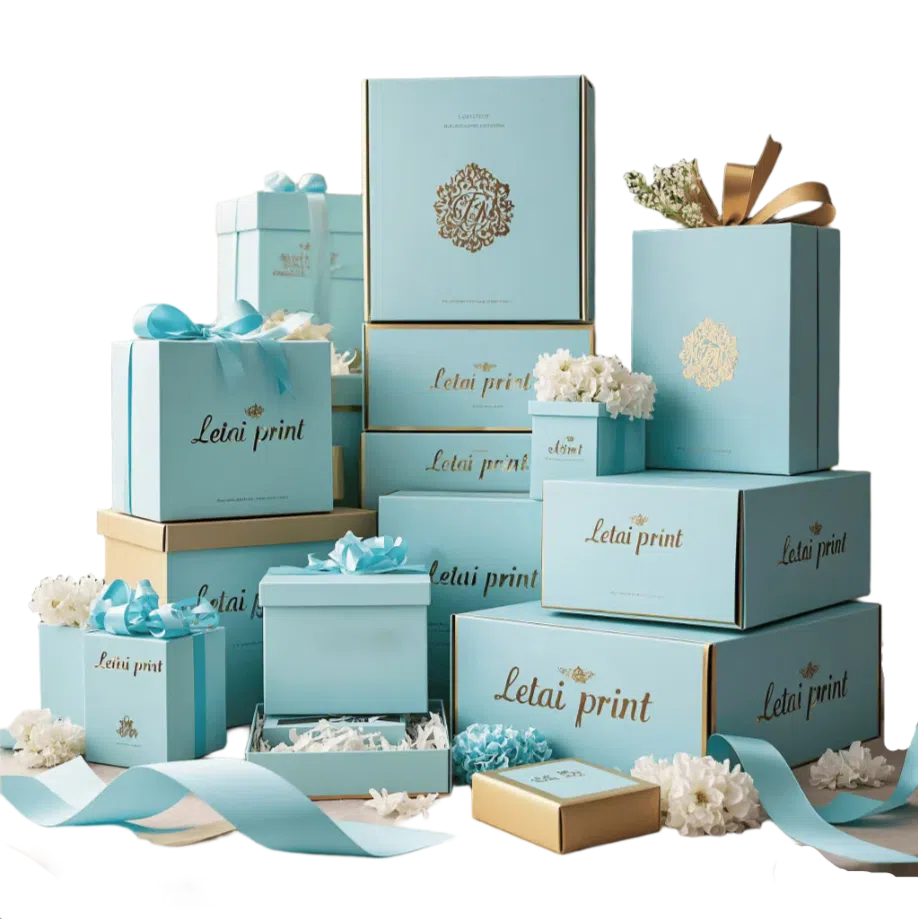
La dorure holographique est une technique d'impression moderne qui ajoute un effet métallique étonnant aux dessins, créant ainsi un aspect vibrant et accrocheur. En appliquant une fine couche de film holographique sur des zones spécifiques de votre emballage, de votre logo ou de votre texte, cette technique renforce l'attrait visuel et attire l'attention sur votre produit. C'est le moyen idéal de faire ressortir votre marque.
Cette méthode innovante associe l'estampage traditionnel à la finition brillante et réfléchissante de la feuille holographique. Que vous conceviez des emballages, du matériel promotionnel ou des cartes de vœux, la dorure holographique rehausse la présentation de votre produit. Elle est largement utilisée dans les emballages de luxe, les cosmétiques et les marques haut de gamme, où l'on recherche un aspect haut de gamme et futuriste.
Qu'est-ce que la dorure holographique ?
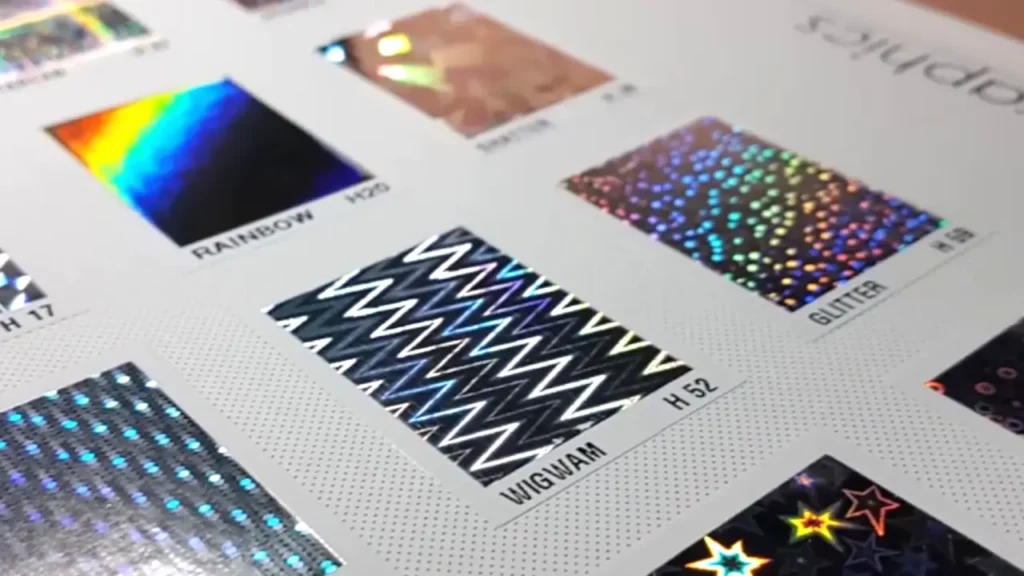
La dorure holographique est une technique d'impression décorative qui consiste à appliquer une feuille métallique brillante et réfléchissante sur un support, créant ainsi un effet vibrant et visuellement frappant.
Le processus d'estampage de feuilles holographiques utilise une matrice métallique spécialisée pour estampiller la feuille holographique sur une surface, qui peut être du papier, du carton ou du plastique. Ce procédé crée un effet dynamique et irisé qui change de couleur et d'intensité en fonction de la lumière, ce qui permet d'attirer l'attention sur les emballages, les logos et les dessins des produits.
Comment fonctionne la dorure holographique ?
La dorure holographique est un processus en plusieurs étapes qui combine la dorure traditionnelle et l'application d'une feuille holographique pour créer des effets éblouissants. La technique consiste à appliquer de la chaleur et de la pression pour transférer la feuille sur la surface souhaitée, ce qui permet de faire apparaître des motifs complexes et accrocheurs. Voici un aperçu de son fonctionnement.
- Création de matrices : La première étape consiste à créer une matrice métallique personnalisée avec le dessin souhaité, qui est chauffée et pressée sur la surface où le film sera appliqué. La matrice est spécialement conçue pour correspondre au dessin, ce qui garantit la précision et la netteté des détails dans le produit final, tandis que la matrice chauffée transfère le film pour garantir une bonne adhérence.
- Sélection de feuilles holographiques : La feuille holographique se décline en différentes couleurs, motifs et effets, et elle est soigneusement choisie pour correspondre à l'intention du dessin. Elle est placée sur la surface avant l'application de la matrice, ce qui permet d'obtenir une finition impeccable et éclatante qui met en valeur le motif.
- Application de la chaleur et de la pression : La chaleur et la pression sont appliquées pour coller la feuille à la surface et transférer l'effet holographique. La matrice est chauffée à une température spécifique, tandis que la pression permet à la feuille d'adhérer fermement au matériau, ce qui lui permet de changer de couleur et de refléter la lumière d'une manière fascinante pour un aspect haut de gamme et luxueux.
- Touches finales : Une fois le film appliqué, le produit est refroidi et inspecté pour en vérifier la cohérence et la précision. Tout excédent de film est soigneusement enlevé, ce qui garantit que le dessin est propre et net. Le résultat final est une finition étonnante et brillante qui capte la lumière, créant ainsi un aspect haut de gamme pour l'emballage ou l'image de marque.
Caractéristiques de la dorure holographique
La dorure holographique offre une variété de caractéristiques uniques qui en font un choix populaire pour l'emballage et l'image de marque. Ses propriétés vibrantes et réfléchissantes confèrent aux produits un attrait luxueux et un design moderne qui attire l'attention.
Voici quelques caractéristiques essentielles de la dorure holographique.
- Effet accrocheur : La dorure holographique crée une surface dynamique et réfléchissante qui change de couleur en fonction de la lumière, ce qui permet d'attirer l'attention. Cet effet optique met en valeur les logos, les textes ou les œuvres d'art, ce qui permet à votre création de se démarquer. Il est parfait pour créer une impression mémorable qui rehausse l'attrait visuel d'un produit.
- Qualité supérieure : Cette technique ajoute une couche de sophistication à votre emballage ou à votre matériel de marque, véhiculant un sentiment de luxe et d'exclusivité. La dorure holographique est souvent utilisée sur des articles haut de gamme tels que les cosmétiques, les produits en édition limitée et les coffrets cadeaux. C'est un choix idéal pour les marques haut de gamme qui souhaitent se démarquer par un design raffiné et haut de gamme.
- Polyvalence dans la conception : La feuille holographique peut être appliquée sur diverses surfaces, notamment le papier, le carton, le plastique et bien d'autres, ce qui la rend polyvalente pour de nombreux secteurs d'activité. Qu'il s'agisse de motifs complexes ou de logos audacieux, le film holographique peut rehausser n'importe quelle conception, qu'il s'agisse de cartes de visite, d'étiquettes, d'emballages ou de matériel promotionnel. C'est une option flexible qui permet d'obtenir des effets à la fois subtils et spectaculaires.
- Durabilité et impact : Contrairement à d'autres méthodes de décoration, la dorure holographique est durable et résistante à l'usure. L'effet vibrant de la feuille reste intact et conserve son attrait pendant une longue période. Cette durabilité garantit que votre motif conservera son impact même en cas de manipulation ou d'expédition, et qu'il laissera une impression durable.
Processus de marquage holographique
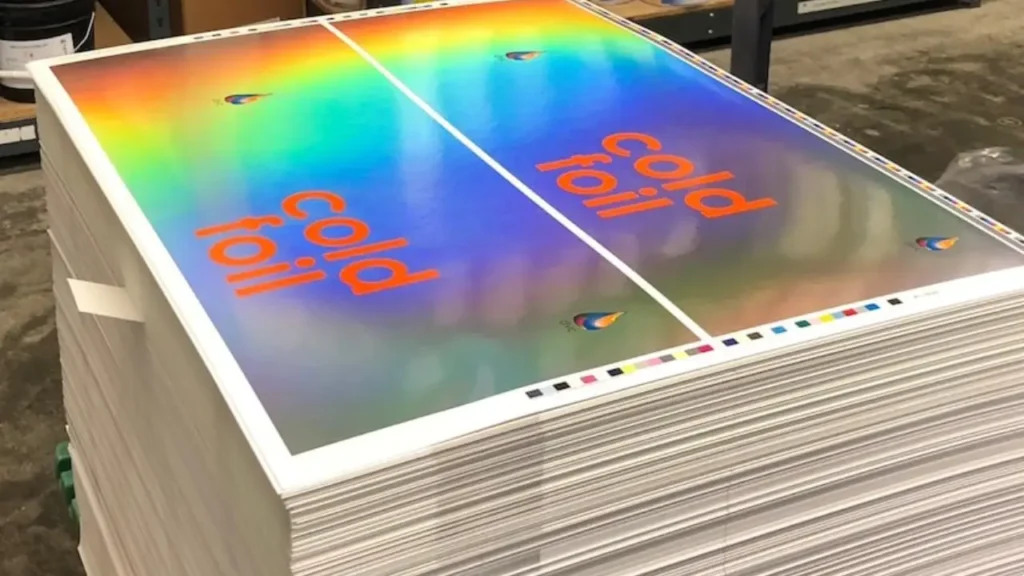
La dorure holographique comprend plusieurs étapes pour appliquer une finition holographique à divers matériaux. Le processus combine la chaleur, la pression et un équipement spécialisé pour transférer la feuille sur une surface, créant ainsi des effets visuels étonnants. Les étapes de cette technique d'impression passionnante sont décrites ci-dessous.
Outils nécessaires :
- Filière métallique
- Feuille holographique
- Machine de presse à chaud
- Machine à estamper
- Support (papier, carton, etc.)
Étape 1 : Création du design et de la matrice
Le processus commence par la création du dessin et de la matrice métallique. Une matrice personnalisée, généralement en laiton ou en acier, est fabriquée avec le dessin exact gravé dessus. Cette matrice est utilisée pour appliquer la feuille holographique précisément à l'endroit voulu. Le dessin sur la matrice détermine l'emplacement et la forme de la feuille pendant le processus d'estampage, ce qui garantit un résultat précis et net.
Étape 2 : Sélection et préparation des feuilles
Ensuite, la feuille holographique est sélectionnée en fonction de l'effet souhaité, qu'il s'agisse d'une finition multicolore vibrante ou d'un aspect réfléchissant subtil. La feuille est soigneusement découpée à la taille requise pour le motif et placée sur la surface, en veillant à couvrir les zones exactes où l'effet holographique sera appliqué. L'emplacement de la feuille est essentiel pour obtenir les meilleurs résultats visuels une fois le transfert effectué.
Étape 3 : Application de la chaleur et de la pression
Au cours de cette étape, la matrice métallique est chauffée et placée sous pression sur le substrat, transférant la feuille holographique sur le matériau. La chaleur active la couche adhésive de la feuille, ce qui lui permet d'adhérer au substrat. La pression garantit que la feuille adhère précisément à la surface et que les effets réfléchissants sont nets et éclatants. Cette étape nécessite un contrôle minutieux de la température et de la pression pour obtenir la meilleure finition possible.
Étape 4 : Refroidissement et finition
Une fois la feuille transférée, on laisse le matériau refroidir, ce qui solidifie la liaison entre la feuille et le substrat. Une fois refroidi, l'excédent de film est retiré, laissant derrière lui un effet holographique propre et net. Le produit final est contrôlé pour s'assurer que le dessin est parfait et que la feuille holographique présente son effet dynamique de changement de couleur à la perfection.
Applications de la dorure holographique
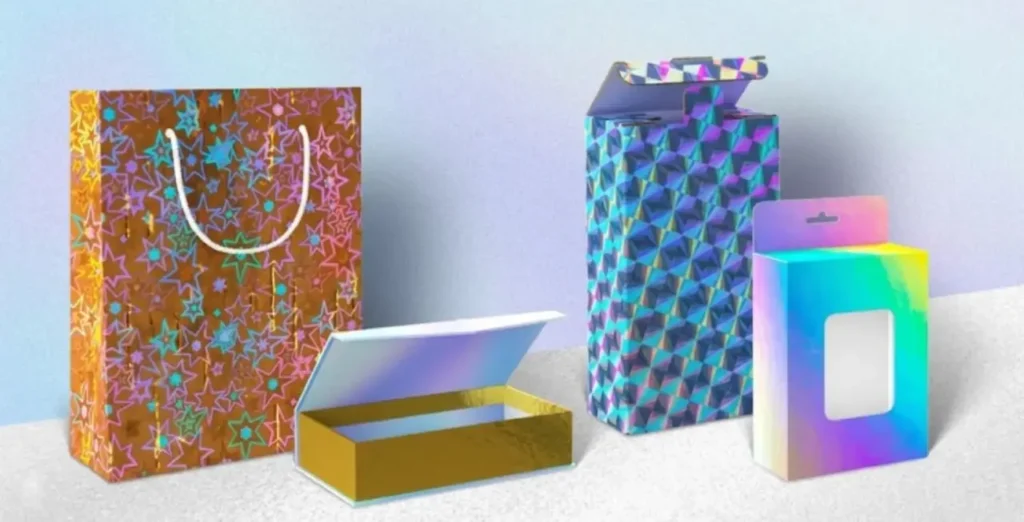
La dorure holographique est utilisée dans un grand nombre de secteurs pour créer des designs luxueux qui attirent l'attention. Ses propriétés vibrantes et réfléchissantes sont parfaites pour les produits et les matériaux dont l'impact visuel est essentiel.
Voici quelques applications courantes de la dorure holographique.
- Emballage : La dorure holographique est largement utilisée dans l'emballage pour créer des boîtes et des sacs haut de gamme qui attirent l'attention. Elle confère un aspect premium et moderne à l'emballage des produits, en particulier pour les produits de luxe tels que les cosmétiques, les parfums et les bijoux. La finition holographique renforce l'image de marque et fait ressortir les produits dans les rayons, augmentant ainsi l'attrait pour le consommateur et la valeur perçue.
- Matériel de marketing : Dans les supports marketing tels que les brochures, les dépliants et les cartes de visite, la dorure holographique permet de rehausser la conception et d'attirer l'attention des clients potentiels. Elle ajoute un élément visuel frappant qui attire l'attention sur les messages ou les logos clés. Cet effet est particulièrement efficace pour les entreprises qui cherchent à faire une première impression audacieuse lors de salons professionnels ou d'événements de réseautage.
- Étiquettes de vente au détail : Les étiquettes de vente au détail marquées d'une pellicule holographique apportent une touche de modernité qui renforce la reconnaissance de la marque. Cette technique est souvent utilisée pour les produits en édition limitée ou les vêtements haut de gamme afin de véhiculer un message d'exclusivité et de luxe. Les détails holographiques sur les étiquettes les rendent plus visibles, ce qui permet de capter l'attention des acheteurs en magasin ou en ligne.
- Invitations et cartes de vœux : La dorure holographique est parfaite pour les invitations et les cartes de vœux, en particulier pour les occasions spéciales telles que les mariages, les anniversaires et les fêtes. La finition étincelante et réfléchissante ajoute de l'élégance et de l'enthousiasme aux créations imprimées. Elle crée une impression de luxe mémorable qui permet aux invitations de se démarquer et de laisser une impression durable sur les destinataires.
- Couvertures de livres et publications : La dorure holographique est fréquemment utilisée sur les couvertures de livres et les publications pour les rendre plus attrayantes. Elle crée un aspect professionnel de haute qualité, qui rend les livres ou les magazines plus attrayants. La surface réfléchissante attire l'attention sur les titres, les logos ou les illustrations spécifiques, ce qui permet à la publication de capter l'attention des lecteurs ou des collectionneurs.
Emballage de marquage holographique
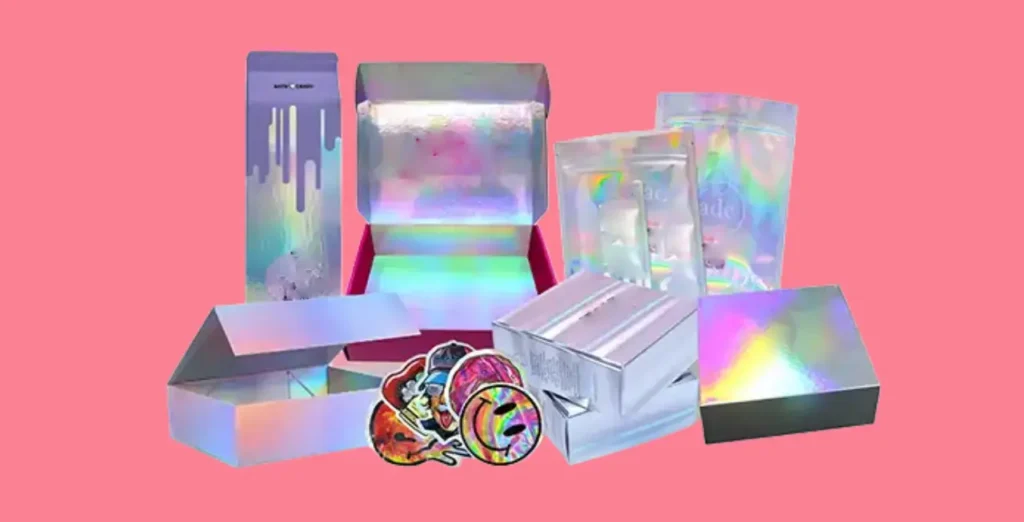
La dorure holographique est une technique puissante utilisée pour améliorer les conceptions d'emballage avec des finitions réfléchissantes qui attirent l'attention. En appliquant une feuille holographique à l'emballage d'un produit, les marques peuvent rehausser la présentation de leur produit en lui conférant un aspect luxueux et haut de gamme. Vous trouverez ci-dessous les principales raisons pour lesquelles la dorure holographique est populaire dans le domaine de l'emballage.
- Améliore la perception de la marque : La dorure holographique crée un aspect haut de gamme qui rehausse instantanément la perception d'une marque. L'effet brillant et dynamique attire l'attention et fait ressortir le produit dans les rayons ou dans le matériel promotionnel. C'est un moyen efficace de véhiculer le luxe et l'exclusivité, en particulier pour les produits haut de gamme.
- Attirer l'attention des consommateurs : L'effet chatoyant de la feuille holographique attire l'attention, rendant l'emballage plus visible pour les acheteurs potentiels. La nature réfléchissante du film attire le regard et crée un sentiment d'excitation autour du produit. Cette visibilité accrue permet d'attirer les clients et peut entraîner une augmentation des ventes et une meilleure reconnaissance de la marque.
- Options de conception polyvalentes : La feuille holographique peut être appliquée de différentes manières, qu'il s'agisse d'accents subtils ou de motifs audacieux et complexes. Qu'il s'agisse de mettre en valeur des logos, du texte ou des graphiques, il peut être personnalisé pour correspondre à l'esthétique de la marque. Cette polyvalence permet de réaliser des dessins simples ou complexes, ce qui la rend adaptée à divers secteurs, des cosmétiques aux emballages alimentaires.
- Durabilité et impact : La dorure holographique améliore non seulement l'attrait visuel de l'emballage, mais aussi sa durabilité. La couche de film protège l'emballage des rayures et de l'usure, ce qui permet au produit de rester intact même après avoir été manipulé. Cette durabilité permet de conserver l'aspect luxueux du produit tout au long de son cycle de vie.
- Options respectueuses de l'environnement : La dorure holographique peut également être réalisée à l'aide de matériaux respectueux de l'environnement, ce qui constitue un choix écologique pour les marques. Le film utilisé dans le processus est souvent recyclable et des options durables sont disponibles. Les marques peuvent ainsi combiner luxe et responsabilité environnementale, ce qui en fait un excellent choix pour les entreprises soucieuses de l'environnement.
Conclusion
La dorure holographique est un outil puissant pour créer des designs uniques qui attirent l'attention. La capacité de cette technique à refléter la lumière et à changer de couleur ajoute de la profondeur et de la dimension, ce qui rend votre emballage ou votre marque vraiment mémorable. C'est un excellent moyen de véhiculer la qualité, le luxe et l'innovation d'une manière visuellement frappante.
Si vous souhaitez ajouter une touche supplémentaire de sophistication à votre emballage, pensez à utiliser la dorure holographique. Il ne s'agit pas seulement d'une technique, mais d'une déclaration de style et de qualité supérieure. Qu'il s'agisse d'une production à petite ou à grande échelle, elle offre des possibilités infinies de personnalisation et de créativité.
Letai Packaging propose des solutions de haute qualité qui allient durabilité, élégance et personnalisation. Explorez nos options dès aujourd'hui et donnez à votre emballage l'attention qu'il mérite avec une dorure holographique de pointe.

J'ai perfectionné mon expertise dans la création de solutions d'emballage de haute qualité, en apportant à la fois innovation et efficacité dans ce domaine. Je suis passionnée par l'obtention de résultats exceptionnels et par la contribution à des pratiques d'emballage durables.
 English
  Español
  Deutsch
  Français
  Italiano
  日本語
日本語  한국어
한국어  Русский
  Português do Brasil
  العربية