크래프트 종이는 오늘날 가장 다재다능하고 친환경적인 포장재 중 하나입니다. 가벼운 포장부터 견고한 포장까지 다양한 용도에 맞게 설계된 다양한 등급으로 제공됩니다. 이러한 유형의 차이점을 이해하면 기업의 특정 요구에 맞는 올바른 선택을 하는 데 도움이 됩니다.
이 가이드에서는 천연, 표백, 코팅 등 다양한 등급의 크래프트 용지에 대해 살펴봅니다. 각 유형의 특성과 용도에 대해 자세히 알아두면 포장, 인쇄 또는 공예 프로젝트에 적합한 크래프트 용지를 더 잘 선택할 수 있습니다.
크래프트 용지란 무엇인가요?

크래프트 용지 는 크래프트 공정으로 알려진 화학 공정을 통해 목재 펄프로 만든 튼튼하고 내구성 있는 종이입니다. 목재 섬유의 자연스러운 갈색을 유지하며 포장, 포장 및 다양한 산업 분야에 자주 사용됩니다.
친환경적인 특성으로 잘 알려진 크라프트지는 생분해되고 재활용이 가능하며 플라스틱 포장을 대체할 수 있는 이상적인 대안입니다.
크래프트 용지의 종류
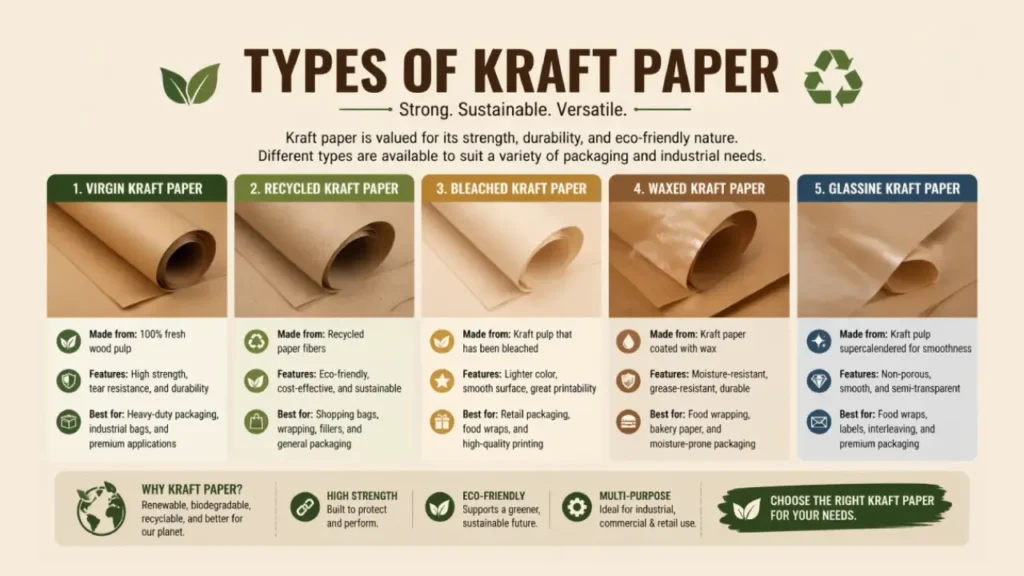
크래프트 용지는 다양한 종류가 있으며, 각 용도에 맞게 설계되어 내구성, 친환경성, 강도를 제공합니다. 포장용, 인쇄용, 공예품용 등 각 유형은 각기 다른 요구에 맞는 고유한 이점을 제공합니다. 이러한 차이점을 이해하면 특정 용도에 적합한 크래프트 용지를 선택하는 데 도움이 될 수 있습니다.
1. 버진 크래프트 종이
버진 크라프트지는 100% 원목 펄프로 만들어져 강도, 찢김 방지 및 내구성이 뛰어납니다. 고품질 구조 덕분에 고강도 포장, 산업용 가방 및 프리미엄 용도에 이상적인 소재입니다. 자연스러운 갈색과 거친 질감으로 복원력이 뛰어납니다.
비재활용 소재에서 파생된 이 소재는 성능 측면에서 추가적인 우위를 제공합니다. 기계 부품이나 고가품 포장과 같이 고강도가 중요한 분야에 사용됩니다.
2. 재활용 크래프트 용지
이 유형의 크래프트지는 재활용 종이 섬유로 만들어져 친환경적이고 비용 효율적인 선택입니다. 쇼핑백, 포장재, 필러 등과 같은 일반 포장 용도로 자주 사용됩니다. 재생 크라프트지는 일상적인 용도에 적합한 강도를 제공하면서 지속 가능성을 지원합니다.
경제성과 친환경성이 결합되어 친환경을 중시하는 브랜드에서 인기를 끌고 있습니다. 특히 더 가벼운 무게가 허용되는 다양한 산업 및 소비자 애플리케이션에서 잘 작동합니다.
3. 표백된 크래프트지
표백 처리된 크래프트 펄프로 만든 이 용지는 색이 더 밝고 표면이 더 부드럽습니다. 뛰어난 인쇄성과 고품질 마감으로 소매 포장, 식품 포장 및 고해상도 인쇄가 필요한 제품에 선호됩니다.
표백 펄프는 깔끔한 외관을 제공하여 프리미엄 포장에 이상적입니다. 이 유형의 크래프트지는 마케팅 자료뿐만 아니라 세련되고 세련된 소매점 랩을 만드는 데 자주 사용됩니다.
4. 왁스 칠한 크래프트지
왁스 처리된 크라프트지는 습기 저항성과 기름 저항성을 제공하는 왁스 층으로 코팅되어 있습니다. 왁스는 신선도를 유지하고 누출을 방지하기 때문에 식품 포장, 베이커리 종이 및 습기에 취약한 포장에 일반적으로 사용됩니다.
이 유형은 습기나 기름에 노출되는 품목을 포장하는 데 이상적이어서 식품 서비스 및 포장 업계에서 인기가 높습니다. 습한 환경에서도 내구성이 뛰어나 내용물을 안전하게 보호할 수 있습니다.
5. 글라신 크래프트지
글라신 크라프트지는 표면을 매끄럽게 하기 위해 슈퍼칼렌더링한 크라프트 펄프로 만들어 광택이 있고 다공성이 없는 표면을 제공합니다. 반투명하여 식품 포장, 라벨 및 기타 프리미엄 포장에 탁월한 옵션입니다.
표면이 매끈하기 때문에 추가적인 보호가 필요한 섬세한 품목에 자주 사용됩니다. 매끄럽고 투명한 품질로 미적 매력을 더해 고급 포장에 가장 적합한 소재입니다.
다음은 포장 및 산업 요구 사항에 따라 각기 다른 장점을 제공하는 주요 크래프트 용지 유형입니다.
다음은 다양한 종류의 크래프트 용지와 그 특징 및 최상의 용도를 보여주는 차트입니다:
| 크래프트 용지 종류 | 만든 곳 | 특징 | 최상의 대상 |
|---|---|---|---|
| 버진 크래프트 용지 | 100% 신선한 목재 펄프 | 높은 강도, 찢김 방지, 내구성 | 고강도 포장, 산업용 가방, 프리미엄 애플리케이션 |
| 재활용 크래프트 용지 | 재생 종이 섬유 | 친환경, 비용 효율, 지속 가능성 | 쇼핑백, 포장재, 필러, 일반 포장재 |
| 표백 크래프트 용지 | 표백 크래프트 펄프 | 더 밝은 색상, 매끄러운 표면, 뛰어난 인쇄성 | 소매 포장, 식품 포장, 고품질 인쇄 |
| 왁스 처리된 크래프트 용지 | 왁스로 코팅된 크래프트 용지 | 내습성, 내유성, 내구성, 내구성 | 식품 포장, 베이커리 종이, 습기에 취약한 포장재 |
| 글라신 크래프트 용지 | 슈퍼칼렌더링 크래프트 펄프 | 비다공성, 매끄러운, 반투명 | 식품 랩, 라벨, 인터리빙, 프리미엄 패키징 |
제품에 적합한 크래프트 포장을 선택하는 방법은?
제품에 적합한 크래프트 포장을 선택하는 것은 제품 보호와 긍정적인 고객 경험을 모두 보장하는 데 매우 중요합니다. 포장은 제품의 크기, 무게, 깨지기 쉬운 정도에 맞춰야 하며 브랜드의 지속 가능성 목표와도 일치해야 합니다.
필요에 가장 적합한 크래프트 포장을 선택하는 방법은 다음과 같습니다.
제품에 적합한 크래프트 포장 선택 방법
- 제품 크기와 무게를 고려하세요: 제품의 크기와 무게에 맞는 크래프트 포장 옵션을 선택하세요. 문구류나 의류와 같이 가벼운 제품의 경우 크래프트 종이 봉투나 작은 상자로 충분합니다. 더 무겁거나 부피가 큰 품목은 더 두꺼운 크래프트지 또는 골판지 상자를 선택하여 제품을 더 잘 지지하고 보호하세요.
- 제품 취약성을 평가합니다: 제품이 섬세하거나 깨지기 쉬운 경우 크래프트 포장에 추가적인 쿠션이 필요할 수 있습니다. 확장된 크래프트지 또는 패딩 처리된 크래프트 상자는 배송 중 제품을 보호하는 데 탁월합니다. 유리 제품이나 전자제품과 같은 품목은 운송 중 파손을 방지하기 위해 충격 흡수 기능이 있는 포장재를 선택하세요.
- 환경 영향 평가: 브랜드의 지속 가능성을 최우선으로 고려한다면 재활용 가능하거나 생분해성 크래프트 포장재를 사용하는 것이 좋습니다. 천연 크래프트지 또는 재활용 크래프트지는 폐기물을 최소화하고 환경에 대한 책임을 촉진하기 때문에 환경을 생각하는 비즈니스에 적합한 선택입니다. 또한 표백하지 않은 크래프트지는 생산 과정에서 화학물질 사용을 줄입니다.
- 패키징 사용자 지정: 로고, 색상, 디자인 등의 브랜딩 요소로 크래프트 포장을 맞춤화하여 브랜드 가시성을 높일 수 있습니다. 소매 포장의 경우, 로고가 인쇄된 크래프트 종이 봉투나 상자를 사용하면 더욱 전문적인 외관을 연출하고 고객 인지도를 높일 수 있습니다. 이는 경쟁이 치열한 시장에서 제품을 차별화하는 데 도움이 될 수 있습니다.
- 패키징 기능 결정하기: 고객이 크래프트 포장을 어떻게 사용할지 고려하세요. 제품을 쉽게 개봉해야 하는 경우, 찢어지는 스트립이나 쉽게 열 수 있는 플랩이 있는 크래프트 상자를 선택하세요. 장기 보관이 필요한 제품의 경우 습기와 같은 환경적 요인으로부터 보호할 수 있는 내구성이 뛰어난 밀봉된 크래프트 상자를 선택하세요.
결론
결론적으로, 다양한 종류의 크래프트지를 이해하는 것은 포장에 필요한 적합한 재료를 선택하는 데 매우 중요합니다. 배송용 천연 크래프트의 강도가 필요하든 인쇄용 표백 크래프트의 매끄러운 마감이 필요하든, 각 등급은 뚜렷한 장점을 제공합니다. 올바른 것을 선택하면 제품의 내구성과 시각적 매력을 보장할 수 있습니다.
크래프트 용지는 다재다능하고 친환경적인 특성으로 인해 제품 품질을 유지하면서 환경 발자국을 줄이려는 기업에게 탁월한 선택입니다. 간단한 포장부터 고급 소매 디스플레이에 이르기까지 크래프트 종이는 다양한 요구 사항을 충족하는 동시에 경제적이고 지속 가능한 솔루션을 제공합니다.
고품질 도매 크래프트 포장을 원한다면 Letai Packaging만 있으면 됩니다. 다양한 업계의 요구 사항을 충족하는 다양한 크래프트 종이 등급을 제공합니다. 맞춤형 크기든 대량 주문이든, Letai Packaging은 내구성이 뛰어나고 환경을 생각하는 옵션을 제공하여 비즈니스의 지속 가능한 성장을 돕습니다.

저는 고품질 패키징 솔루션을 개발하는 데 전문성을 쌓아왔으며, 이 분야에서 혁신과 효율성을 모두 가져왔습니다. 저는 탁월한 결과를 제공하고 지속 가능한 포장 관행에 기여하는 데 열정을 쏟고 있습니다.
- CBD 박스란 무엇인가? 완벽한 가이드 - 2026년 6월 9일
- 팔찌 보관함 아이디어: 깔끔한 공간을 위한 영감을 주는 디자인 - 2026년 6월 8일
- 뱅글 박스란 무엇인가? 완벽한 가이드 - 2026년 6월 8일
 English
  Español
  Deutsch
  Français
  Italiano
  日本語
日本語  한국어
한국어  Русский
  Português do Brasil
  العربية