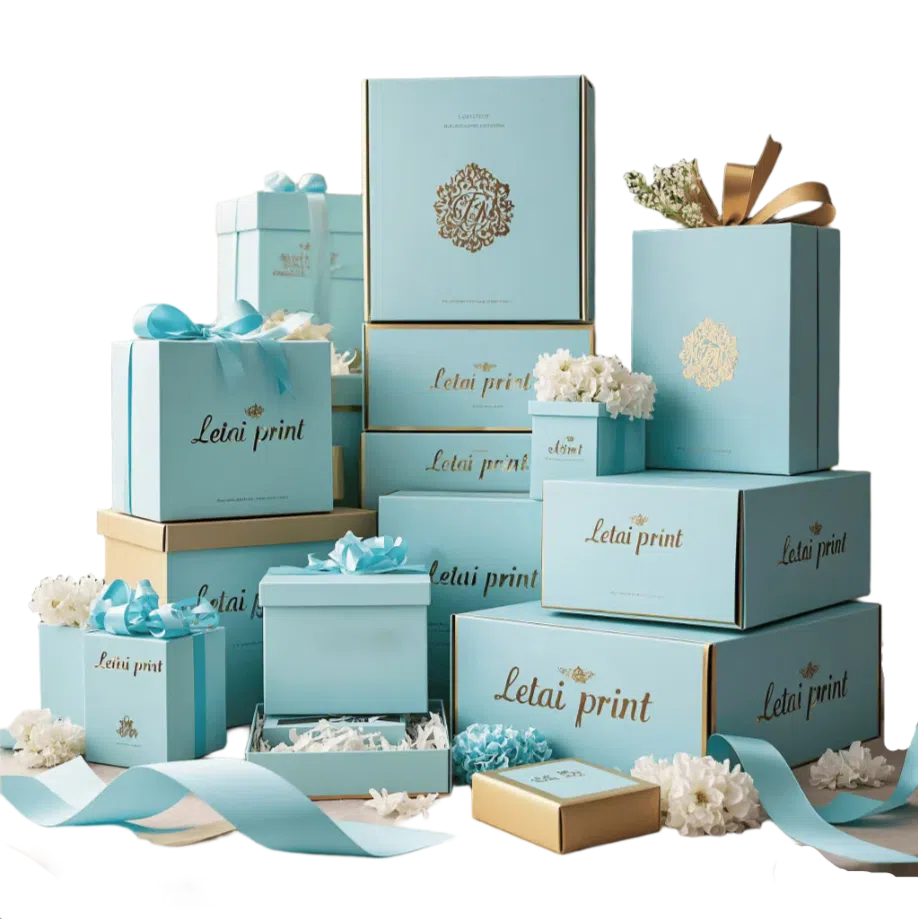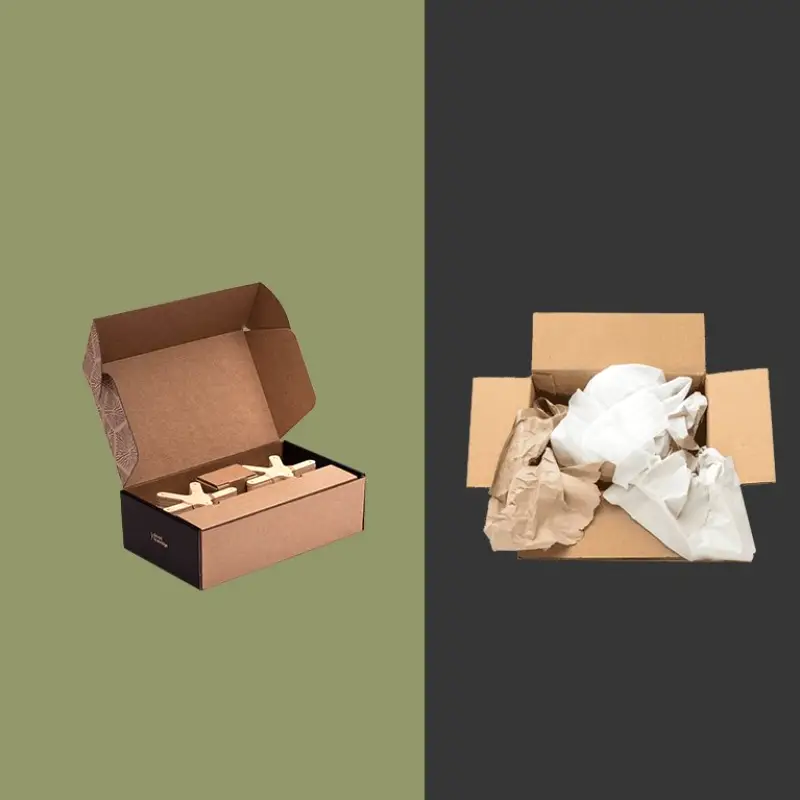
Frustration free packaging and standard packaging differ in design, usability, and environmental impact. While standard packaging focuses primarily on protection, frustration free packaging prioritizes ease of opening, minimal materials, and customer satisfaction. Understanding these differences helps businesses choose the right packaging solution for both efficiency and positive consumer experiences.
This guide explores the main distinctions between frustration free and standard packaging. From material usage to sustainability and user experience, businesses can learn how packaging choices affect costs, operations, and brand perception. Knowing the pros and cons of each type allows companies to make informed decisions that align with modern consumer expectations.
What is Frustration Free Packaging?
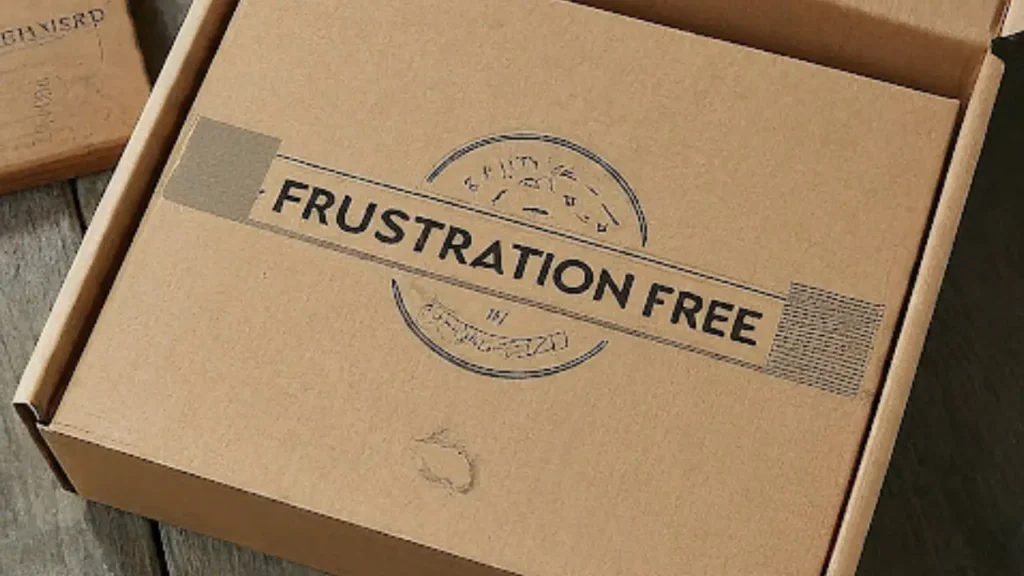
Frustration free packaging is designed to simplify the unboxing experience while reducing environmental impact. It focuses on easy-to-open designs, minimal materials, and recyclable components. By eliminating excessive plastic, clamshells, and hard-to-open seals, this packaging enhances customer satisfaction, improves brand perception, and supports sustainability efforts across a variety of industries.
- E-commerce – Frustration free packaging is ideal for online retail, where products must be protected during shipping while remaining easy to open. Lightweight, durable designs reduce shipping costs and waste, providing customers with a convenient, eco-friendly unboxing experience that encourages repeat purchases and brand loyalty.
- Consumer Electronics – Electronics benefit from packaging that protects delicate devices while remaining simple to access. Reduced layers, protective inserts, and recyclable materials ensure products arrive safely. Customers appreciate easy access and sustainable design, which improves satisfaction and strengthens brand trust in technology markets.
- Household Goods – Kitchenware, cleaning products, and personal care items use frustration free packaging to combine convenience with durability. Minimal, recyclable materials reduce waste, while simple opening designs allow consumers to access products efficiently, enhancing the overall shopping and user experience.
- Toys and Games – Toys packaged in frustration free designs are safer and easier for children and parents to open. Simplified, sturdy packaging protects products, reduces waste, and improves unboxing enjoyment, demonstrating the brand’s attention to safety, sustainability, and customer satisfaction.
- Food and Beverage – Packaged foods, snacks, and beverages use easy-to-open, recyclable designs to maintain freshness while reducing packaging waste. Consumers enjoy convenient access, and brands benefit from improved satisfaction and stronger eco-conscious reputations in the competitive food industry.
What is Standard Packaging?
Standard packaging refers to traditional product packaging that prioritizes protection and branding over ease of use or sustainability. It often includes multiple layers, plastic clamshells, tapes, and inserts to safeguard products during transport. While effective for durability, it can be difficult to open, generate excess waste, and impact customer experience negatively.
- E-commerce – Standard packaging is widely used in online retail to ensure products arrive intact. However, bulky boxes, plastic wraps, and protective inserts can frustrate customers during unboxing. While reliable for protection, it may increase shipping costs and generate more waste compared to streamlined alternatives.
- Consumer Electronics – Electronics often use standard packaging with multiple layers and plastic molds for fragile devices. While these designs protect items effectively during transport, they can be cumbersome for customers to open, potentially causing dissatisfaction despite the safety and security offered by the packaging.
- Household Goods – Kitchenware, cleaning products, and personal care items in standard packaging use extra layers, shrink wraps, or inserts for protection. While these prevent damage, they often require tools to open and generate more waste, making the unboxing experience less convenient for consumers.
- Toys and Games – Toys packaged in standard clamshells or with excessive plastic are difficult to open and sometimes unsafe for children. While these packages protect the products well, they often frustrate parents and reduce the overall enjoyment of receiving and using the product.
- Food and Beverage – Standard packaging for food and beverages uses layered boxes, plastic seals, or wraps to maintain freshness and prevent damage. While effective for preservation, it can be harder for consumers to open and often produces more non-recyclable waste, impacting convenience and sustainability.
Frustration Free vs Standard Packaging
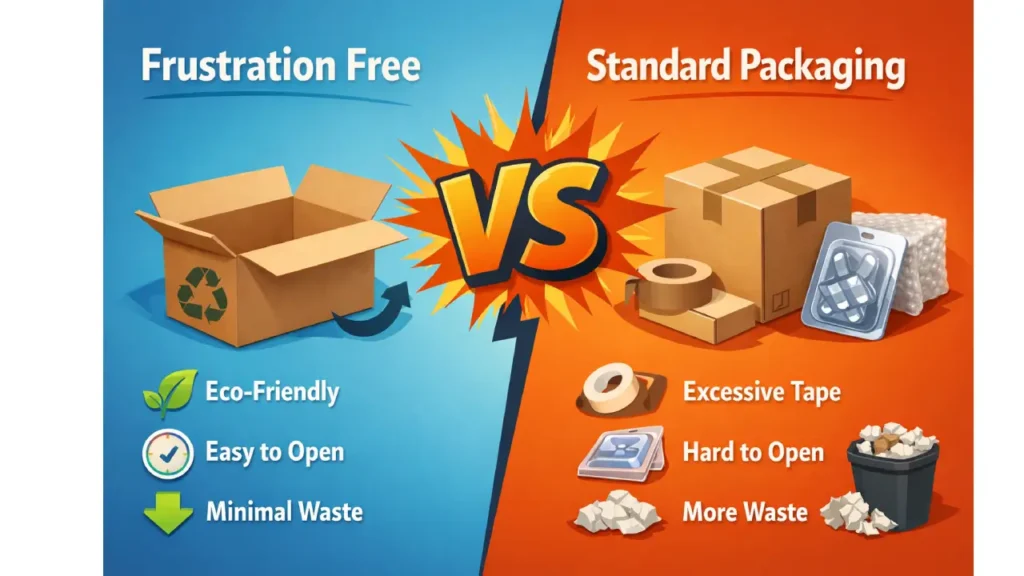
Frustration free packaging and standard packaging serve different purposes in product protection, usability, and sustainability. While standard packaging focuses on durability and brand presentation, frustration free packaging emphasizes ease of opening, minimal material use, and eco-friendly solutions. Understanding their differences helps businesses optimize costs, customer experience, and environmental impact.
Ease of Opening
Frustration free packaging is designed for quick, tool-free access. Tear strips, perforations, and foldable designs allow consumers to open products easily without frustration. This simplicity improves the unboxing experience, encouraging repeat purchases and brand loyalty.
Standard packaging often includes multiple layers, clamshells, or heavy tape. While effective in protecting products, these features make opening difficult and time-consuming, causing potential frustration for customers and negatively impacting the overall experience.
Material Usage
Frustration free packaging uses only essential materials, reducing bulk and waste. Recyclable paper, cardboard, and molded pulp are commonly used, providing protection while minimizing environmental impact. Efficient material use also lowers shipping costs and storage requirements.
Standard packaging typically uses excess layers, plastic inserts, and foam for protection. Although these materials secure products during transport, they increase costs, weight, and waste, and often complicate recycling due to mixed-material construction.
Environmental Impact
Frustration free packaging reduces waste and supports sustainability. Minimal, recyclable, or biodegradable materials lower the carbon footprint and appeal to environmentally conscious consumers, aligning with corporate social responsibility goals.
Standard packaging contributes more significantly to landfill waste. Mixed plastics and excess materials are difficult to recycle, increasing environmental harm. While protective, this approach is less sustainable and less attractive to eco-aware customers.
Customer Experience
Frustration free packaging improves satisfaction with clean, simple designs. Easy access enhances usability, strengthens brand perception, and encourages repeat purchases. Consumers appreciate thoughtful packaging that respects their time and reduces frustration.
Standard packaging can cause dissatisfaction due to difficult unboxing and excessive protective layers. While functional for protection, it may harm brand perception, especially for e-commerce customers who value convenience and ease of use.
Cost Efficiency
Frustration free packaging can reduce shipping, storage, and material costs due to optimized, lightweight designs. Efficient packaging minimizes waste and improves operational efficiency, creating long-term savings for businesses.
Standard packaging incurs higher costs from excess materials, bulkier designs, and heavier shipments. While protective, it can increase shipping fees, handling labor, and storage requirements, impacting overall operational efficiency.
Branding and Presentation
Frustration free packaging can be clean, minimal, and modern, reflecting brand values while emphasizing sustainability. Thoughtful design enhances product appeal and customer satisfaction without unnecessary materials.
Standard packaging allows for bold branding and elaborate displays, but may prioritize aesthetics over functionality. While visually impactful, complex designs can frustrate customers and generate excess waste, reducing overall efficiency.
Here are some differences between frustration-free and standard packaging
| Aspect | Frustration Free Packaging | Standard Packaging |
|---|---|---|
| Ease of Opening | Quick, tool-free, simple access | Multiple layers, clamshells, hard to open |
| Material Usage | Minimal, recyclable, efficient | Excess layers, plastics, mixed materials |
| Environmental Impact | Low waste, eco-friendly | High waste, difficult to recycle |
| Customer Experience | Convenient, enhances satisfaction | Can be frustrating, time-consuming |
| Cost Efficiency | Reduced shipping and material costs | Higher costs due to bulk and materials |
| Branding & Presentation | Clean, minimal, sustainable | Bold, elaborate, may reduce usability |
How to Choose Frustration-free and Standard Packaging?
Choosing between frustration free and standard packaging requires careful consideration of product needs, customer experience, and sustainability goals. The right choice balances protection, usability, cost, and environmental impact. Understanding your product type, shipping conditions, and consumer expectations ensures packaging that enhances satisfaction while minimizing waste and operational inefficiencies.
- Assess Product Protection Needs – Determine how fragile or sensitive your product is. Fragile items may require standard packaging with extra padding, while durable goods can use frustration free designs. Matching protection to product requirements ensures items arrive safely without unnecessary materials or customer frustration.
- Evaluate Customer Experience – Consider how easy it should be for customers to access the product. Frustration free packaging prioritizes simple, tool-free opening to improve satisfaction, while standard packaging may focus more on presentation and security. Choosing the right balance impacts repeat purchases and brand perception.
- Consider Sustainability Goals – If minimizing environmental impact is a priority, frustration free packaging with recyclable or biodegradable materials is preferable. Standard packaging often uses mixed materials and plastics that are harder to recycle. Aligning packaging choice with sustainability strengthens brand responsibility and meets eco-conscious consumer expectations.
- Review Cost and Efficiency – Frustration free packaging can reduce material, shipping, and storage costs due to lightweight and optimized designs. Standard packaging may increase expenses because of excess materials and heavier shipments. Evaluating cost-effectiveness ensures packaging supports operational efficiency without compromising product safety.
- Match Branding and Presentation – Packaging should reflect your brand identity. Frustration free packaging offers clean, minimal designs emphasizing simplicity and sustainability. Standard packaging allows for elaborate displays and visual appeal. Choosing the style that fits your brand helps convey the right message to consumers.
- Test and Iterate – Pilot different packaging options to see how they perform in shipping, unboxing, and customer feedback. Gathering insights on protection, usability, and brand perception allows businesses to refine packaging choices, ensuring they meet both operational and consumer satisfaction goals.
Conclusion
Frustration free packaging provides a modern alternative to traditional packaging by emphasizing simplicity, sustainability, and customer convenience. By reducing unnecessary materials and improving usability, brands can enhance satisfaction, lower shipping costs, and strengthen their reputation. This approach aligns with evolving consumer expectations and environmental responsibility.
Standard packaging still serves an important role in protecting products during transport, but it often falls short in ease of use and sustainability. Companies relying solely on traditional packaging may face higher material costs, more waste, and decreased customer satisfaction compared with frustration free alternatives that streamline both experience and operations.
For businesses looking to make the switch, Letai Packaging offers wholesale frustration free packaging solutions tailored to your needs. We provide customizable designs, reliable production, and eco-friendly options, helping you deliver a better unboxing experience while reducing costs and supporting sustainability goals.

I have honed my expertise in creating high-quality packaging solutions, bringing both innovation and efficiency to the field. I am passionate about delivering exceptional results and contributing to sustainable packaging practices.
- What is a CBD Box? The Ultimate Guide - June 9, 2026
- Bangle Box Ideas: Inspiring Designs for a Clutter-Free Space - June 8, 2026
- What is a Bangle Box? The Ultimate Guide - June 8, 2026
 English
  Español
  Deutsch
  Français
  Italiano
  日本語
日本語  한국어
한국어  Русский
  Português do Brasil
  العربية