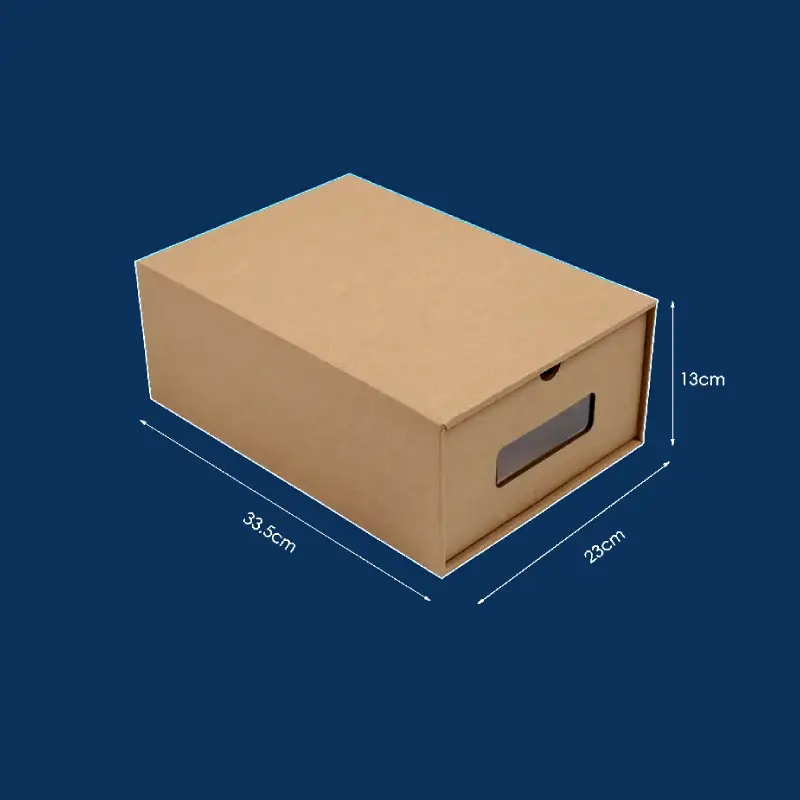
Keeping your shoes organized starts with choosing the right shoe box size. Proper dimensions ensure each pair fits comfortably without being squashed or wasted space. Whether you have sneakers, heels, or boots, understanding box dimensions helps protect your shoes from dust, deformation, and damage.
Measuring your shoes and knowing the standard box dimensions simplifies storage and organization. Clear labeling combined with the right box size makes finding pairs quick and effortless. From single pair storage to full closet solutions, selecting perfect dimensions is key to a tidy and functional shoe collection.
Why Shoe Box Size Matters?
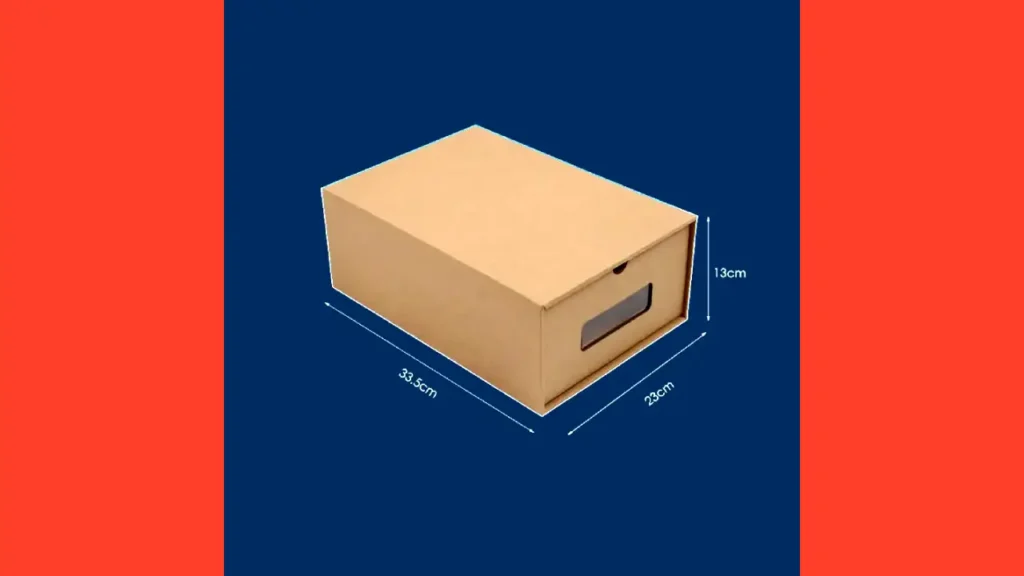
Choosing the correct shoe box size is essential for protecting your footwear, maximizing storage space, and keeping your collection organized. The right dimensions prevent damage, make stacking easier, and ensure easy access to each pair without crushing or deforming them.
- Protection from Damage: Properly sized shoe boxes prevent shoes from being squashed, scuffed, or bent. A box that fits the shoe snugly ensures it maintains its shape, while extra padding or compartments can protect delicate materials.
- Efficient Storage: Using boxes with the right dimensions allows for better closet or shelf organization. Shoes can be stacked neatly, reducing wasted space and making it easier to store multiple pairs in limited areas.
- Easy Access and Organization: Correctly sized boxes with clear labeling make finding the right pair quick and stress-free. Organized storage saves time, prevents clutter, and keeps your shoe collection looking tidy and professional.
Shoe Box Size Dimensions
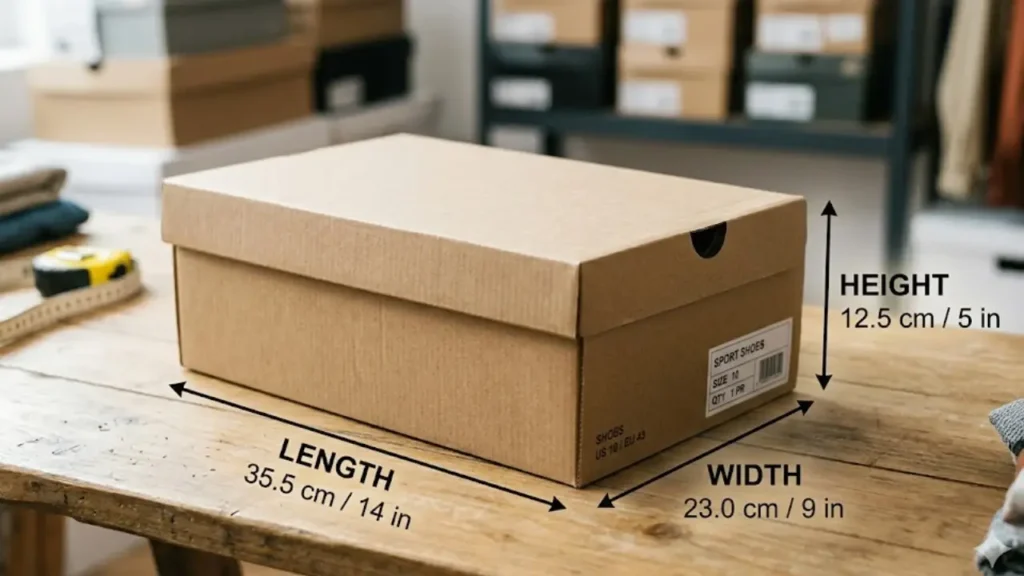
Selecting the right shoe box size dimension is key to keeping shoes protected and organized. Different shoe types require different lengths, widths, and heights to prevent deformation and allow easy stacking. Understanding standard dimensions makes storage efficient, whether for personal collections or retail packaging.
Measuring your shoes accurately before choosing a box ensures a snug fit. Oversized boxes can waste space and make stacking unstable, while undersized boxes may damage shoes. Using the right dimensions improves both protection and accessibility for all footwear types.
Standard Sneakers Box Dimensions
Sneakers generally need a length of 13–14 inches, a width of 7–8 inches, and a height of 4–5 inches. These dimensions accommodate most adult sizes while leaving enough room for protective wrapping or tissue paper.
Using these standard dimensions ensures shoes maintain their shape, fit neatly in closets or shelves, and are easy to stack. Retailers often adopt these dimensions to maintain consistency across product lines and simplify logistics.
Boots Box Dimensions
Boots require taller boxes due to their height, typically 14–16 inches in length, 8–10 inches in width, and 6–9 inches in height. High boots may require custom dimensions to avoid bending the material.
Properly sized boot boxes prevent creasing, maintain boot shape, and allow safe stacking in storage or shipping. Custom sizing ensures even premium or designer boots are well-protected while maintaining presentation quality.
Heels Box Dimensions
High heels often need smaller lengths but higher boxes to protect the heel, generally 12 inches long, 6–7 inches wide, and 5–6 inches tall. Proper dimensions prevent heels from snapping or shifting during storage.
Using tailored boxes for heels ensures durability and safety. It also allows for organized presentation, making it easier for retailers or collectors to store multiple pairs without damage.
Shoe Box Size Dimensions Chart
| Shoe Type | Length (in) | Width (in) | Height (in) |
|---|---|---|---|
| Sneakers | 13–14 | 7–8 | 4–5 |
| Boots | 14–16 | 8–10 | 6–9 |
| Heels | 12 | 6–7 | 5–6 |
Standard Shoe Box Size
Understanding standard shoe box sizes helps protect shoes, optimize storage, and make stacking easier. Standard dimensions fit most adult shoes, providing enough space for padding, labels, or inserts.
Choosing the right size prevents damage, maximizes organization, and ensures consistency in personal or retail use.
- Sneakers Standard Size: Typical boxes are 13–14 inches long, 7–8 inches wide, and 4–5 inches high. These dimensions accommodate most adult sneakers comfortably, leaving space for tissue paper or inserts that prevent scuffing and maintain shape.
- Boots Standard Size: For boots, standard boxes are larger: 14–16 inches in length, 8–10 inches in width, and 6–9 inches in height. Extra height protects tall boots, while wider dimensions prevent creasing and allow safe stacking in storage.
- Heels Standard Size: Heels usually require boxes 12 inches long, 6–7 inches wide, and 5–6 inches high. These dimensions protect delicate heels from bending or snapping, while keeping them organized and ready for display or shipping.
- Children’s Shoes Standard Size: Children’s shoes need smaller boxes, roughly 9–11 inches long, 5–6 inches wide, and 3–4 inches high. These dimensions fit growing feet while allowing safe storage, easy labeling, and stacking for closets or retail shelves.
Standard Shoe Box Sizes Chart
| Shoe Type | Length (in) | Width (in) | Height (in) |
|---|---|---|---|
| Sneakers | 13–14 | 7–8 | 4–5 |
| Boots | 14–16 | 8–10 | 6–9 |
| Heels | 12 | 6–7 | 5–6 |
| Children’s Shoes | 9–11 | 5–6 | 3–4 |
Dimensions for Different Types of Shoes
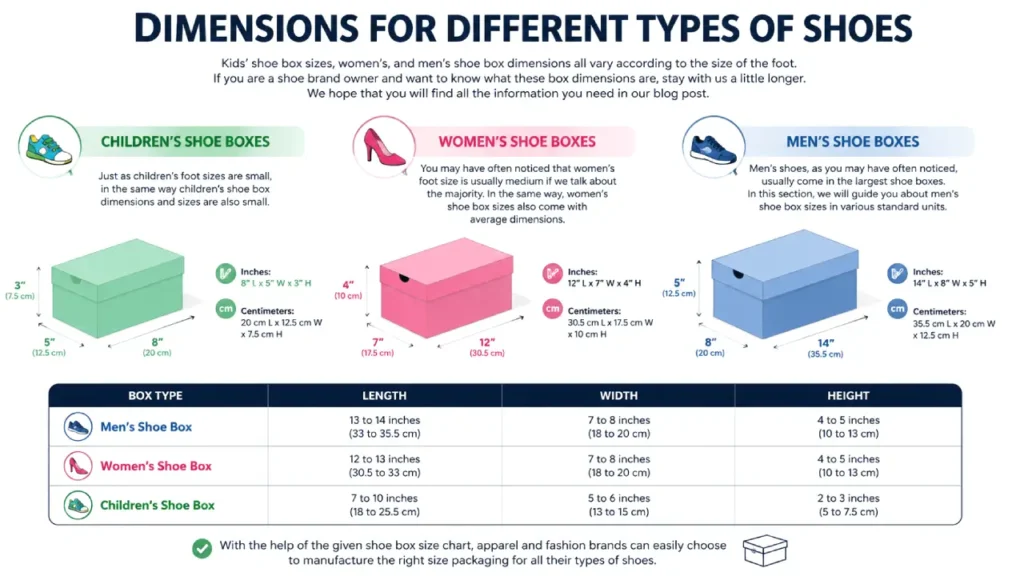
Kids’ shoe box sizes, women’s, and men’s shoe box dimensions all vary according to foot size. If you are a shoe brand owner and want to know the ideal box dimensions, stay with us. This guide provides all the information you need to select the perfect sizes.
Understanding shoe box dimensions ensures proper storage, protection, and presentation. Choosing the right box prevents damage, keeps shoes organized, and helps maintain the shape of the footwear. Standardized sizes also simplify manufacturing and retail processes, allowing you to meet consumer expectations efficiently.
Children’s Shoe Boxes
Just as children’s feet are small, children’s shoe box sizes are also compact. Properly sized boxes provide enough room for shoes while allowing protective padding or inserts, ensuring shoes are safe, neat, and easy to store or ship.
Kids’ shoe box dimensions:
- In inches: 8” L x 5” W x 3” H
- In centimeters: 20 cm L x 12.5 cm W x 7.5 cm H
These dimensions are standard for children’s shoes, offering sufficient storage space while preventing unnecessary bulk or wasted materials.
Women’s Shoe Boxes
Women’s shoes typically require medium-sized boxes, balancing shoe length and width. Choosing the right box ensures shoes are protected, prevents deformation, and makes stacking and storage easier in closets or retail shelves.
Women’s shoe box dimensions:
- In inches: 12” L x 7” W x 4” H
- In centimeters: 30.5 cm L x 17.5 cm W x 10 cm H
Standard women’s boxes are suitable for most adult female shoes, providing an organized and professional presentation for retail or personal storage.
Men’s Shoe Boxes
Men’s shoes generally need the largest boxes due to bigger foot sizes. Proper dimensions protect shoes, maintain their shape, and allow stacking for storage or display in retail environments.
Men’s shoe box dimensions:
- In inches: 14” L x 8” W x 5” H
- In centimeters: 35.5 cm L x 20 cm W x 12.5 cm H
Using appropriately sized boxes ensures shoes are secure, prevents damage during transport, and enhances shelf organization for retailers.
Shoe Box Size Chart
| Box Type | Length | Width | Height |
|---|---|---|---|
| Men’s Shoe Box | 13–14 inches (33–35.5 cm) | 7–8 inches (18–20 cm) | 4–5 inches (10–13 cm) |
| Women’s Shoe Box | 12–13 inches (30.5–33 cm) | 7–8 inches (18–20 cm) | 4–5 inches (10–13 cm) |
| Children’s Shoe Box | 7–10 inches (18–25.5 cm) | 5–6 inches (13–15 cm) | 2–3 inches (5–7.5 cm) |
With this chart, apparel and fashion brands can easily choose the right packaging size for each type of shoe, ensuring consistent protection, storage, and presentation across their product lines.
How to Measure Shoe Box Size?
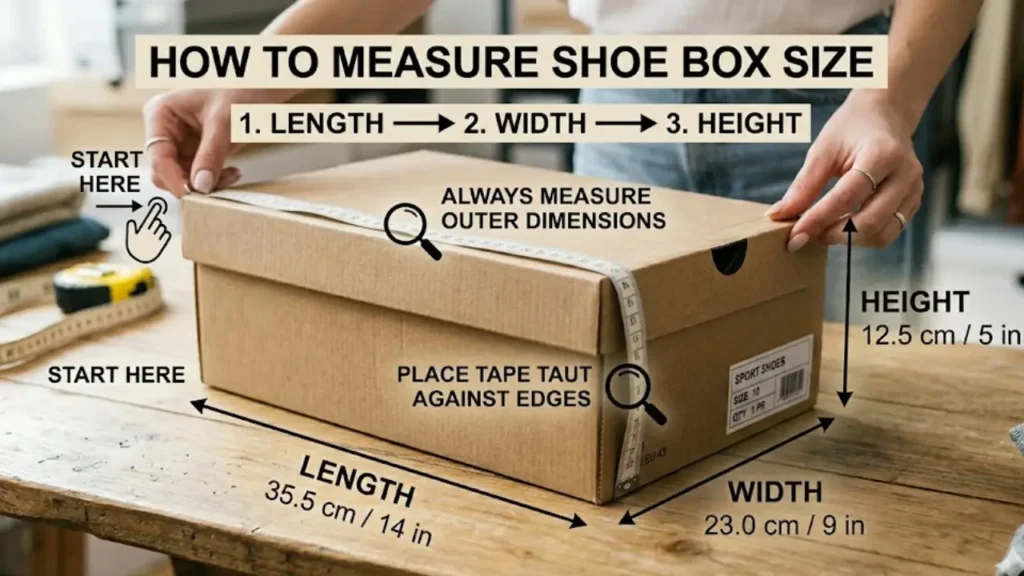
Measuring the correct shoe box size ensures your shoes fit perfectly, are protected from damage, and can be stored efficiently. Accurate measurements help in organizing closets, stacking boxes, and planning custom packaging. Understanding dimensions is essential for personal use, retail, or wholesale purposes.
Tools Needed
- Measuring tape or ruler
- Pen and paper or digital note app
- Existing shoe boxes for reference
- Calculator (optional for conversions)
Step 1: Measure the Length
Start by measuring the longest part of your shoe from heel to toe. This will determine the minimum box length needed to fit the shoe comfortably without bending or squeezing the material. Accurate measurement ensures the box protects the shoe and allows room for padding.
Measure each shoe individually if sizes vary significantly. Using consistent units (inches or centimeters) helps maintain accuracy. Record the measurements carefully and compare them to existing standard box sizes to select the most suitable dimensions.
Step 2: Measure the Width
Measure across the widest part of the shoe, typically around the ball of the foot. This width ensures the shoe fits without being forced into a box that’s too narrow, which could cause deformation or creases. Correct width is critical for maintaining shoe shape.
For uneven shoes, measure both shoes and use the larger width. Add a small allowance for tissue or protective material to prevent friction or scuffing. Accurate width measurement contributes to stacking efficiency and overall storage organization.
Step 3: Measure the Height
Measure from the sole to the highest point of the shoe, including heels if applicable. This determines the minimum box height needed to store the shoe upright without bending or compressing it. Proper height measurement prevents crushing and preserves the shoe’s form.
Consider adding extra height for packaging inserts or padding. For boots or high heels, measure carefully to include tall shafts or heel tips. Correct height ensures that all shoes fit securely in their boxes and are protected during storage or transport.
How to Choose Shoe Box Sizes?
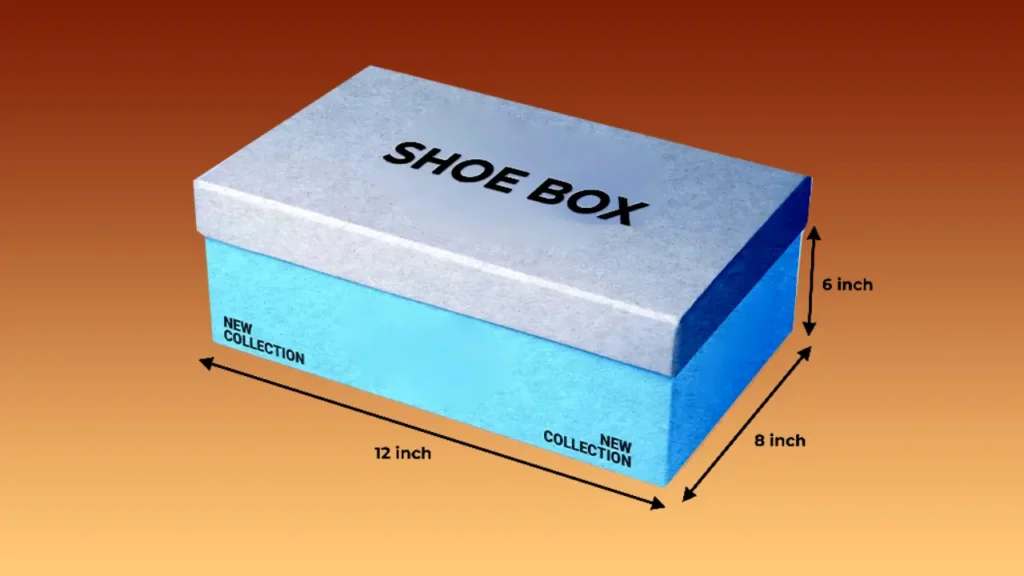
Choosing the right shoe box size ensures shoes are well-protected, easy to store, and neatly organized. Considering shoe type, material, and storage method helps you select dimensions that prevent damage and make stacking and labeling efficient, whether for personal collections or retail purposes.
- Consider Shoe Type: Sneakers, boots, heels, and children’s shoes all have different dimensions. Choosing boxes that fit the specific shoe type prevents deformation, keeps shoes protected, and ensures consistent stacking and storage without wasting space or risking damage to delicate materials.
- Allow Extra Space: Adding a small allowance in length, width, or height helps accommodate tissue paper, protective inserts, or small accessories. This extra space prevents shoes from being crushed, allows easy removal, and provides room for minor size variations between pairs.
- Think About Storage: How and where you store boxes influences the size you choose. Stackable boxes for closets, shelves, or storage rooms should fit standard dimensions, while custom or retail packaging may need specialized sizes for shipping or display purposes.
- Match Aesthetic Needs: For retail or gift purposes, the appearance and presentation of the box matter. Choosing the right size ensures shoes look appealing, labels are visible, and the overall packaging reflects quality and care while keeping items secure.
Conclusion
Choosing the right shoe box size and dimensions transforms shoe storage from cluttered chaos into organized perfection. Properly sized boxes protect footwear, make stacking easier, and improve accessibility. For businesses or individuals needing reliable solutions, wholesale custom shoe box packaging offers consistency and convenience.
At Letai Packaging, we provide wholesale custom shoe boxes designed for any shoe type. Our boxes are built with durability, ideal dimensions, and style in mind, ensuring both protection and presentation. Whether you sell footwear or need personal organization, our packaging solutions make storage seamless and professional.
Investing in custom shoe box packaging from Letai Packaging guarantees long-term organization and protection. Our boxes are tailored to match your shoe dimensions, stack neatly, and present your shoes beautifully. Efficient storage, minimized damage, and easy access are just some benefits of choosing Letai Packaging for wholesale solutions.

I have honed my expertise in creating high-quality packaging solutions, bringing both innovation and efficiency to the field. I am passionate about delivering exceptional results and contributing to sustainable packaging practices.
 English
  Español
  Deutsch
  Français
  Italiano
  日本語
日本語  한국어
한국어  Русский
  Português do Brasil
  العربية