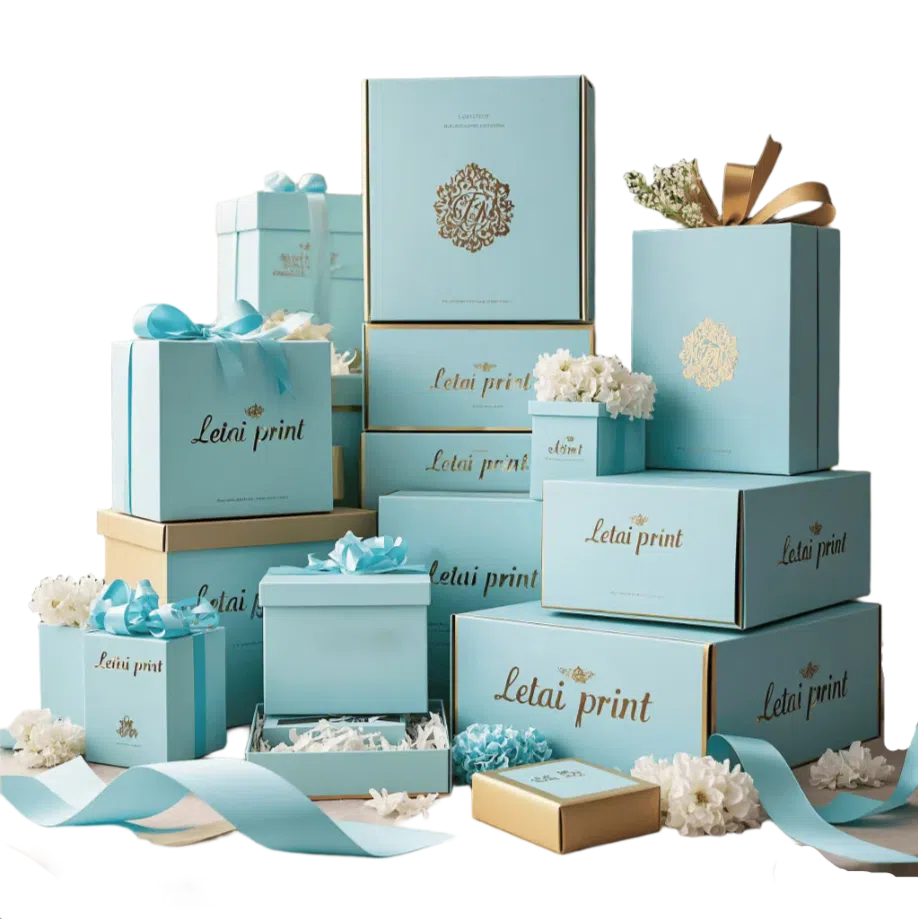
Your packaging is the first thing a customer touches. It needs to look great, but it also needs to survive shipping, stocking, and handling. Ink can smudge. Edges can scuff. How do you protect your design without breaking the budget?
The answer is often a finish called aqueous coating.
It’s one of the most popular and practical choices in the printing world. This clear, water-based sealant adds a professional look. It protects against fingerprints and dirt. It also helps the environment. This guide will walk you through everything you need to know.
We will cover what is aqueous coating, the different types available, and how it compares to other finishes. You will also learn what to watch out for. Let’s get started.
What Is Aqueous Coating?
Aqueous coating is a clear, protective finish for paper. It is water-based, made from a simple mix of water and acrylic polymers. After printing, the coating is applied. The water evaporates, leaving a tough, transparent layer behind.
Its primary job is protection. The coating seals the ink so it won’t rub off. No more smudges. It also resists scuffs, fingerprints, and dirt, keeping your packaging looking sharp.
This coating is also a green choice. Because it’s water-based, it releases very few volatile organic compounds (VOCs). This makes it better for the environment than many other coatings. Best of all, paper with aqueous coating is fully recyclable.
Over 54% of consumers reported choosing products with sustainable packaging in the past six months, boosting demand for eco-friendly options.
The application process is very efficient. Printers apply the coating right on the press along with the ink. It dries almost instantly with heat and air. This inline process saves time and reduces costs, making it a smart, standard choice for most projects.
Types of Aqueous Coating and When to Use Them
Choosing the right aqueous coating comes down to two things: visual style and functional needs. The finish you choose depends entirely on your packaging’s job. A matte coating works for a luxury gift box. An oil-resistant coating is perfect for food packaging.
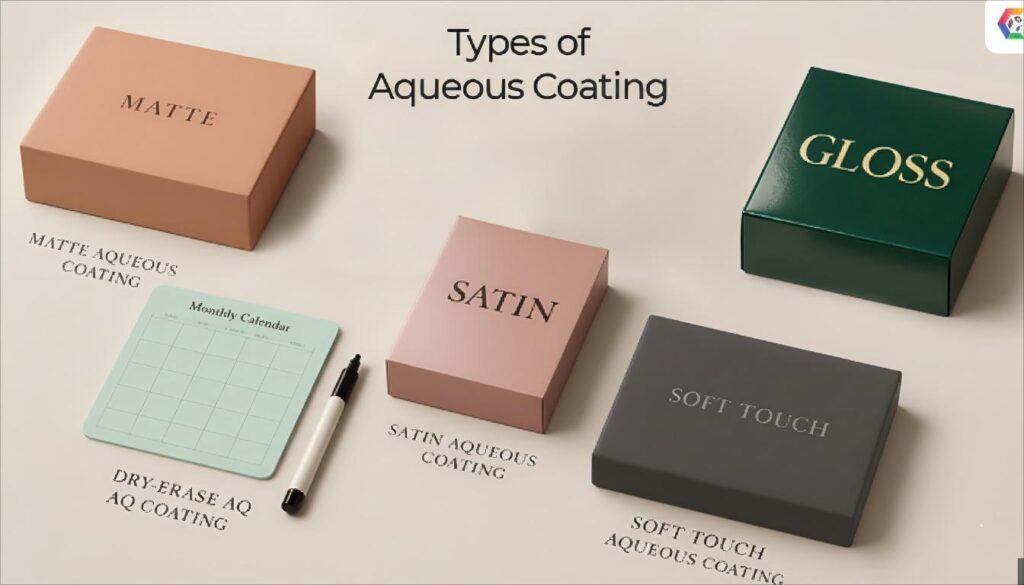
1. Matte Aqueous Coating
It has a low gloss level (30-50 gloss units). This creates a soft, non-reflective finish.
Best for:
Luxury Gift Boxes: Cosmetics, watches, and other premium gifts.
Cultural Products: Book covers, journals, and high-end stationery.
Premium Food Lines: Organic goods, artisan chocolates, and bakery gift boxes.
What to Avoid: This coating can slightly dull bright colors. It is not ideal for packaging that needs to look extremely vibrant, like fruit boxes. If you need both a matte feel and bright colors, your printer must use high-saturation inks first, then apply a very thin matte coating.
2. Gloss Aqueous Coating
This provides a medium gloss (60-70 gloss units). The shine is noticeable but soft, not a harsh glare like UV coating.
Best for:
Consumer Goods: Snack bags, soap wrappers, and beverage labels.
E-commerce Boxes: Apparel, small electronics, and everyday items.
General Food Packaging: Cereal boxes, frozen foods, and milk cartons.
What to Avoid: Gloss finishes can show fingerprints and scratches easily, especially on dark, solid colors like black or deep purple. If you must use it on a dark background, ask your printer about adding an anti-fingerprint agent to the coating.
3. Satin Aqueous Coating
Satin offers a middle ground between matte and gloss (45-55 gloss units). It has a smooth, velvety feel. This finish provides a perfect balance. You get a touch of elegance without sacrificing color vibrancy.
Best for:
Mid-Range Gift Sets: Corporate gifts and baby products.
Mid-Tier Cosmetics: Lotions, creams, and fragrance boxes.
Boutique Grocery Items: Imported snacks and premium fresh foods.
What to Avoid: The softness of satin can weaken sharp visual contrasts. If you need a logo to pop dramatically against a background, this might not be the best choice.

Ready To get Custom Packaging ?
Contact us with a Lower Quantity
4. Oil-Resistant Aqueous Coating
This coating contains additives that block grease and oil. It creates a barrier that prevents oil from seeping through the paper. It is designed to meet food-contact safety standards, such as FDA 21 CFR 176.170.
Best for: High-grease food packaging (chips, fried foods, chocolate) and oily product packaging (cooking oil labels, butter boxes).
What to Avoid: The effectiveness depends on the coating’s thickness. A thin layer won’t provide enough protection. Ensure your printer applies a layer of at least 3μm for reliable oil resistance.
5. Abrasion-Resistant Aqueous Coating
This formula includes hardening agents like silica. It creates a tougher surface that can achieve a pencil hardness of 1H (standard coatings are HB). It is designed to withstand rubbing and scuffing without the ink flaking off.
Best for: Use it for high-friction packaging like e-commerce shipping boxes and toy boxes. It is also good for long-term storage boxes and items handled often, like instruction manuals.
6. Recyclable Aqueous Coating
Key Features: This coating uses resins that break down well during the paper recycling process. The coating separates completely from the paper fibers, preventing contamination of the recycled pulp. It helps products comply with environmental regulations like the EU’s REACH (94/62/EC).
Best for: This is best for export packaging to markets like Europe and North America. It also works for eco-conscious brands and public-sector packaging.
What is the Benefit of Aqueous Coating?
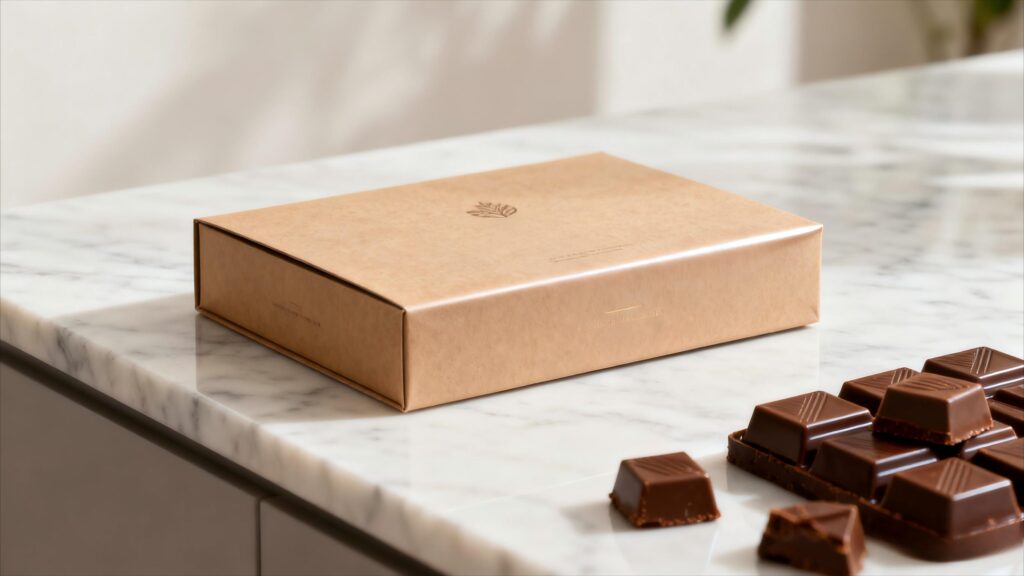
Aqueous coating offers a powerful mix of benefits. It shines in projects that need to be safe, affordable, and produced in large numbers. For many companies, it is the perfect balance of quality, cost, and compliance.
Safety is a huge advantage. The coating is water-based. When it dries, no harmful chemicals are left behind. This makes it ideal for food and medicine packaging.
It meets strict safety standards for materials that can touch food, like those from the( FDA). There is no risk of chemicals migrating into the product.
Aqueous coating is also very cost-effective. It provides excellent basic protection for a low price. Because printers apply it in a fast, inline process, it saves time and money, especially on large orders.
Finally, it is very versatile. The finish works well with other design processes. You can easily add foil stamping, die-cutting, or embossing on top of an aqueous coating.
The surface has just the right texture, so foil sticks to it perfectly. This is a big advantage over some super-slick UV coatings, which can cause foil to peel off.
How Is Aqueous Coating Applied?
Printers apply aqueous coating in a simple, efficient way. They apply it directly on the printing press, right after the ink goes on the paper. This is called an “inline” process. Because it happens all in one step, it saves a lot of time and keeps production costs low.
The coating itself is mostly water. This makes it very eco-friendly. It contains almost no harmful solvents.
Drying the coating is also straightforward. It does not need powerful UV lamps. Instead, printers use warm air to dry it. This process uses much less energy than other methods. It makes aqueous coating a greener choice for factories.
The final result is a thin, clear film over your packaging. This layer is thinner than a UV coating but provides solid protection. It is hard enough to guard against everyday scuffs, smudges, and fingerprints. It keeps your packaging looking great from the shelf to your customer’s hands.
The Differences of Aqueous Coating, Uv Coating, and Lamination
UV Coating
This is a liquid finish cured instantly with ultraviolet light. Its main benefit is a very high-gloss, almost wet look.
It is also extremely durable, offering excellent resistance to scratches and water. This makes it ideal for luxury products that need to stand out. The downsides are its higher cost and the fact that it is more difficult to recycle.
The UV coatings market is valued at $4,499.7 million in 2025, indicating its significant share in high-gloss applications for premium branding.
Lamination (Film)
Lamination is different. It is not a liquid coating. Instead, it is a thin layer of plastic film bonded to the paper. Lamination provides the best possible protection against water, scuffs, and tearing.
It is perfect for shipping boxes or products in humid conditions. However, it is the least eco-friendly option. The plastic film is difficult to recycle, and the adhesives can release VOCs.
| Feature | Aqueous Coating | UV Coating | Lamination (Film) |
| Eco-Friendliness (VOCs) | Excellent | Fair | Poor |
| Cost | Low | High | Medium |
| Gloss Level (Glossy) | Medium | High | Medium |
| Durability (Water/Scratch) | Fair | Excellent | Excellent |
| Recyclability | Excellent | Fair | Poor |
| Best For | Food packaging, consumer goods, recyclable packaging | Luxury gift boxes, labels needing high gloss | Shipping boxes, packaging for humid environments |
What You Need to Notice When Using Aqueous Coating
Aqueous coating is a versatile and cost-effective choice. But it’s not right for every job. Here are three key limitations to keep in mind.
1. It Does Not Have a High-Gloss Shine
Aqueous coating offers a medium, soft shine. It cannot create the deep, reflective gloss that a UV coating can. If your packaging needs a very bright, almost wet look to appear luxurious, aqueous coating might fall short.
The finish can look understated or flat in comparison. For a true mirror-like shine, UV coating is the better option.
2. It Has Poor Water Resistance
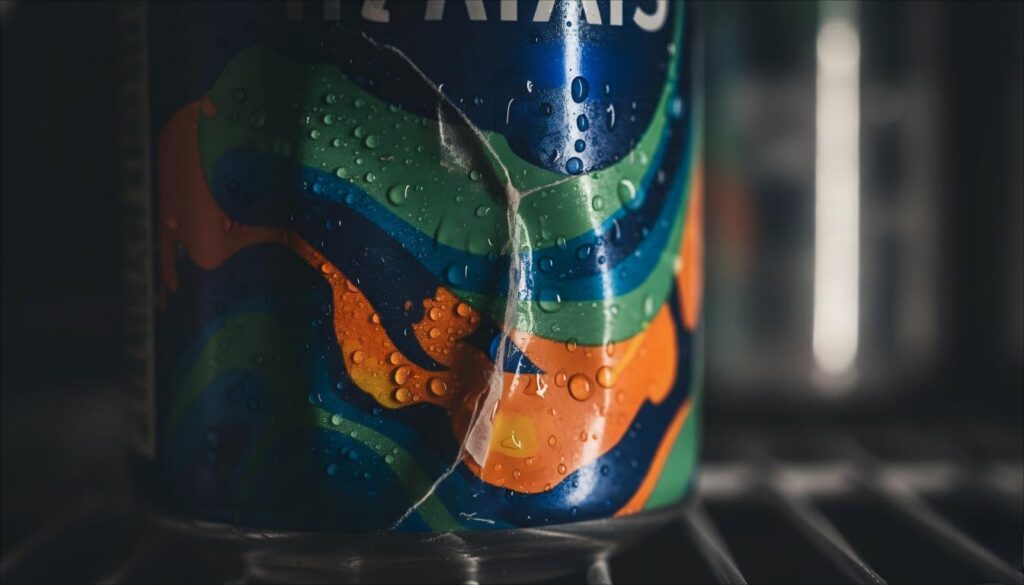
The coating is water-based, so it does not hold up well against moisture. When the finish gets wet, it can soften, smudge, or even peel away from the paper.
This makes it a bad choice for products that will be in humid environments. Do not use it for packaging stored in a refrigerator. It is also unsuitable for beverage bottle labels that might get wet.
3. It Does Not Stick to Smooth, Non-Porous Surfaces
Aqueous coating needs a porous surface to adhere correctly. It does not stick well to very smooth or slick materials, like paper that is already laminated or has a plastic film on it.
If you apply it directly to these surfaces, the coating can easily peel or flake off. It works best on standard, uncoated paper stocks where it can properly bond with the fibers.
Summary
In short, aqueous coating is a smart, versatile finish for many packaging needs. It offers a great balance of protection, cost, and eco-friendliness. It is the perfect solution when you need a safe, recyclable, and affordable coating for large-volume projects.
Choosing the right finish can be tricky. The experts at Letai Printing are here to help.
Contact Letai Printing today to discuss your project and get a custom quote.

I have honed my expertise in creating high-quality packaging solutions, bringing both innovation and efficiency to the field. I am passionate about delivering exceptional results and contributing to sustainable packaging practices.
 English
  Español
  Deutsch
  Français
  Italiano
  日本語
日本語  한국어
한국어  Русский
  Português do Brasil
  العربية