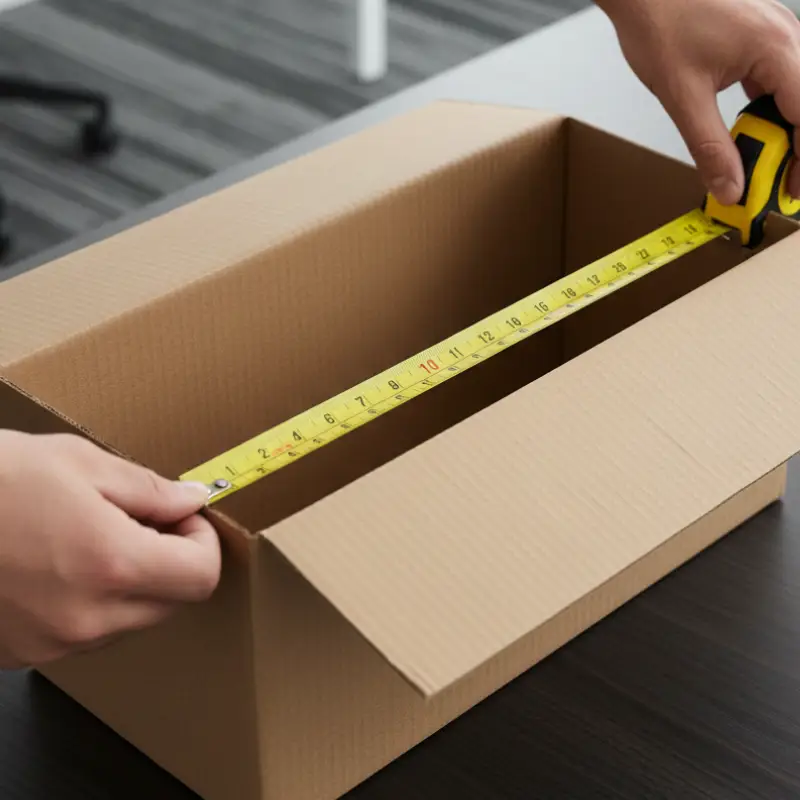
Measuring a corrugated box is crucial for ensuring that your products fit securely during transit. Accurate measurements help reduce shipping costs and prevent damages. This blog will guide you through the process, covering the key dimensions to consider and how to measure each one effectively.
When preparing for shipping, it’s essential to know the correct size of your corrugated box. Improper sizing can lead to wasted space, increased costs, and potential product damage. We will explain how to measure length, width, and height, and the common mistakes to avoid for perfect packaging every time.
What is a Corrugated Box?
A corrugated box is a type of packaging made from a combination of paperboard layers, typically consisting of a fluted inner layer between two flat outer layers.
This design provides strength, durability, and protection for products during transportation and storage. Corrugated boxes are lightweight yet sturdy, making them ideal for shipping various items, from fragile goods to bulk products, while being cost-effective and recyclable.
Corrugated Box Dimensions
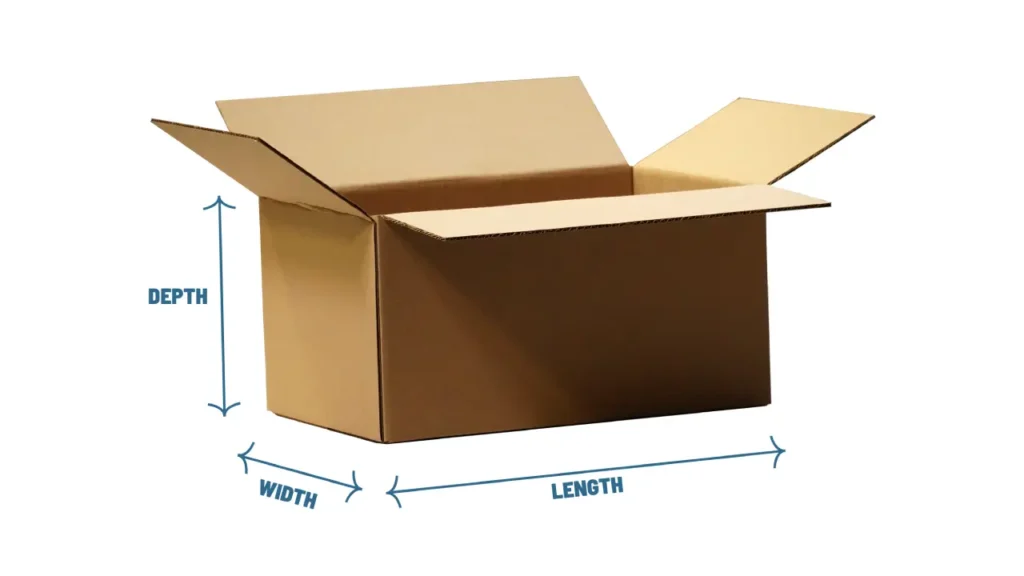
Understanding corrugated box dimensions is crucial for selecting the right box for shipping. The three key measurements to consider are length, width, and height. Each of these dimensions ensures that the box fits your product snugly and securely, helping to prevent damage and minimize shipping costs.
Length
The length of a corrugated box is the longest side, measured from one inner edge to the other. This dimension is essential for ensuring that your products fit within the box without being too long or cramped.
- Measure from the inside of one wall to the inside of the opposite wall.
- Avoid measuring the outer flaps as they are not part of the interior dimension.
- Ensure the product has a bit of extra space for padding or inserts.
Width
The width of the box is the shorter side, measured from inside edge to inside edge across the opening. Proper width ensures that the box accommodates the width of your product without causing it to shift or be too tight.
- Measure across the box’s inside edges to get an accurate width.
- Ensure the product fits snugly inside without excessive gaps.
- Adjust the width based on the product’s size and the need for cushioning.
Height
The height is the vertical dimension, measured from the bottom to the top of the box. This measurement is crucial for ensuring that taller products or stacked items fit securely without risk of crushing.
- Measure from the bottom of the box to the inside of the top.
- Don’t include the flaps when measuring the internal height.
- Ensure enough space to prevent the product from being compressed.
| Dimension | Measurement | Explanation |
|---|---|---|
| Length | Inside measurement from edge to edge | Ensures your product fits along the longest side. |
| Width | Inside measurement from edge to edge | Ensures your product fits across the shorter side. |
| Height | Inside measurement from bottom to top | Ensures vertical space is sufficient for your product. |
How to Measure a Corrugated Box?
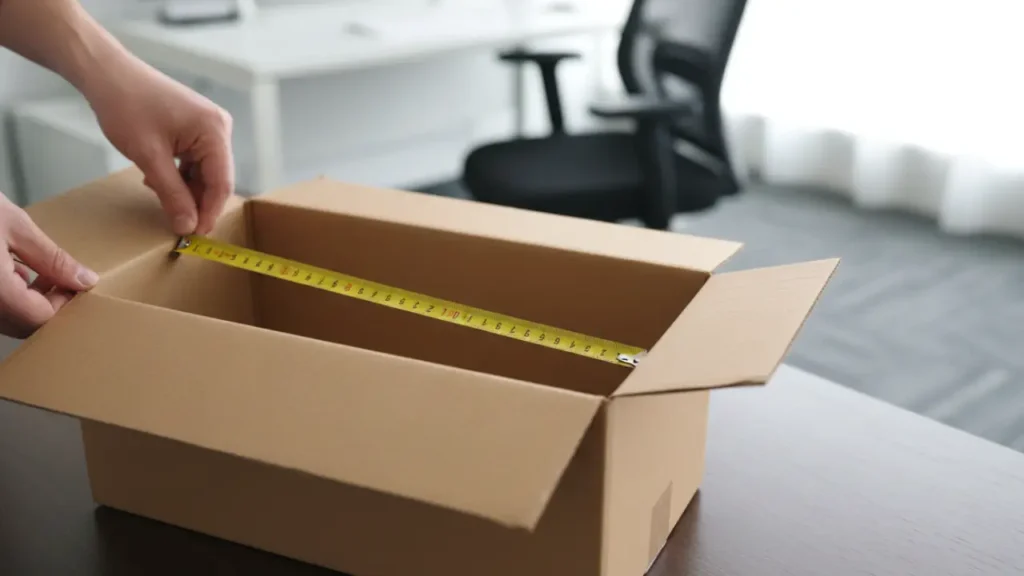
When it comes to measuring a corrugated box, accuracy is key. Knowing the right dimensions ensures that your products fit properly and are well-protected. Here’s a simple guide to help you measure your box correctly, so you can choose the best one for your shipping needs.
Tools Needed
- Measuring tape or ruler
- Calculator (optional)
- Notepad or pencil for recording measurements
Step 1: Measure the Length
Start by measuring the length of the box. Place the measuring tape along the longest side of the box, from one end to the other. This dimension is crucial when determining whether the box is large enough to fit your product or if a different size box is needed.
After measuring the length, be sure to record it accurately. If you’re unsure of the unit of measurement, double-check to ensure consistency, whether in inches or centimeters. This step is essential for a precise fit, as too much extra space can lead to damage or unnecessary shipping costs.
Step 2: Measure the Width
Next, measure the width of the box by placing the measuring tape across the shorter side. This dimension determines the box’s ability to accommodate the product’s width. Be sure to measure from edge to edge, keeping the tape parallel to the opening of the box for accuracy.
Record the width measurement once you’ve confirmed it. Consistency is essential for packaging your products efficiently. If you’re measuring multiple boxes, double-check each one to avoid any discrepancies. Accurate width measurements ensure that the box provides the best protection and prevents the need for extra cushioning material.
Step 3: Measure the Height
Finally, measure the height of the corrugated box by measuring from the base to the top. This dimension is particularly important for stacking and securing your products during shipping. Measure from the inside of the box to avoid including the outer flaps, ensuring a true height measurement.
Once you’ve completed the height measurement, write it down and double-check for accuracy. Correct height measurements are vital to ensure that your products are securely packed without excess room that could cause shifting or damage. Always measure carefully, especially for irregularly shaped items.
How to Measure Inner Dimension of a Corrugated Box?
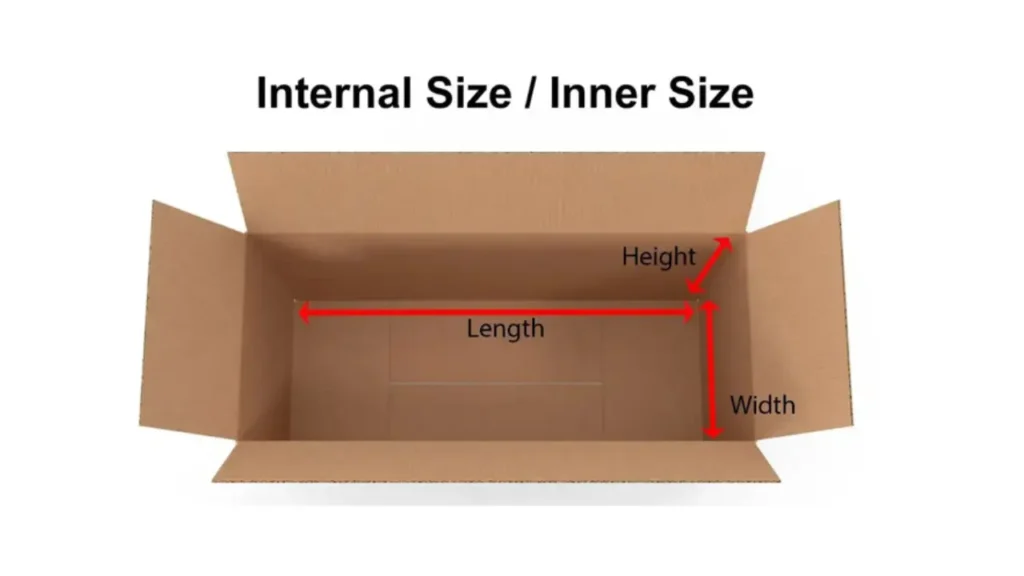
Measuring the inner dimensions of a corrugated box is critical for selecting the right box size to ensure your products fit securely. The process involves measuring the internal length, width, and height, which allows you to optimize the use of space, reduce shipping costs, and minimize the risk of product damage during transport.
Tools Needed
- Measuring tape or ruler
- Notepad or pencil for recording measurements
Step 1: Measure the Inner Length
To measure the inner length, place the measuring tape along the longest side of the inside of the box. Measure from one inner edge to the other, ensuring the tape lies flat against the box to get an accurate reading. This measurement is key in determining whether the box is long enough to accommodate your product.
Once you’ve measured the length, record the value in your preferred units (inches or centimeters). It’s important to ensure that the measurement does not include the thickness of the outer walls or flaps. By accurately measuring the inner length, you ensure the box offers the correct space for your items, preventing unnecessary gaps or an overly tight fit.
Step 2: Measure the Inner Width
Next, measure the inner width of the box by positioning the measuring tape across the shorter side, ensuring it rests against the inner edges. Measure the distance from one inner edge to the other, ensuring the tape is parallel to the box’s opening. This dimension is crucial for determining whether the box is wide enough for your product without it being too tight or too loose.
When measuring the width, always take note of any irregularities in the box’s shape, as some boxes may have slight variances due to manufacturing. Record the measurement accurately to ensure consistency with the length and height, as all three dimensions work together to ensure your product fits snugly inside the box.
Step 3: Measure the Inner Height
Finally, measure the inner height of the box by placing the tape from the inside bottom to the top inner edge. Make sure to measure the height straight up, avoiding the outer flaps, as they do not contribute to the available interior space. This measurement is critical for items that require vertical space to fit properly, like bottles or taller products.
Once you have the inner height measurement, record it carefully and double-check for accuracy. The correct height ensures your product is fully protected from top to bottom, preventing movement inside the box that could lead to damage. By measuring all three dimensions accurately, you can ensure a proper fit for your product and achieve more efficient packaging.
How to Choose Suitable Corrugated Box Sizes?
Selecting the right corrugated box size is essential for ensuring your products are securely packaged and shipped efficiently. The proper box size minimizes wasted space, reduces shipping costs, and provides adequate protection for your items. Here are some factors to consider when choosing the ideal box size for your needs.
Product Dimensions
The first step in choosing the right box size is knowing the exact dimensions of the product. Measure the length, width, and height of the item to ensure that the box provides a proper fit.
- Measure your product’s length, width, and height accurately.
- Consider if additional space is needed for cushioning materials like bubble wrap or foam.
- Choose a box size slightly larger than the product for proper protection.
Box Strength and Durability
The strength of the box should correspond to the weight and fragility of the product. Heavier or more delicate items require sturdier boxes to avoid damage during shipping.
- Choose a box with a weight rating that matches the product’s weight.
- Opt for double-wall or triple-wall corrugated boxes for fragile items.
- For lightweight items, single-wall boxes may suffice.
Shipping Requirements
Different shipping methods may require different box sizes. Ensure that the chosen box fits within the shipping carrier’s size restrictions and guidelines to avoid additional fees.
- Check the shipping carrier’s size limits and weight restrictions.
- Choose a box that aligns with standard shipping practices for your product.
- Consider the potential for stacking or handling during transportation.
Box Type
Corrugated boxes come in different types (e.g., regular slotted containers, full overlap, or padlock boxes), each with its own size flexibility and suitability for various products.
- Select the box type based on product weight and shape.
- Regular slotted containers work for most items, while custom boxes are ideal for unique shapes.
- Full overlap boxes offer extra strength for fragile or heavier items.
Conclusion
In conclusion, knowing how to measure a corrugated box is essential for achieving cost-effective, safe shipping. By carefully measuring length, width, and height, you can choose the right box for your needs. Always ensure that your product fits snugly without excessive empty space to reduce the risk of damage.
Letai Packaging offers a wide range of high-quality wholesale corrugated boxes, perfect for businesses looking to streamline their shipping processes. Our boxes are designed to be durable and customizable to meet your specific packaging needs. With Letai, you get reliable, cost-effective solutions for your packaging requirements.
Whether you’re shipping small items or larger goods, Letai Packaging ensures your products are securely packaged for delivery. Trust us for your wholesale corrugated box needs and experience exceptional service and competitive pricing. Get in touch today to find the perfect boxes for your business!

I have honed my expertise in creating high-quality packaging solutions, bringing both innovation and efficiency to the field. I am passionate about delivering exceptional results and contributing to sustainable packaging practices.
- What is a CBD Box? The Ultimate Guide - June 9, 2026
- Bangle Box Ideas: Inspiring Designs for a Clutter-Free Space - June 8, 2026
- What is a Bangle Box? The Ultimate Guide - June 8, 2026
 English
  Español
  Deutsch
  Français
  Italiano
  日本語
日本語  한국어
한국어  Русский
  Português do Brasil
  العربية