The strength of corrugated board plays a critical role in ensuring the safety and security of goods during shipping. With varying strengths available, choosing the right type of corrugated board can significantly reduce the risk of damage, improving overall product protection. This blog will explore why corrugated board strength matters for packaging.
When packaging products for transit, it’s essential to consider the board’s strength, as it directly affects how well your items are shielded from impact, compression, and environmental factors. Understanding this strength can help businesses select the ideal corrugated board type for different shipping needs, optimizing both protection and cost-efficiency.
What is Corrugated Board Strength?
Corrugated board strength refers to the material’s ability to withstand external forces such as compression, impact, and stacking pressure without deforming or failing.
It is determined by factors such as the thickness of the linerboard, the type of flute used, and the overall construction of the board. Stronger corrugated boards provide better protection for products during shipping, preventing damage from handling, stacking, and transportation.
How to Calculate Strength of Corrugated Box?

Calculating the strength of a corrugated box is essential for ensuring it can withstand the pressures of shipping and handling. By understanding the box’s strength, you can prevent product damage and optimize your packaging choices.
The strength is typically measured in terms of the box’s compression resistance and durability.
Tools Needed
- Caliper or ruler for measuring thickness
- Compression tester or test machine (optional)
- Notepad for recording data
Step 1: Measure the Corrugated Box Dimensions
Start by measuring the length, width, and height of the corrugated box. These measurements will be used to calculate the box’s volume and help estimate its strength capacity.
Use a ruler or caliper to measure the inside dimensions accurately. The length and width are critical for determining how much weight the box can support when stacked or placed under pressure during shipping.
Next, multiply the length, width, and height of the box to get the internal volume. This is important as larger boxes typically require stronger materials to support the added weight and size. Be precise when recording the dimensions, as any errors could affect the accuracy of the strength calculation.
Step 2: Measure the Material’s Burst Strength
Burst strength refers to the box’s resistance to pressure, usually measured in pounds per square inch (psi). You’ll need a burst strength tester or compression testing machine to determine this value.
Place a sample of the corrugated material into the tester and apply pressure until it bursts. This measurement indicates the maximum amount of force the material can withstand before failing, giving you a clear idea of its strength.
Once you have the burst strength reading, compare it to the weight of your typical products. Boxes with higher burst strength ratings are more suitable for heavier or fragile items. For general shipping, ensure that the burst strength meets or exceeds the requirements of your heaviest items to ensure adequate protection.
Compression Strength Formula for Corrugated Boxes
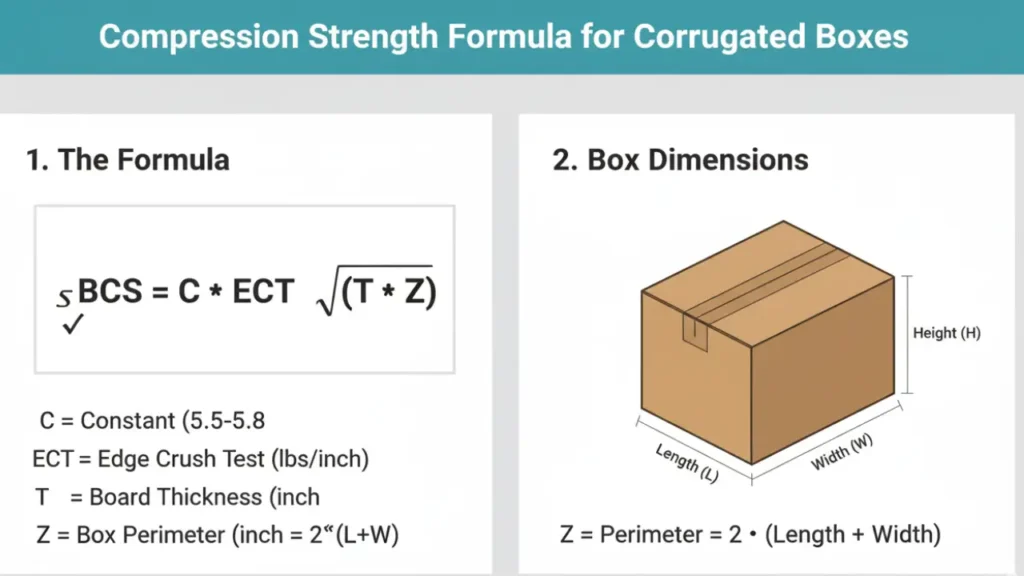
The compression strength of a corrugated box is a measure of how much weight or force it can withstand before being crushed. This is crucial for determining the box’s ability to hold up under pressure during storage and shipping.
Below is the formula used to calculate compression strength.
Formula for Compression Strength
The basic formula for calculating the compression strength is:
Compression Strength (C) = (Box Compression Strength) / (Box’s Area)
- The formula helps to measure how well a box can handle weight before succumbing to pressure.
- The area of the box’s base plays a crucial role in determining how much weight it can hold.
Corrugated Box Compression Strength Calculator
Factors Affecting Compression Strength
Several factors influence the compression strength of corrugated boxes.
- The flute size and type determine the internal structure of the box and its ability to resist crushing.
- Material composition, such as the type of linerboard and number of layers, impacts overall strength.
- Proper box design and the quality of the corrugated material also contribute to the box’s compression resistance.
Why Corrugated Cardboard is Strong?
Corrugated cardboard is known for its strength and durability, making it a popular choice for packaging. Its unique structure, combining layers of paper and a fluted core, gives it the ability to withstand pressure, impact, and compression. Here’s why this material is so strong.
Structure
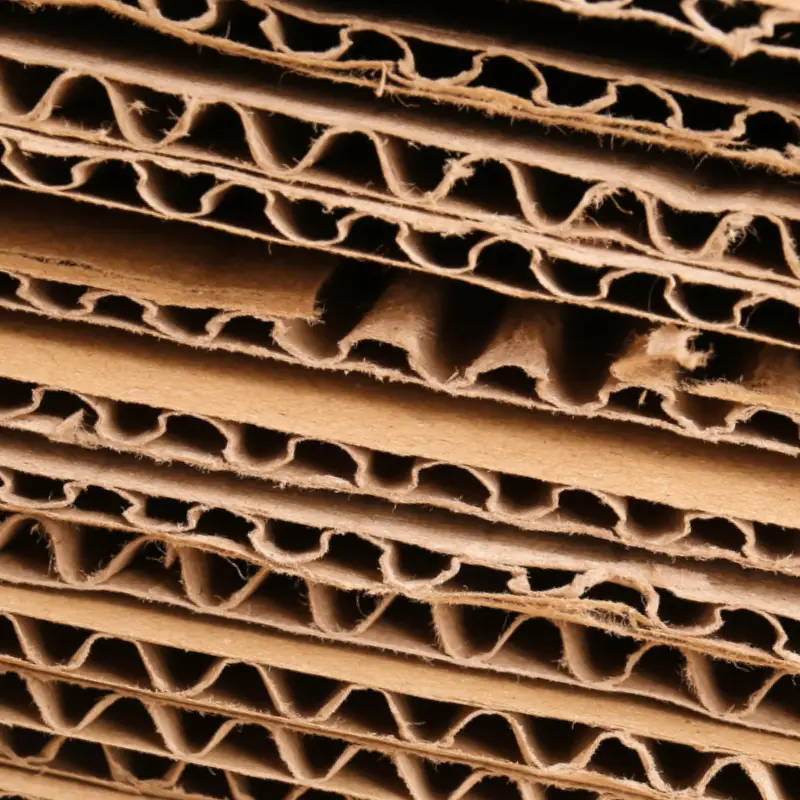
The key to corrugated cardboard’s strength lies in its layered construction: the fluted inner layer creates a cushion of air, offering shock absorption and resistance to crushing; the two flat outer liners provide additional strength and rigidity, ensuring the board can handle heavier loads without compromising its integrity.
Material Composition
The materials used in corrugated cardboard contribute to its strength: made from recycled paper or virgin fibers, it’s designed to offer strength while remaining lightweight; the combination of fibers in the linerboard and fluting adds to its compressive strength, allowing it to bear weight without collapsing or buckling.
Flexibility and Durability
Corrugated cardboard can adapt to various pressures without failing: the fluted structure allows it to bend and absorb forces, making it ideal for packaging fragile items; its flexibility also helps it endure the rigors of transportation, providing consistent protection against impacts and shifting during shipping.
Cost-Effective Strength
Despite its superior strength, corrugated cardboard is an affordable packaging solution: it offers a balance of strength, lightness, and cost-efficiency, making it a go-to option for many industries; the material’s ability to be customized into various sizes and shapes further increases its practicality while maintaining affordability.
How to Improve Corrugated Board Strength?
Improving the strength of corrugated board packaging ensures better protection during shipping and handling. By enhancing the durability of the material, businesses can reduce product damage and improve customer satisfaction.
Below are some methods to strengthen corrugated board to ensure it provides optimal protection for your products.
Increase Flute Size
Increasing the flute size in the corrugated board design significantly enhances its strength and cushioning ability. Larger flutes provide better shock absorption, making the board more resistant to compression, impacts, and other forces that may occur during transportation. This makes it ideal for protecting fragile or heavy items, as the added cushioning helps prevent damage.
Use Double or Triple-Wall Construction
Double or triple-wall construction involves adding additional layers of fluted material between the linerboards, which greatly improves the overall strength of the corrugated board. Double-wall boxes are stronger and more resistant to external pressures, making them suitable for medium to heavy-duty packaging. Triple-wall construction offers the highest level of protection, ideal for very heavy or fragile items, ensuring durability in harsh shipping conditions.
Strengthen the Linerboard
The strength of the linerboard plays a crucial role in the overall durability of the corrugated board. By using stronger materials for the linerboard, such as virgin fibers, you increase the overall strength of the box. Virgin fiber linerboards are less prone to tearing or bending, providing added rigidity and better resistance to weight and pressure compared to recycled fibers.
Add Coatings or Laminations
Coating or laminating the surface of corrugated cardboard can enhance its strength by providing additional protection against moisture, dirt, and other environmental factors. For instance, applying a wax coating or polyethylene lamination adds a layer of water resistance, preventing the board from weakening or losing strength when exposed to humid or wet conditions. This also increases the material’s durability in rough handling scenarios.
Optimize Box Design
Optimizing the corrugated box design can significantly improve its strength. Properly sized boxes that fit products snugly help reduce the chance of crushing during transit, as excess empty space can lead to instability. Additionally, reinforcing box corners and edges during the design process further enhances the box’s overall structural integrity, ensuring greater protection against pressure and impact.
Corrugated Box Strength Guidelines
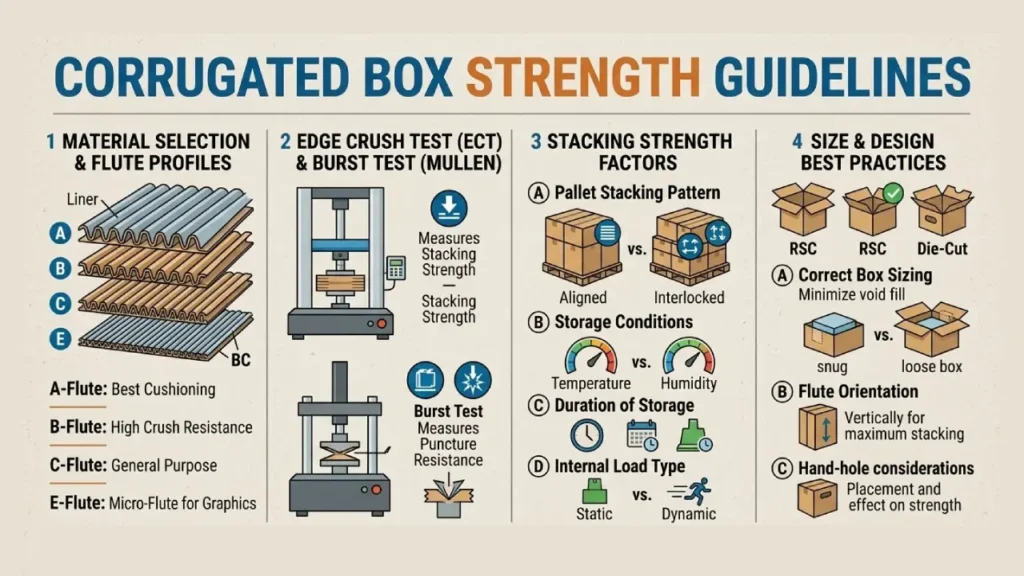
When selecting a corrugated box, it’s essential to understand the strength requirements to ensure your products are adequately protected during shipping. The strength of a box is determined by several factors, including the material, construction, and design. Here are some important guidelines to consider when choosing the right corrugated box.
Material Type
The type of material used in the corrugated box affects its strength.
- Use virgin fiber for higher strength and durability, especially for heavy or fragile items.
- Recycled fibers offer cost-effective solutions for lightweight products but may be less durable.
- Consider the box’s intended use and required strength when selecting the material type.
Flute Profile
The corrugated cardboard flute size plays a significant role in the box’s strength.
- C-flute is the most common and provides a good balance between strength and cushioning.
- B-flute is thinner and better for items that need more surface area for printing or lighter protection.
- E-flute offers excellent print quality but is less protective for heavy items.
Box Construction
The construction of the box can significantly impact its strength.
- Single-wall boxes are suitable for light to medium-weight products.
- Double-wall boxes offer extra protection for heavier or fragile items, making them ideal for shipping delicate goods.
- Triple-wall boxes provide the highest level of strength for very heavy or bulky items.
Box Size
Choosing the right box size is essential for ensuring strength and protection.
- A box that’s too large may cause products to shift and become damaged.
- Conversely, an overly tight box can cause compression, damaging the product inside.
- Properly sized boxes prevent unnecessary movement and provide maximum protection.
Testing for Strength
Testing a box’s strength helps ensure it meets the necessary standards for your products.
- Conduct compression tests to evaluate the box’s load-bearing capacity.
- Perform burst strength tests to check resistance to pressure.
- Use edge crush tests to assess the board’s ability to withstand side pressure.
Conclusion
In conclusion, the strength of corrugated board is a crucial factor when selecting packaging materials for shipping. A well-chosen corrugated board can enhance product safety by providing the right balance between durability and weight. It ensures that items reach their destination intact and in excellent condition, minimizing the risk of product damage.
By understanding how corrugated board strength impacts your packaging, you can make better-informed decisions, saving money while enhancing the security of your shipments. Factors such as flute profile, board thickness, and weight ratings all contribute to the overall strength of the material, which should align with your specific shipping requirements.
At Letai Packaging, we offer a range of high-quality wholesale corrugated box packaging to meet diverse business needs. Our durable and customizable solutions are designed to ensure your products are well-protected during transit. Contact us today to find the perfect corrugated packaging for your business!

I have honed my expertise in creating high-quality packaging solutions, bringing both innovation and efficiency to the field. I am passionate about delivering exceptional results and contributing to sustainable packaging practices.
- What is a CBD Box? The Ultimate Guide - June 9, 2026
- Bangle Box Ideas: Inspiring Designs for a Clutter-Free Space - June 8, 2026
- What is a Bangle Box? The Ultimate Guide - June 8, 2026
 English
  Español
  Deutsch
  Français
  Italiano
  日本語
日本語  한국어
한국어  Русский
  Português do Brasil
  العربية