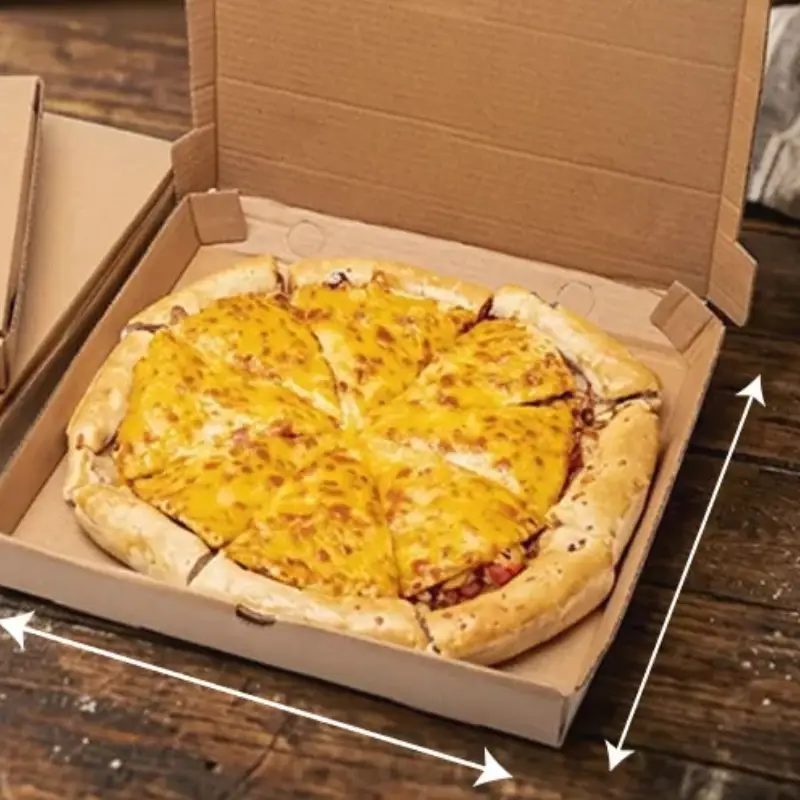
Choosing the right pizza box sizes is essential for any pizzeria or delivery service. The right box keeps your pizza fresh, prevents damage during transport, and enhances customer satisfaction. Understanding standard sizes and how they fit different pizza types can save both time and money in your operations.
Smarter pizza box selection also means reducing unnecessary packaging costs. By matching box sizes to your menu offerings and optimizing your ordering strategy, you can cut waste, improve efficiency, and maintain consistent quality. Small changes in box choices can lead to significant savings without compromising presentation or safety.
How to Measure Pizza Box Sizes?

Measuring pizza box sizes accurately ensures the right fit for your pizzas, reduces waste, and improves delivery efficiency. Knowing the correct dimensions helps you order the proper pizza boxes, avoid excess costs, and maintain presentation quality. This guide walks you through the steps for precise measurement.
Step 1: Gather Your Tools
Tools Needed:
- Measuring tape or ruler
- Notebook and pen
- Calculator (optional)
Start by collecting the right tools to ensure accuracy. A measuring tape or ruler helps you get precise dimensions, while a notebook allows you to record measurements. A calculator is handy for conversions or comparing multiple box sizes efficiently.
Measure the box length, width, and height carefully, recording each dimension. Double-check your numbers to prevent errors that could affect box fit or cost. Consistent measurements save time when ordering wholesale boxes and help maintain uniform packaging across all pizza types.
Step 2: Measure Length and Width
Place the box on a flat surface before measuring. Measure the inside length and width from corner to corner to get the usable space for pizzas. This ensures your pizza fits snugly without damage during transport or delivery.
Repeat measurements for multiple boxes to check consistency. Recording these dimensions allows you to compare different box sizes and select the most cost-effective options. Accurate length and width measurements prevent ordering oversized boxes that increase packaging costs unnecessarily.
Step 3: Measure Height
Measure the internal height of the box from base to lid. This step ensures the pizza and toppings fit comfortably without squashing, maintaining presentation and quality during delivery or storage.
Check heights for various pizza types, including thick-crust or loaded pizzas. Proper height measurement prevents damage, avoids waste, and ensures consistent packaging standards. It also helps when choosing the right stackable boxes for storage efficiency.
Pizza Box Sizes

Choosing the right pizza box sizes is crucial for pizza quality, delivery efficiency, and cost management. Proper box sizing ensures pizzas remain fresh, toppings stay intact, and customers receive a professional presentation.
Understanding standard and custom sizes helps pizzerias optimize operations and reduce waste.
Benefits of Using Correct Pizza Box Sizes:
- Keeps pizzas fresh during transport
- Prevents toppings from getting squashed
- Reduces packaging costs and waste
- Improves customer satisfaction
- Streamlines storage and inventory management
Matching pizza box size to pizza type ensures efficiency in storage and delivery. For example, small boxes suit personal pizzas, medium boxes fit standard pies, and large boxes accommodate party-sized orders. Choosing wisely prevents excess material use and maintains consistent quality.
Common Pizza Box Size Chart:
| Pizza Type | Typical Diameter | Recommended Box Size | Notes |
|---|---|---|---|
| Personal | 6–8 inches | Small | Single-serving pizza |
| Standard | 10–12 inches | Medium | Most common restaurant size |
| Family / Party | 14–16 inches | Large | Serves 3–4 people |
| Extra Large / XL | 18+ inches | Extra Large | Party or specialty pizza |
How to Make a Pizza Box Smaller?
Making a pizza box smaller can help reduce packaging waste, save storage space, and match pizza sizes more accurately. Whether you have leftover large boxes or need custom solutions, adjusting box dimensions ensures your pizzas remain fresh and protected while cutting unnecessary material costs.
Step 1: Gather Your Tools
Tools Needed:
- Measuring tape or ruler
- Box cutter or scissors
- Tape or glue
- Marker or pencil
Start by collecting all necessary tools for safely resizing your pizza box. Measuring tools ensure accurate cuts, while a box cutter or scissors allow precise trimming. Tape or glue is essential to secure the new edges and maintain box stability.
Measure the current dimensions of your pizza box and decide the target size. Mark the cut lines clearly with a pencil or marker to ensure even adjustments. Accurate marking prevents mistakes and ensures the resized box maintains structural integrity for holding your pizza safely.
Step 2: Trim the Box
Carefully cut along the marked lines using a box cutter or scissors. Take your time to ensure clean, straight edges to prevent weak points that could compromise the box’s strength. Always work on a flat surface for safety and precision.
After cutting, fold the flaps to form the new box shape. Reinforce corners and edges with tape or glue to maintain durability. Check that the pizza fits comfortably inside without squeezing, ensuring proper presentation and protection during transport or storage.
Step 3: Test the Resized Box
Place a pizza inside the resized box to verify the fit. Ensure there is enough room for toppings, and the box closes securely without bending or warping. Adjust minor edges if necessary to perfect the fit.
Testing confirms the structural integrity of the smaller box. A well-measured and reinforced box maintains pizza quality during delivery. This step ensures your resized box is practical for daily use, saving costs while keeping pizzas safe and presentable.
How to Choose Suitable Pizza Box Sizes?
Choosing suitable pizza box sizes is essential for pizza quality, customer satisfaction, and cost management. The right box protects your pizza during delivery, prevents toppings from getting squashed, and ensures presentation looks professional. Knowing standard and custom sizes helps pizzerias save money and reduce waste.
Key Factors to Consider When Choosing Pizza Box Sizes:
- Pizza diameter and thickness
- Type of crust and toppings
- Delivery or takeout requirements
- Storage space availability
- Cost efficiency and material use
Selecting the correct box size ensures pizzas fit snugly without unnecessary empty space. A snug fit prevents the pizza from sliding during transport, reduces packaging waste, and maintains the temperature. Proper sizing also enhances the unboxing experience for customers, adding to perceived quality.
Different pizzas require different boxes. Personal or small pizzas need compact boxes, while family or party-sized pizzas require larger boxes. For specialty pizzas with extra toppings or deep-dish styles, taller boxes may be needed. Matching box size to pizza type improves efficiency, reduces waste, and protects pizza quality.
Conclusion
Selecting the proper pizza box sizes directly impacts your bottom line and customer experience. Using appropriately sized boxes minimizes product damage, reduces waste, and lowers packaging costs. For pizzerias looking to streamline operations, understanding these choices is crucial for long-term success and profitability.
Investing in wholesale pizza boxes ensures your pizzas reach customers in perfect condition. At Letai Packaging, we provide durable, customizable options designed to fit every pizza size and style. Our range of boxes supports both small restaurants and large chains, helping you save on costs while maintaining professional presentation.
Partnering with Letai Packaging means consistent supply, competitive pricing, and tailored solutions for your business. Whether you need standard, eco-friendly, or branded pizza boxes, we help you select the best options to match your menu. Let us support your growth by providing reliable packaging that keeps customers happy.

I have honed my expertise in creating high-quality packaging solutions, bringing both innovation and efficiency to the field. I am passionate about delivering exceptional results and contributing to sustainable packaging practices.
- What is a CBD Box? The Ultimate Guide - June 9, 2026
- Bangle Box Ideas: Inspiring Designs for a Clutter-Free Space - June 8, 2026
- What is a Bangle Box? The Ultimate Guide - June 8, 2026
 English
  Español
  Deutsch
  Français
  Italiano
  日本語
日本語  한국어
한국어  Русский
  Português do Brasil
  العربية