Gravure printing and flexo printing are two popular methods used in packaging and printing industries. While both offer high-quality results, they differ in the technology used, the types of substrates they work best with, and the costs involved. Understanding their differences can help businesses make informed decisions for their printing needs.
Gravure printing is a high-speed process primarily used for long-run printing jobs. It involves engraving an image or design onto a cylinder, making it ideal for large-scale productions. On the other hand, flexographic printing uses flexible plates to transfer ink onto various materials, making it more versatile but typically suited for shorter runs or less intricate designs.
What is Gravure Printing?
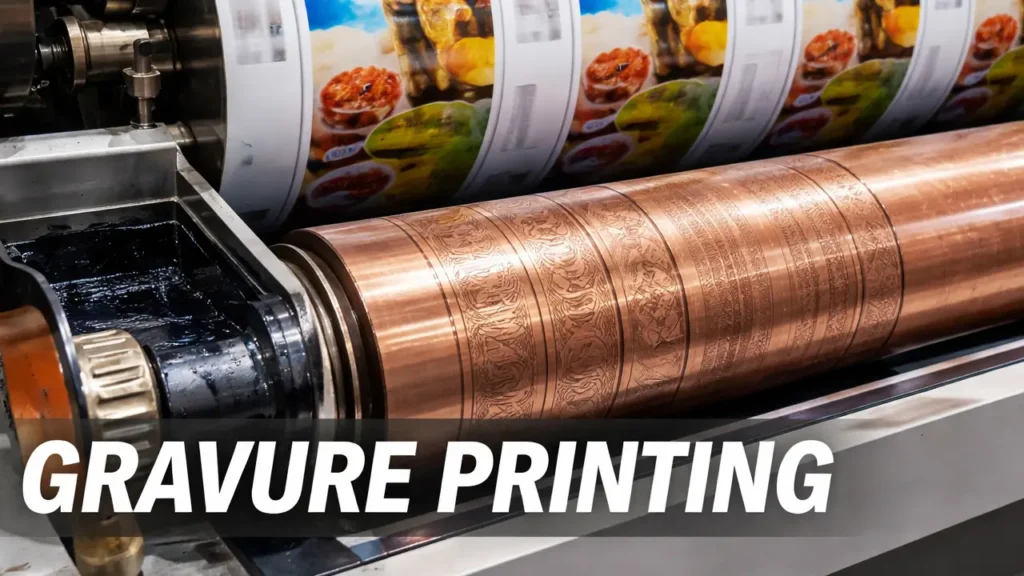
Gravure printing is a high-speed printing process used primarily for large-scale production runs. It involves engraving an image onto a cylinder, which transfers ink onto the substrate. It’s ideal for long-run printing projects, offering excellent color reproduction and durability. This method is most commonly used for packaging, labels, and magazines.
Benefits of Gravure Printing:
- High Print Quality: Gravure offers exceptional print quality, providing sharp, detailed images and vibrant colors. The engraved cylinder transfers ink consistently, producing fine details and smooth gradients. This makes it ideal for high-end packaging or magazines that require top-tier aesthetics.
- Cost-Effective for Long Runs: While the setup cost is high, gravure printing is cost-efficient for large volumes. The high-speed production capability of the engraved cylinder allows for quicker turnarounds, which significantly reduces the per-unit cost as production scales.
- Versatility with Substrates: Gravure printing is compatible with a wide range of substrates, from paper and plastic to metallic and film materials. This versatility makes it a popular choice for industries such as packaging, textiles, and labels, where various materials are needed for different applications.
- Durability and Consistency: Gravure prints offer superior durability, particularly in outdoor and high-usage environments. The deep ink penetration ensures that prints are resistant to fading, scratching, and wear over time. This durability is crucial for packaging that must endure handling and storage conditions.
What is Flexo Printing?
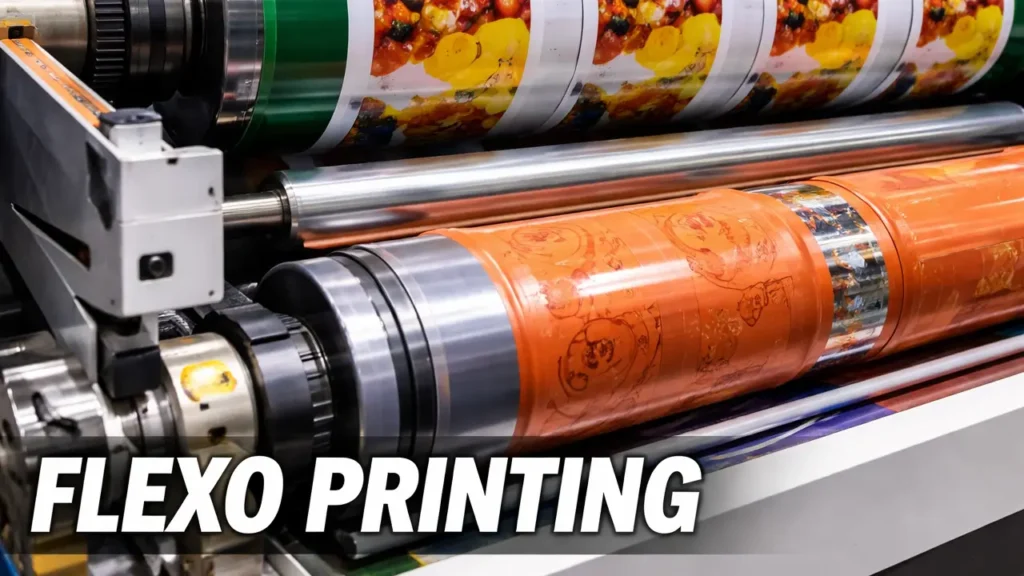
Flexo printing, also known as flexography, is a relief printing process that uses flexible plates to transfer ink onto various substrates. It’s a versatile and efficient method commonly used for printing on packaging materials like plastic, paper, and corrugated board. Flexo is ideal for both short and long production runs and can print on a wide range of materials.
Benefits of Flexo Printing:
- Versatility with Materials: Flexo printing excels at printing on a variety of substrates, including paper, films, corrugated board, and even non-porous materials like foil and plastic. Its adaptability makes it ideal for industries such as food packaging, labels, and flexible packaging.
- Cost-Effective for Short Runs: Flexo printing is relatively affordable compared to other methods like gravure, especially for shorter print runs. Its ability to quickly switch between different materials and designs makes it an efficient option for businesses with smaller production needs or frequent changes in design.
- Fast Setup and Production: Flexo printing offers quick turnaround times due to its fast setup and production speeds. The flexible plates used in the process are easier and faster to produce than engraved cylinders, making it a popular choice for industries requiring efficient workflows and fast production cycles.
- Eco-Friendly Ink Options: Flexo printing uses water-based or UV-cured inks, which are more environmentally friendly compared to solvent-based inks used in other printing methods. This reduces emissions and makes flexo a more sustainable option for businesses focused on green packaging or minimizing their environmental impact.
Gravure Printing vs Flexo
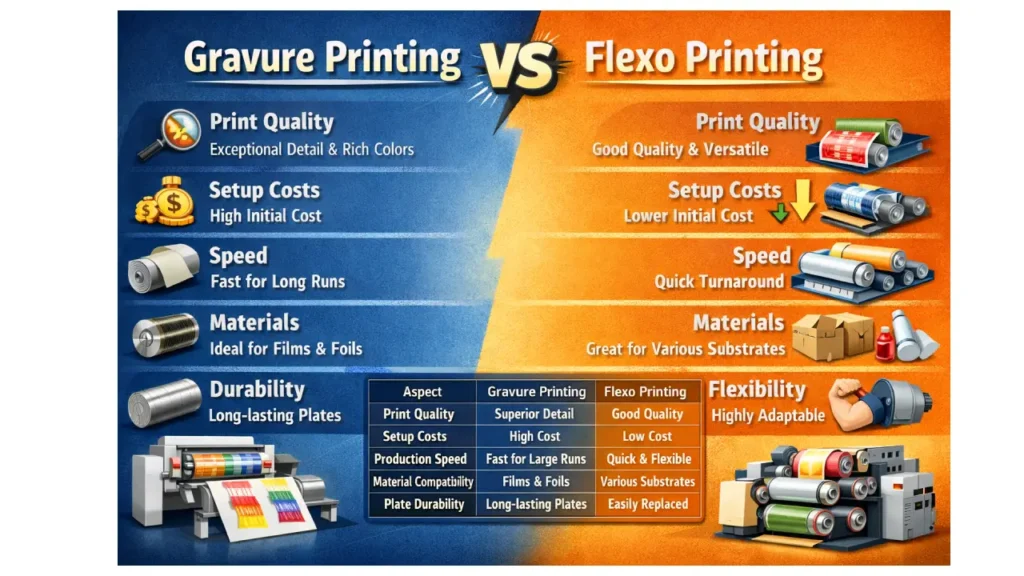
Gravure printing and flexo printing are two of the most widely used methods in the printing industry. Both offer high-quality results but cater to different production needs and materials. The primary differences between these techniques stem from setup costs, material compatibility, and production speed. Here’s a detailed comparison to help you choose the right method for your project.
Setup and Production Cost
Gravure printing involves higher initial setup costs due to the engraving of cylinders, making it ideal for large-scale, long-run productions. In contrast, flexo printing has lower setup costs, as it uses flexible plates that are quicker and less expensive to produce. This makes flexo a more affordable option for shorter print runs and quick production needs.
Gravure is cost-effective for projects with large quantities, as the per-unit price decreases significantly with volume. However, for smaller runs, flexo provides better value due to its low setup costs. The cost-effectiveness of each method depends on the scale of your print job and how quickly you need to complete it.
Material Compatibility
Gravure printing excels in printing on a wide variety of materials, including paper, plastic films, and metal foils. The process works well for smooth, non-porous surfaces, making it perfect for high-end packaging and magazines. Flexo printing, on the other hand, is highly versatile and can print on a broader range of substrates, including textured and porous materials like corrugated board, paper, and plastic.
Flexo’s flexibility allows it to adapt to many different materials, which is why it’s commonly used in the food and beverage packaging industry. Gravure is typically used for higher-end, durable packaging solutions, where print quality and long-lasting durability are key considerations.
Print Quality
Gravure printing is known for its sharp and precise print results. The engraved cylinders produce fine details and smooth gradients, making them the preferred choice for jobs that require a high level of detail and color consistency. Flexo printing, while capable of producing prints, is generally not as detailed as gravure. However, it can still produce vibrant colors and is suitable for most packaging needs.
For industries where premium quality prints are a must, such as luxury packaging or high-end magazines, gravure printing is the go-to method. However, flexo offers satisfactory quality for many other industries and is particularly effective for shorter runs where quick turnaround times are more important than intricate details.
Production Speed
Gravure printing is a high-speed process, making it ideal for large-scale, high-volume production. The engraved cylinder can produce consistent prints quickly, reducing production times significantly for large print jobs. Flexo printing, while also fast, tends to be slower in terms of setup time but can still maintain quick production speeds once the setup is complete.
If you’re working on large-volume projects with tight deadlines, gravure printing is the best option. However, flexo’s quick changeover time and ability to print on a variety of materials make it a versatile choice for both long and short runs, allowing for more flexibility in production scheduling.
Environmental Impact
Flexo printing is considered more environmentally friendly compared to gravure printing. It uses water-based or UV-curable inks, which are less harmful to the environment. Gravure printing often relies on solvent-based inks, which can emit harmful VOCs (volatile organic compounds) into the atmosphere. This makes flexo a better choice for companies looking to reduce their environmental impact.
For companies committed to sustainability, flexo printing provides an eco-friendly option without compromising on print quality. Gravure printing, while highly effective for certain applications, may not align as well with sustainability goals due to the nature of its ink and solvent usage.
Here are some differences between gravure printing and flexo printing:
| Aspect | Gravure Printing | Flexo Printing |
|---|---|---|
| Setup Cost | High due to cylinder engraving | Low with flexible plate production |
| Material Compatibility | Works well with smooth, non-porous materials | Can print on a variety of materials (textured, porous) |
| Print Quality | High-quality, precise, and detailed | Satisfactory quality, but less fine detail |
| Production Speed | High-speed, best for large runs | Fast once setup is done, but slower setup |
| Environmental Impact | Uses solvent-based inks, higher VOCs | Uses water-based or UV-cured inks, eco-friendly |
How to Choose Gravure Printing and Flexo Printing?
Choosing between gravure and flexo printing depends on factors such as production volume, material compatibility, print quality, and environmental considerations. Understanding your specific needs can help you select the method that offers the best balance of cost, quality, and efficiency.
Here are key factors to consider when making your decision.
- Production Volume: Gravure printing is ideal for large-scale, high-volume jobs due to its efficient setup for mass production. The per-unit cost decreases significantly as production increases. For small to medium runs, flexo printing offers quicker turnarounds and lower setup costs, making it more affordable for smaller jobs.
- Material Types: Gravure printing is suitable for smooth, non-porous materials, such as glossy paper, plastic films, and foils, where high-quality images are required. Flexo printing excels on a wide variety of materials, including textured and porous ones like paperboard, corrugated materials, and films, offering more versatility for different applications.
- Print Quality: Gravure offers exceptional print quality with sharp, vibrant, and detailed images, making it perfect for high-end applications like luxury packaging and magazines. Flexo printing produces vibrant colors but is slightly less detailed than gravure. It’s better suited for industries where high-quality detail is less critical than versatility.
- Turnaround Time: Gravure printing requires more setup time due to cylinder engraving, which makes it ideal for long-run projects. Flexo printing, on the other hand, has faster setup times and is better suited for shorter runs or quick production cycles. If speed is crucial, flexo may be the more efficient choice.
- Environmental Considerations: Flexo printing is more eco-friendly, using water-based or UV-curable inks that produce fewer harmful emissions. Gravure printing often involves solvent-based inks that can emit volatile organic compounds (VOCs). If sustainability is a priority for your brand, flexo may be a more environmentally responsible option.
Conclusion
When choosing between gravure and flexo printing, the decision largely depends on the scale of production and material requirements. Gravure is perfect for mass production, offering detailed prints and superior color reproduction, but it comes with higher setup costs. Flexo printing, while not as intricate, is cost-effective for shorter runs and flexible materials.
For businesses seeking cost-effective packaging solutions, flexo printing offers a great balance of affordability and quality. It’s ideal for industries that require printing on a wide variety of materials such as films, plastics, and corrugated boards. Flexo’s versatility ensures it can meet the diverse needs of custom packaging.
If you’re looking for reliable, wholesale custom packaging, Letai Packaging offers top-notch solutions to fit your business’s requirements. With years of experience in the industry, they provide high-quality printing methods and packaging options that help enhance your brand and product appeal. Choose Letai Packaging for exceptional service and quality.

I have honed my expertise in creating high-quality packaging solutions, bringing both innovation and efficiency to the field. I am passionate about delivering exceptional results and contributing to sustainable packaging practices.
- What is a CBD Box? The Ultimate Guide - June 9, 2026
- Bangle Box Ideas: Inspiring Designs for a Clutter-Free Space - June 8, 2026
- What is a Bangle Box? The Ultimate Guide - June 8, 2026
 English
  Español
  Deutsch
  Français
  Italiano
  日本語
日本語  한국어
한국어  Русский
  Português do Brasil
  العربية