Gravure printing creates the world’s highest-quality images with perfect consistency. he global gravure printing services market projected to reach USD 64.91 billion by 2030. So, what is gravure printing? This guide will explain the process, its pros and cons, and where it is used.
What is Gravure Printing
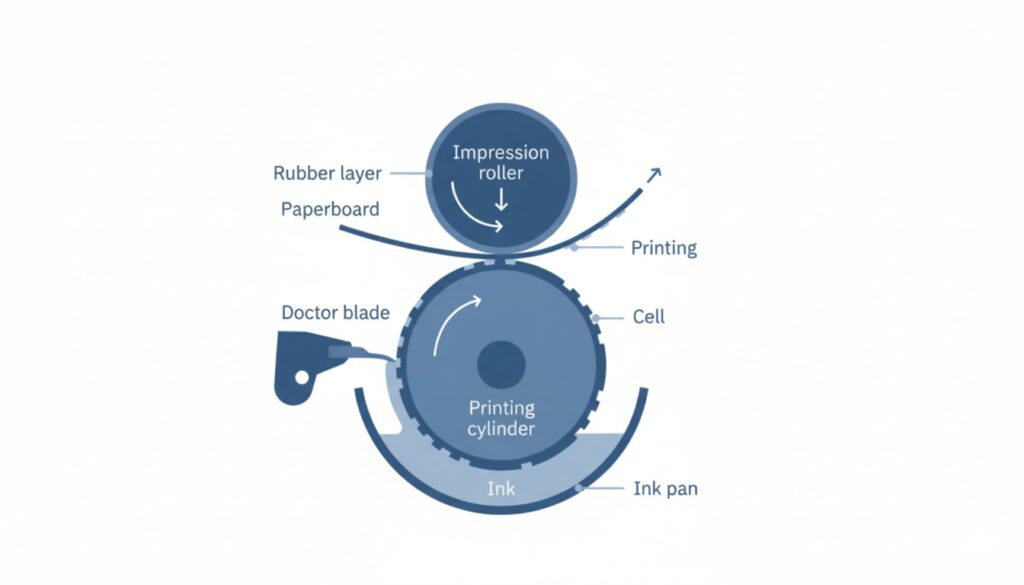
Gravure printing is a type of intaglio printing, meaning the image is engraved directly onto a metal cylinder. This cylinder, especially copper-plated, has millions of tiny recessed cells that hold the ink.
The depth and size of these cells vary, which controls the amount of ink transferred to the paper.
This allows the process to create images with rich, continuous tones and exceptional detail. The cylinders are very durable. So gravure printing produces perfectly consistent results for even millions of impressions.
What is Gravure Printing Process
The gravure process follows a core principle. Recessed cells hold the ink. A blade controls the amount of ink. Then, pressure transfers the ink to create the image.
The process starts with the gravure cylinder. This is a copper-plated metal roller. A machine electronically engraves the image onto the cylinder’s surface.
This creates millions of tiny cells. The depth of these cells is very important. Deeper cells hold more ink for dark areas like black text.
Shallower cells hold less ink for light areas like soft gradients. This variable depth allows gravure to produce rich and detailed colors.
Next, the cylinder gets inked. It rotates through a bath of ink which fills every engraved cell. A thin metal “doctor blade” then scrapes the cylinder’s smooth surface.
This action removes all the excess ink. Ink remains only inside the recessed cells. This method provides extremely precise ink control. The error margin is often just ±1%.
Finally, the ink transfers to the printing material. This material is called the substrate. An impression roller presses the substrate firmly against the gravure cylinder.
This pressure lifts the ink from the cells onto the substrate. The final ink layer is thick, typically 5 to 15 micrometers. This thickness creates intense color saturation. It also gives the print excellent resistance to rubbing and scuffs.
The Advantages of Gravure Printing and What is Gravure Printing Used for?
Gravure printing has key advantages. These strengths shine in high-end, high-volume packaging. For these jobs, gravure is not just an option. It is often the only process that delivers top quality and durability.
1. Superior Flexible Packaging
Many packages must resist oil, water, and solvents. Think of composite flexible packaging. This includes food packets, cosmetic tubes, and foil bags.
These products have tough requirements. They must block moisture and oil. They need a high-quality look. They also must resist scuffs during shipping.
Gravure printing’s thick ink layer and special inks are the perfect solution.
Gravure can use special solvent or water-based inks. After drying, the ink layer forms a dense film. This film blocks oil and water.
It prevents ink from moving into food, meeting strict safety standards. Gravure prints consistently pass industry tests for oil resistance and friction, surviving hundreds of rubs without color loss.
This process also works well for curved packages. Cosmetic tubes need ink that adheres strongly.
Gravure’s pressure transfer process ensures the ink sticks tightly to the tube’s surface. This prevents logos and text from flaking off during use. It helps preserve a brand’s premium image.
2. High-Quality Anti-Counterfeit Packaging
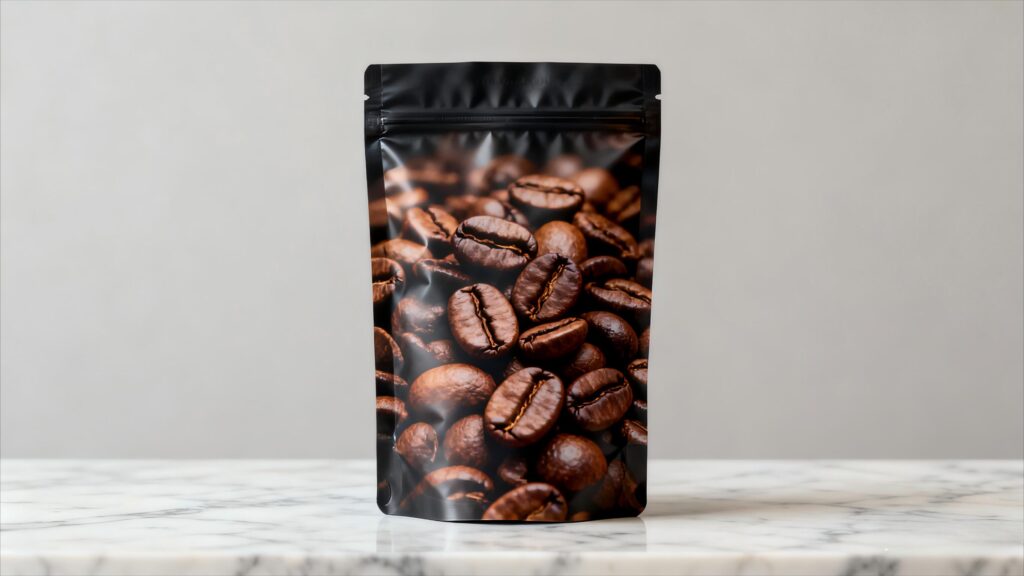
Tobacco and liquor packaging demand extreme quality. They also need strong anti-counterfeit features. These packages require fine details, a metallic shine, and hidden security textures. Gravure’s precise electronic engraving and thick ink layer achieve all of this perfectly.
Gravure’s engraved cells create perfect, smooth gradients. It avoids the visible patterns or breaks found in other printing methods. Its dot reproduction accuracy is extremely high. Gravure can also print special metallic inks, like gold and silver.
The thick ink layer creates a rich metallic shine that is very durable. Manufacturers can also engrave hidden anti-counterfeit textures, like micro-text, into the cylinder. This text is only visible with a magnifying glass.
This combination of features creates a powerful barrier against forgery, making the packaging significantly harder to replicate accurately.
3. Durable Outdoor and Long-Term Packaging
Outdoor packaging needs to be very tough. Bags for agricultural or industrial products are a good example.
They must resist sunlight, aging, and chemicals. Gravure’s ink bonds very strongly to the material. This makes it superior for these applications.
Gravure can use special outdoor inks that contain UV inhibitors. The thick, dense ink layer blocks sunlight.
A gravure print can be exposed to the sun for long periods with minimal fading. The ink adhesion also earns the highest rating in tape tests, showing no peeling. It can withstand exposure to common industrial chemicals without the ink coming off.
Because of this, gravure-printed industrial bags are proven to withstand outdoor storage for a full year or more. They often surpass standard requirements for weather resistance.
The Disadvantages of Gravure Printing
Gravure printing has clear advantages. However, it also has significant drawbacks. High costs, long lead times, and environmental risks are three core problems. Choosing gravure without understanding these issues can lead to budget overruns, missed deadlines, and compliance penalties.
1. High Initial Costs and Small Batch Inefficiency
The main cost of gravure printing is the metal cylinder. Making a single engraved copper cylinder is very expensive. A multi-color job requires a separate cylinder for each color, multiplying this high initial cost.
The plate-making process is also slow, often taking one to two weeks. This makes gravure completely unsuitable for small print runs.
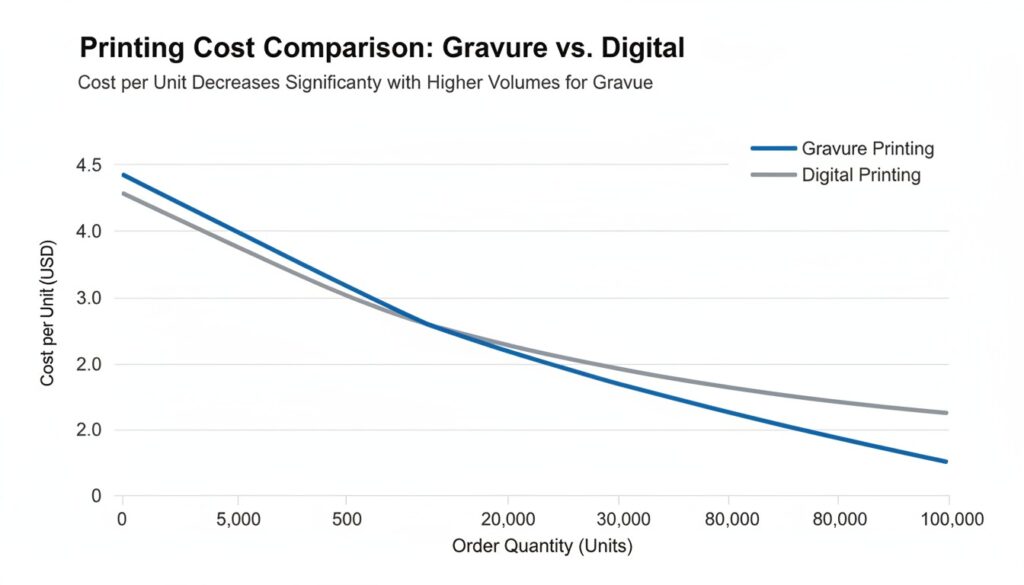
For a small or medium-sized job, the total cost of gravure can be more than double that of flexography. This is because the massive cylinder cost dominates the total price.
The cost per item only becomes competitive on very large print runs, often 500,000 units or more. At that volume, the high plate cost is spread out and becomes a tiny fraction of the price per package.
Therefore, a new brand launching a product with a small initial run would find gravure far too expensive. If sales do not meet high expectations, the initial investment in cylinders is lost.
As a rule, gravure should not be chosen for print jobs under 300,000 units. It is best for massive volumes where quality and durability are the top priorities.
2. Long Lead Times for Production
The gravure process is slow to start. The cylinder production alone takes 7 to 15 days. Setting up the press for a new job can take another 2 to 3 days.
This is much longer than other methods. Flexography plates can be made in 2 to 3 days. Digital printing requires no plates at all.
This long timeline makes gravure completely unable to handle urgent orders. A typical gravure job might take 12 days from start to finish. A flexo job might take 7 days, while a digital job could be done in 5.
If a company needs a quick restock for a sales promotion, gravure is not a viable option. The long lead time makes it impossible to react quickly to market demand.
For any order needed in less than 10 days, flexography or digital printing are better choices. Gravure jobs must be planned at least 15 days in advance.
3. Environmental and Safety Risks
Traditional gravure printing often uses solvent-based inks. These inks contain Volatile Organic Compounds (VOCs), which are environmental pollutants.
The VOC emissions from gravure can be very high, often exceeding strict national environmental standards. Factories must install expensive VOC recovery systems to operate legally. This adds significant cost. Failure to comply can result in large fines.
There is also a safety risk. Solvents from the ink can migrate from the packaging into food products. For this reason, there are strict legal limits on the amount of solvent residue allowed in food packaging.
A solution is to use water-based gravure inks. These inks have very low VOC emissions and no solvent residue risk. However, they have their own drawbacks. Water-based inks dry more slowly, which can reduce printing speed by up to 30%.
They also typically cost about 20% more than solvent-based inks. For food packaging or products exported to regions with strict rules like the EU, water-based inks are the safest choice. Always ask the printer for compliance reports to verify safety.
4. High Maintenance and Limited Reusability
Gravure cylinders are precision metal parts. They are easily damaged. Scratches from the doctor blade or impurities on the substrate can ruin the print quality. Repairing a cylinder is difficult and expensive.
A scratch requires the entire cylinder to be re-plated and re-engraved, costing as much as 50% of a new cylinder. This is very different from flexography, where a damaged plastic plate can be replaced cheaply.
The cylinders also have very low reusability. If a brand updates its packaging design, even a small logo change, the old cylinders become completely useless. New cylinders must be made from scratch, incurring the full cost again.
A brand that frequently updates its designs would face enormous costs. For this reason, gravure should never be used for designs that are not finalized. Brands that need flexibility should choose flexography or digital printing.
When to Choose Gravure Printing
| Factor | Choose Gravure (Recommended) | Avoid Gravure (Use Flexo/Digital instead) |
|---|---|---|
| Print Volume | Very large batches (500,000+ units) | Small or medium batches (< 300,000 units) |
| Quality | Highest quality is essential (rich colors, fine details, high durability) | Standard quality is good enough |
| Deadline | Not urgent (lead time of 15+ days is okay) | Urgent orders (need delivery in < 10 days) |
| Design | Design is final and will not change | Design may be updated or is not final |
| Compliance | For food/export, but only if using water-based inks with a certified printer | To minimize safety risks or if printer status is unknown |
Gravure printing is the king of quality. Packaging applications dominate with a 68% share of the gravure printing services market, driven by food and beverage end-use at 38%.
It excels at high-end, high-volume packaging. But it is not a universal solution. Choosing it requires careful thought. A simple three-part rule can guide your decision.
First, consider the print volume. Gravure is only cost-effective for massive jobs. Your print run should be 500,000 units or more.
At that scale, the huge cylinder cost gets spread thin, making the price per item competitive. For small batches, gravure is simply too expensive. You should avoid it.
Second, analyze your quality needs. Gravure is the only answer for certain demands. Choose it for intense, saturated colors.
Use it for prints that must resist friction, solvents, and UV light. The process also creates exceptionally fine and smooth gradients.
This makes it perfect for luxury packaging, like premium liquor boxes or high-performance flexible food packs. If you only need standard quality and fast delivery, choose flexography or offset printing instead.
Third, look at compliance. This is critical for safety. It is also a legal requirement.
Use water-based gravure inks for food packaging. This is also necessary for products you plan to export.
You must also confirm the printer has proper environmental certifications. This simple step helps you avoid serious risks.
Summary
Gravure printing is a deliberate trade-off. You pay a high price. You get ultimate quality and durability in return. It is not the right choice for ordinary packaging.
It is a core tool for premium brands. They use it to build a quality barrier that competitors cannot easily overcome. Gravure’s true value is unlocked only when it is precisely matched to the right job.
For expert guidance on your next packaging project, contact Letai Printing.

I have honed my expertise in creating high-quality packaging solutions, bringing both innovation and efficiency to the field. I am passionate about delivering exceptional results and contributing to sustainable packaging practices.
- What is a CBD Box? The Ultimate Guide - June 9, 2026
- Bangle Box Ideas: Inspiring Designs for a Clutter-Free Space - June 8, 2026
- What is a Bangle Box? The Ultimate Guide - June 8, 2026
 English
 Español
 Deutsch
 Français
 Italiano
 日本語
 한국어
 Русский
 Português do Brasil
 العربية