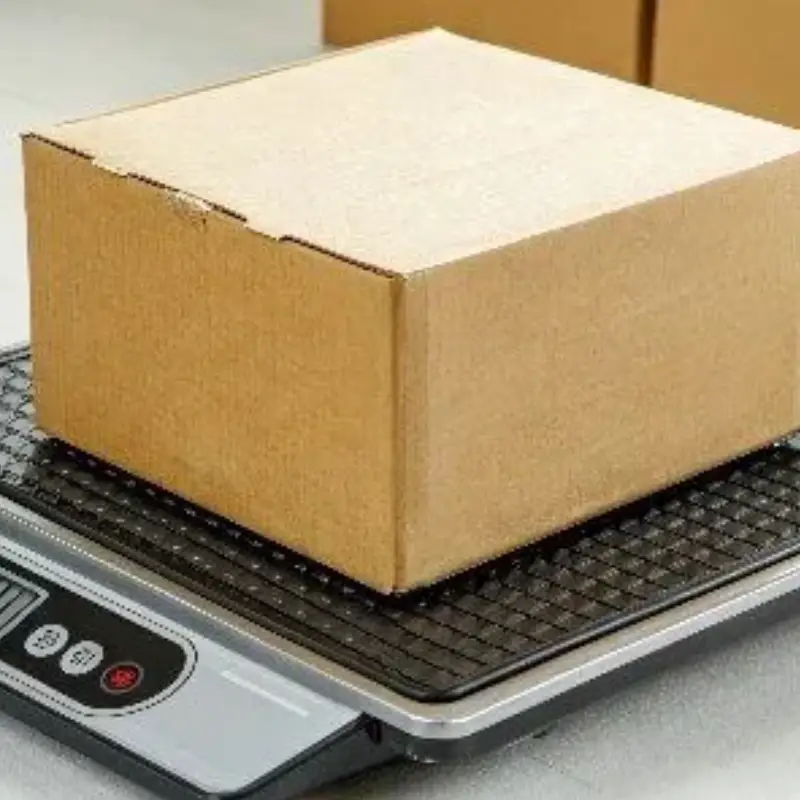
Box weight is a critical factor in shipping, storage, and handling. It affects transportation costs, material selection, and overall product safety. Understanding the factors that contribute to box weight helps businesses make informed decisions about packaging design, ensuring efficiency, durability, and cost-effectiveness for both domestic and international shipping.
The weight of a box depends on its material, size, and structural design. Cardboard thickness, corrugation type, and additional coatings all influence the final weight. Accurately calculating box weight helps businesses avoid shipping overcharges, maintain product integrity, and choose the most suitable packaging for different types of products.
What is Box Weight?
Box weight refers to the total mass of a packaging box, including the material, structure, and any coatings or reinforcements. It plays a crucial role in shipping, storage, and handling, as it affects transportation costs, durability, and product protection.
Box weight depends on factors such as cardboard type, thickness, corrugation, size, and additional finishes. Accurately calculating box weight ensures safe handling, cost-effective shipping, and appropriate material selection for different products and logistics requirements.
How Much Does a Box Weigh?

The weight of a box depends on its material, size, thickness, and construction. Cardboard is the most common material, and its weight is influenced by dimensions and GSM (grams per square meter). Larger boxes or those made with thicker, high-GSM board weigh more, affecting shipping, handling, and packaging costs.
- Small boxes: Typically 12x9x6″ and weigh 0.5–1 lb. These are ideal for apparel and lightweight products. They are easy to handle and cost-effective for shipping, while providing sufficient protection for small, low-weight items.
- Medium boxes: Around 18x14x12″, weighing 1.5–2 lbs. Suitable for household items and general merchandise, they offer durability without excessive weight. The balance between strength and weight makes them versatile for various applications.
- Large boxes: Usually 24x18x18″, weighing 2.5–3.5 lbs. Best for shipping light but bulky items, these boxes provide significant space while maintaining manageable handling. Higher weight is due to larger size and sometimes higher GSM cardboard.
- GSM considerations: Light cardboard ranges from 40–80 GSM, while 120–400 GSM is standard for average boxes. A higher GSM indicates thicker, stronger material, contributing to overall box weight and durability.
Standard cardboard box weights chart
| Type | Size (inches) | Weight (lbs) | Best For |
|---|---|---|---|
| Small | 12x9x6 | 0.5 – 1 | Apparel packaging |
| Medium | 18x14x12 | 1.5 – 2 | Household, general merchandise |
| Large | 24x18x18 | 2.5 – 3.5 | Shipping light but bulky items |
This chart provides a quick reference to estimate box weight based on size and typical use, helping businesses choose the right cardboard for their shipping and packaging needs.
How to Calculate Corrugated Box Weight?
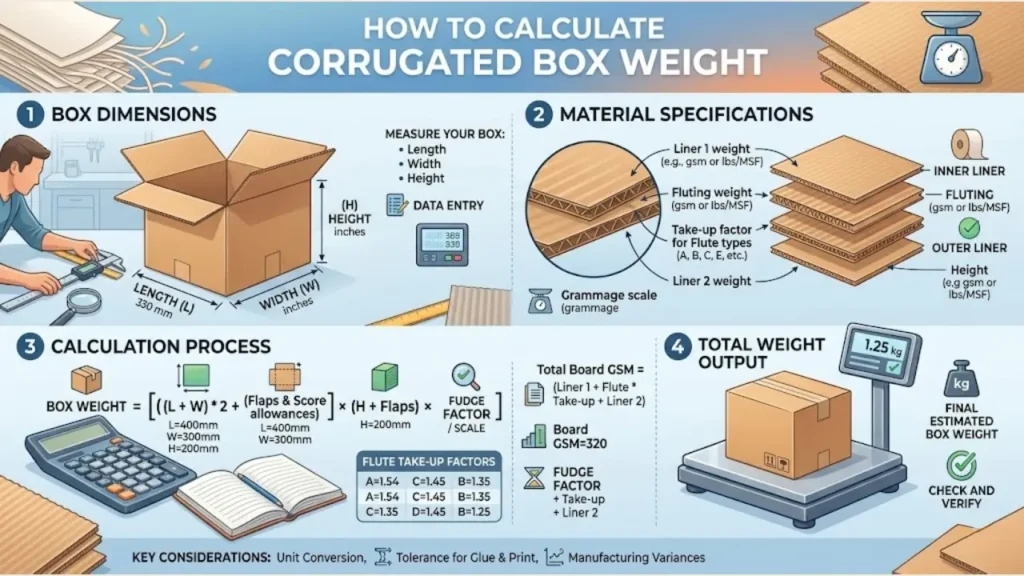
Calculating the weight of a corrugated box is essential for shipping, logistics, and packaging design. It ensures cost-effective transport, avoids overloading, and helps in selecting the right material. Understanding the steps and using the correct tools allows businesses to accurately determine box weight for safe handling and efficient operations.
Tools Needed
- Measuring tape or ruler for dimensions
- Scale for weighing cardboard sheets
- Calculator for calculations
- Pen and paper for notes
- GSM or board weight specification from manufacturer
Step 1: Measure Box Dimensions
Begin by measuring the length, width, and height of the corrugated box in inches or centimeters. Accurate measurements ensure proper calculation of surface area, which directly affects the weight estimation. Record each dimension carefully, including flaps and folds that contribute to total material used.
Next, convert the measurements to the same unit if needed. Multiply the length, width, and height to calculate total box volume or surface area. This helps in estimating the amount of cardboard used, which is crucial for applying GSM or board weight values to determine overall weight.
Step 2: Determine Board Weight (GSM)
Identify the GSM (grams per square meter) of the corrugated board. GSM indicates the density and thickness of the cardboard, affecting durability and weight. Higher GSM boards result in heavier boxes, which can withstand more pressure but also increase shipping costs. Record the GSM for accurate calculations.
Check whether the board is single-wall, double-wall, or triple-wall, as each type has different weight per square meter. Multiply the total surface area of the box by the board weight factor to estimate the base weight contribution from the cardboard material used in construction.
Step 3: Calculate Surface Area
Calculate the total surface area of all sides of the box, including the top and bottom flaps. This gives the total material needed to create the box. Accurately calculating surface area ensures the final weight estimate reflects the actual cardboard used in production.
Include additional surface from folds, joints, and overlaps. These extra areas slightly increase material usage and weight. Summing all surfaces provides a realistic estimate of cardboard consumption, which is essential for multiplying by GSM or board weight to determine total box weight.
Step 4: Apply GSM and Conversion
Multiply the total surface area by the board’s GSM to find the total cardboard weight in grams. Ensure all measurements are in compatible units to avoid miscalculations. This step provides the most accurate estimate of a corrugated box’s weight before final adjustments.
Convert grams to pounds or kilograms depending on shipping requirements. This step ensures the calculated box weight aligns with industry standards for logistics, packaging design, and transportation cost estimations, helping businesses plan efficiently for distribution.
Step 5: Include Additional Factors
Factor in any extra coatings, lamination, or inserts that may add weight to the box. These additions enhance durability or visual appeal but increase overall weight, affecting shipping and handling considerations.
Check for optional features like printing, labels, or protective layers. Adding these elements to the calculation ensures the final box weight accurately represents the actual packaged product, preventing underestimation in shipping and logistics planning.
How Much Does a Rigid Box Weigh?
Rigid boxes are perfect for high-end products, offering sturdy, pre-assembled, non-collapsible construction. Made from thick chipboard and covered with decorative paper, fabric, or leather, they provide both protection and a premium unboxing experience. Weight varies depending on size, board GSM, and design, affecting shipping, handling, and perceived product value.
- Small boxes: Usually 6x6x6″, weighing 0.25–0.3 lb. Ideal for jewelry, cosmetics, or small luxury items. Despite their compact size, they maintain a high-quality feel and protect delicate products while offering an elegant presentation for gifting or retail display.
- Medium boxes: Around 10x8x4″, weighing approximately 1.2 lbs. Suitable for gift boxes, perfume packaging, or mid-size luxury items. Their weight provides a premium tactile feel while remaining manageable for handling, shipping, and storage.
- Large boxes: Typically 18x18x16″, ranging from 1.5 to 5+ lbs depending on product and board thickness. Perfect for heavy footwear or larger luxury items, these boxes combine space, strength, and durability with a high-end unboxing experience.
- GSM considerations: For rigid boxes, choose high GSM board for durability and premium feel. Options include 500 GSM for smaller boxes and 1000–1800+ GSM for larger or heavier items. Proper GSM ensures sturdiness, protects contents, and enhances the luxury perception.
Standard rigid box weights chart
| Type | Size (inches) | Weight (lbs) | Best For |
|---|---|---|---|
| Small | 6x6x6 | 0.25 – 0.3 | Jewelry boxes, cosmetic packaging |
| Medium | 10x8x4 | 1.2 | Gift boxes, perfume packaging |
| Large | 18x18x16 | 1.5+ | Heavy footwear like boots |
This chart provides a quick reference for estimating rigid box weight based on size and application, helping businesses choose packaging that balances durability, presentation, and logistics efficiency.
How Much Does a Paperboard Box Weigh?
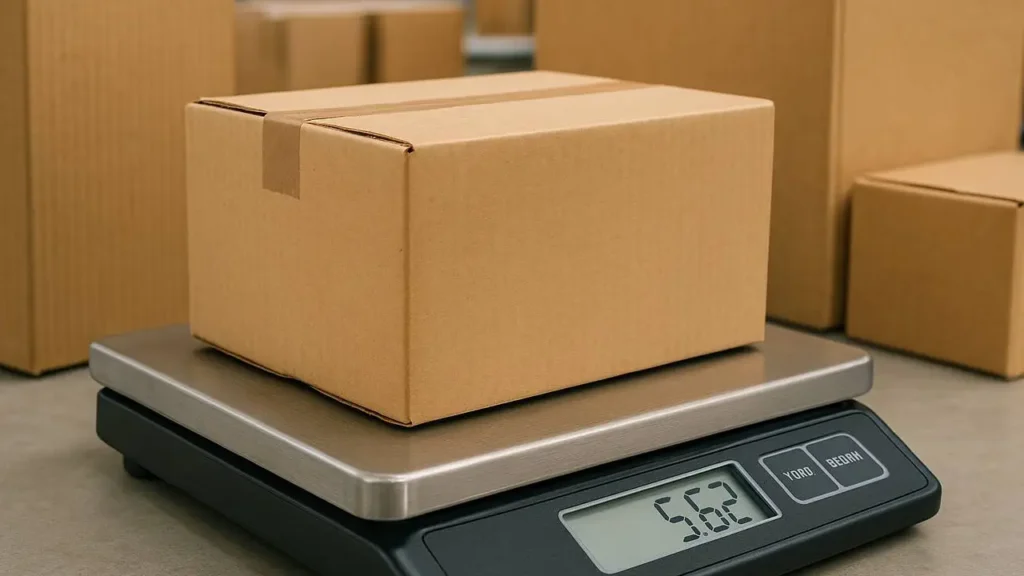
Paperboard boxes are ideal for small, lightweight items and provide an elegant unboxing experience. Made from wood pulp or recycled paper pulp, paperboard is thicker than regular paper but lighter than cardboard. Box weight varies depending on size, thickness, and GSM, influencing durability and shipping costs.
- Small boxes: Typically 12x9x6″, weighing 0.5–1 lb. Perfect for small electronics, toys, or lightweight products. They are easy to handle and cost-effective, providing sufficient protection for delicate or low-weight items while maintaining a professional presentation.
- Medium boxes: Around 12x12x12″, weighing 1–1.5 lbs. These are ideal for mailer boxes or products requiring slightly larger packaging. Their moderate weight balances protection and affordability, making them versatile for shipping and retail applications.
- Large boxes: Usually 24x18x18″, weighing 4–5 lbs. Suitable for e-commerce delivery or larger lightweight items, these boxes provide significant space and strength while remaining manageable. Heavier weight comes from larger size and optional higher GSM paperboard.
- GSM considerations: Light food or general packaging uses 200–350 GSM paperboard. For better product safety, 125–250 GSM is sufficient, while 300–330 GSM provides a thicker, sturdier option. Choosing the right GSM ensures protection without unnecessary weight increase.
Standard paperboard box weights chart
| Type | Size (inches) | Weight (lbs) | Best For |
|---|---|---|---|
| Small | 12x9x6 | 0.5 – 1 | Small electronic items, light toys |
| Medium | 12x12x12 | 1 – 1.5 | Mailer boxes |
| Large | 24x18x18 | 4 – 5 | E-commerce shipping |
This chart helps businesses estimate paperboard box weight based on size and typical applications, guiding the selection of packaging that balances protection, aesthetics, and shipping efficiency.
How Much Does a Corrugated Box Weigh?
Corrugated boxes are strong, layered containers made from corrugated fiberboard, ideal for shipping and storage. Their fluted, S-shaped middle layer provides cushioning and rigidity, while the linerboards add strength. Box weight varies by size, wall type, and GSM, which affects durability, handling, and shipping costs for different products.
- Small boxes: Typically 8x6x4″, weighing around 0.6 lbs. Perfect for electronics, cosmetics, and small fragile items, they offer sufficient protection while remaining lightweight. These boxes are easy to handle, cost-effective, and suitable for both storage and shipping purposes.
- Medium boxes: Usually 12x12x12″, weighing 1.5 lbs for single-wall or 2.5 lbs for double-wall. Ideal for toys, small décor items, and sturdy mailer boxes. The double-wall option provides extra durability and impact resistance, making it suitable for products that require more protection.
- Large boxes: Typically 24x18x18″, weighing 4–5 lbs. These boxes are designed for bulk shipping or heavier items, providing excellent strength and cushioning. Higher weight comes from larger size, thicker corrugated layers, and higher GSM, ensuring safe transport of large or fragile products.
- GSM considerations: Single-wall boxes range from 125–200 GSM, double-wall from 200–300 GSM, and heavy-duty boxes exceed 300 GSM. Higher GSM results in a heavier, stronger board, offering increased protection, durability, and suitability for heavier or more fragile shipments.
Standard corrugated box weights chart
| Type | Size (inches) | Weight (lbs) | Best For |
|---|---|---|---|
| Small | 8x6x4 | 0.6 | Electronics, cosmetic items |
| Medium | 12x12x12 | 1.5 – 2.5 | Mailer boxes, toys, small décor |
| Large | 24x18x18 | 4 – 5 | Shipping boxes, bulk items |
This chart provides a reference for corrugated box weight based on size and typical applications, helping businesses select appropriate boxes for shipping, storage, and product protection.
How Much Does a Kraft Box Weigh?
Kraft boxes are durable, eco-friendly packaging made from natural wood fibers or recycled paperboard. Known for their rustic brown color and strength, they provide reliable protection while supporting sustainable practices. Box weight depends on size, material thickness, and GSM, affecting shipping, handling, and product safety.
- Small boxes: Typically 12x9x6″, weighing 0.5–1 lb. Ideal for apparel or food packaging, these boxes offer sufficient protection for lightweight items while remaining cost-effective and easy to handle, making them perfect for small-scale retail and eco-conscious products.
- Medium boxes: Around 18x14x12″, weighing 1.5–2 lbs. Popular for shoe boxes, soap packaging, and medium-sized retail products, they strike a balance between durability and weight. Medium boxes are versatile for shipping, retail displays, or sustainable packaging solutions.
- Large boxes: Usually 24x18x18″, weighing 2.5–3.5 lbs. Perfect for candle boxes, home appliances, and larger eco-friendly items. These boxes provide ample space and structural strength while remaining manageable, supporting safe transport and environmentally responsible packaging choices.
- GSM considerations: Kraft boxes are generally 125–200 GSM, providing standard durability. Heavier boards of 200–300+ GSM are available for extra strength, making them suitable for heavier products or items requiring enhanced protection during handling and shipping.
Standard Kraft Box Weights Chart
| Type | Size (inches) | Weight (lbs) | Best For |
|---|---|---|---|
| Small | 12x9x6 | 0.5 – 1 | Apparel packaging, food packaging |
| Medium | 18x14x12 | 1.5 – 2 | Shoe boxes, soap packaging, medium retail items |
| Large | 24x18x18 | 2.5 – 3.5 | Candle boxes, home appliances |
This chart provides a quick reference to estimate kraft box weight based on size and intended use, helping brands choose eco-friendly packaging that balances protection, sustainability, and shipping efficiency.
How to Choose a Suitable Box Weight?
Choosing the right box weight is crucial for protecting products, managing shipping costs, and ensuring safe handling. The weight should balance durability with efficiency, considering the product’s size, fragility, and transportation method.
Selecting the appropriate box weight helps maintain product quality while optimizing logistics and reducing unnecessary expenses.
- Assess product weight: Determine the weight of the items being packaged. Heavier products require sturdier, thicker boxes to prevent crushing, while lighter items can use thinner boards. Matching box weight to product weight ensures safety during storage, shipping, and handling.
- Consider product fragility: Fragile items need heavier, reinforced boxes for extra protection. Lightweight boxes may suffice for durable goods, but delicate products like glassware, electronics, or collectibles require thicker cardboard or double-wall construction to minimize the risk of damage during transport.
- Account for shipping conditions: Factor in transportation distance, handling methods, and stacking requirements. Long-distance shipping or frequent handling may require heavier, more robust boxes. Properly assessing shipping conditions ensures boxes maintain integrity and protect products throughout the delivery process.
- Evaluate budget and efficiency: Heavier boxes often cost more to produce and ship. Balance strength with cost-effectiveness by selecting the lightest box that still provides adequate protection. Efficient box weight minimizes shipping charges without compromising product safety or customer satisfaction.
- Check material and GSM: The type of cardboard and its GSM affect weight and durability. Higher GSM boards are stronger but heavier, while lighter boards reduce shipping weight. Understanding material properties allows you to choose a box that meets both performance and logistical needs.
Conclusion
Understanding box weight is essential for optimizing packaging, shipping efficiency, and product safety. By considering factors like material, size, and structure, businesses can select boxes that balance durability with cost-effectiveness, ensuring products arrive safely while minimizing unnecessary shipping expenses. Accurate weight management supports operational efficiency.
At Letai Packaging, we offer wholesale custom packaging solutions tailored to your product and weight requirements. Our team helps you choose the right materials and box designs to ensure safe transportation, optimal performance, and customer satisfaction. We combine expertise with flexible options to meet diverse packaging needs.
Get wholesale custom packaging from Letai Packaging to enhance your shipping and storage solutions. We provide custom boxes designed for durability, efficiency, and cost savings. Whether for small-scale products or bulk shipments, our custom solutions help your brand stand out and deliver products safely to customers.

I have honed my expertise in creating high-quality packaging solutions, bringing both innovation and efficiency to the field. I am passionate about delivering exceptional results and contributing to sustainable packaging practices.
- What is a CBD Box? The Ultimate Guide - June 9, 2026
- Bangle Box Ideas: Inspiring Designs for a Clutter-Free Space - June 8, 2026
- What is a Bangle Box? The Ultimate Guide - June 8, 2026
 English
  Español
  Deutsch
  Français
  Italiano
  日本語
日本語  한국어
한국어  Русский
  Português do Brasil
  العربية