Shoe box weight plays a crucial role in shipping, storage, and overall product presentation. Choosing lightweight shoe packaging can help reduce transportation costs while ensuring the shoes remain protected. Both retailers and manufacturers need to understand how material, design, and structure impact the weight of each shoe box without compromising durability.
Lightweight shoe boxes also improve handling and customer experience. They are easier to stack, move, and store, saving time and effort in warehouses. By selecting the right materials and designs, businesses can create packaging that balances protection, sustainability, and aesthetics, ensuring shoes reach customers in perfect condition while keeping costs manageable.
Types of Shoe Boxes

Shoe boxes come in different types to meet various storage, shipping, and display needs. Choosing the right type ensures protection, convenience, and brand appeal. From standard designs to specialty options, each shoe box type has unique benefits, helping retailers and individuals present, protect, and store shoes efficiently.
- Standard Shoe Box: The most common option, made from sturdy cardboard, ideal for everyday shoes. Offers reliable protection, easy stacking, cost-effective, and versatile. Suitable for retail, storage, and shipping. Custom branding enhances visual appeal and provides a professional, organized presentation for any shoe collection or product line.
- Drawer Shoe Box: Features a sliding compartment for easy access, perfect for premium or delicate shoes. Provides both protection and elegant presentation. Allows customers to view contents without fully opening the box. Enhances convenience, improves retail display, and adds a premium touch to shoe packaging solutions.
- Window Shoe Box: Includes a transparent panel to display shoes inside, widely used in retail. Customers can see the product without opening the box. Combines protection with marketing, attracts attention on shelves, and encourages purchase decisions. Ideal for showcasing design, style, and color while keeping shoes secure.
- Collapsible Shoe Box: Designed to save space when not in use; can be folded flat for storage or shipping. Lightweight yet durable, protects shoes during transport and storage. Efficient for businesses needing flexible, cost-effective packaging solutions. Enhances warehouse organization and reduces shipping volume and costs.
- Luxury Shoe Box: Crafted with high-end materials, often featuring magnetic closures or unique textures. Used for premium shoes, enhances unboxing experience, prioritizes aesthetics and branding. Perfect for gifts, special editions, or high-value products, leaving a lasting impression while maintaining excellent protection and visual appeal.
How to Measure Shoe Box Weight?

Measuring shoe box weight accurately is essential for shipping, cost calculation, and inventory management. Understanding the exact weight helps reduce shipping errors and ensures compliance with logistics requirements. This process is simple when you follow clear steps, use the right tools, and consistently record measurements for reliable results every time.
Tools Needed
- Digital scale or precision balance
- Notebook or recording device
- Pen or pencil
- Optional: gloves for handling fragile boxes
Step 1: Prepare the Shoe Box
Before weighing, make sure the shoe box is empty and fully assembled. Remove any inserts, tissue paper, or protective packaging inside. This ensures the weight measured reflects only the box itself, providing accurate data for shipping calculations, cost estimation, and comparison with other box types.
Check the box for damage, moisture, or dust that could affect its weight. Wipe it clean and place it on a flat, stable surface to avoid measurement errors. Accurate preparation ensures that the results are reliable and consistent across multiple boxes of the same type.
Step 2: Calibrate the Scale
Turn on your digital scale and allow it to calibrate according to the manufacturer’s instructions. Some scales require zeroing or placing a calibration weight first. Calibration ensures that measurements are precise and prevents errors caused by scale drift or uneven surfaces during weighing.
Make sure the scale is on a flat, stable surface away from vibrations or wind that could interfere with the reading. Double-check the units displayed on the scale, usually grams or ounces, to ensure consistency with your recording and shipping requirements.
Step 3: Weigh the Shoe Box
Place the prepared shoe box gently on the center of the scale. Wait until the reading stabilizes, then record the weight in your notebook or digital device. Repeat the process at least twice to verify consistency and eliminate anomalies or mistakes.
For larger batches, weigh multiple boxes and calculate the average weight. This provides a representative figure for shipping calculations, helps standardize packaging, and supports cost management. Accurate weighing also prevents overpayment for shipping and improves logistics efficiency.
Step 4: Record and Analyze Results
Document each shoe box’s weight, noting the type, size, and material. Keeping organized records makes it easier to compare different boxes and identify which types are lighter, more cost-effective, or better suited for shipping requirements.
Analyze the recorded data to make informed packaging decisions. Use it to adjust materials, choose alternative designs, or optimize shipping costs. Maintaining consistent records ensures long-term efficiency and helps identify trends in box weight across product lines.
Shoe Box Dimensions
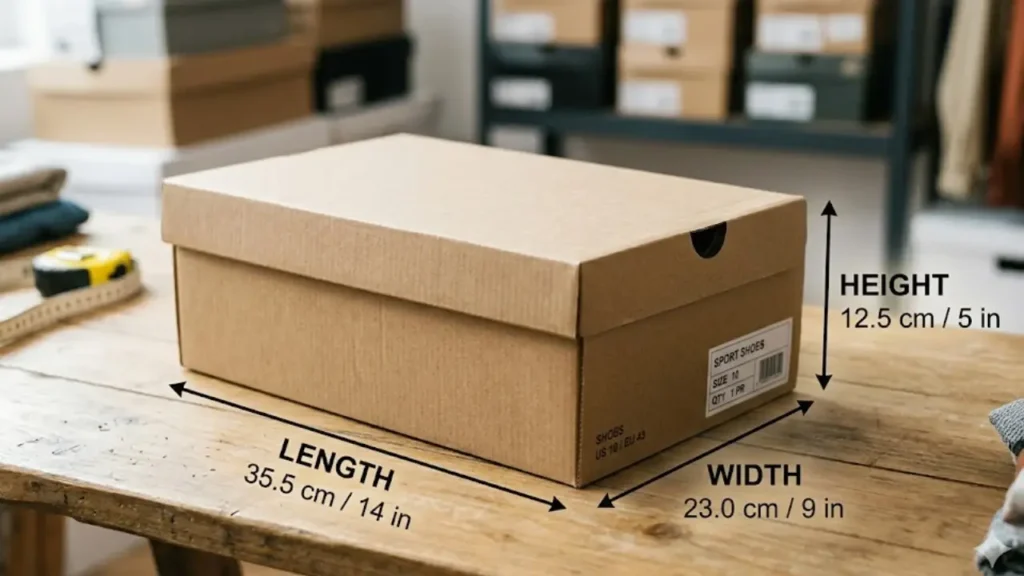
Shoe box dimensions are a key factor in storage, shipping, and display. Choosing the right shoe box size ensures shoes fit securely, packaging remains cost-effective, and boxes are stackable. Understanding length, width, and height for different shoe types helps retailers and manufacturers optimize protection, reduce shipping costs, and improve warehouse organization.
- Standard Shoe Box Dimensions: Typically range from 12 x 7 x 4 inches for adult shoes. These dimensions provide enough space for most casual and athletic shoes, balancing protection and compactness. Standard sizing ensures easy stacking, consistent shipping weight, and compatibility with most retail shelving systems.
- Kids’ Shoe Box Dimensions: Smaller in size, usually around 9 x 5 x 3 inches. Designed to fit children’s shoes snugly, preventing movement inside the box. Proper sizing ensures better protection, reduces wasted space, and allows for easier handling during storage, display, and shipping.
- High-Top or Boot Shoe Box Dimensions: Taller boxes, often 14 x 10 x 6 inches, accommodate boots and high-top shoes. Extra height prevents deformation of shoes and ensures full coverage. Larger boxes provide additional padding space, protecting footwear during transport and maintaining product shape.
- Custom Shoe Box Dimensions: Tailored to specific shoe types, brands, or marketing needs. Custom dimensions ensure a perfect fit, enhance presentation, and allow creative designs or branding. Businesses can optimize material use, reduce shipping costs, and improve customer experience with boxes that match product specifications precisely.
- Collapsible Shoe Box Dimensions: Slightly variable due to foldable design, often similar to standard boxes when assembled. These boxes save storage space and shipping volume when not in use. Despite being lightweight, they maintain durability, and dimensions are designed to accommodate various shoe sizes efficiently.
How Much Does a Shoe Box Weight in kg?

Knowing a shoe box’s weight in kilograms helps with international shipping, inventory planning, and logistics. Weight varies depending on shoe type, size, and packaging material. Accurate kg measurements allow retailers and manufacturers to estimate costs, optimize storage, and ensure safe handling, while keeping shipments compliant with courier and freight requirements.
- Standard Adult Shoe Box: Typically weighs 0.68 to 1.13 kg. Sturdy cardboard provides protection without adding unnecessary weight. Ideal for everyday shoes, these boxes balance durability and manageability, making them suitable for shipping, retail display, and efficient warehouse stacking.
- Kids’ Shoe Box: Usually lighter, around 0.36 to 0.68 kg. Smaller dimensions and lighter materials reduce shipping costs and storage space requirements. Despite their smaller size, they still protect the shoes adequately, making them practical for bulk orders and retail sales.
- Boot / High-Top Shoe Box: Heavier due to extra height and padding, usually 1.36 to 1.81 kg. Taller boxes accommodate bulkier footwear while preventing deformation. Proper weight management ensures safe shipping, stacking efficiency, and better handling in warehouses.
- Lightweight / Collapsible Shoe Box: Weighs approximately 0.45 to 0.68 kg. Thin, foldable materials allow space-saving storage and cost-efficient shipping. Despite being lightweight, they maintain durability and protection, making them suitable for both retail and logistics purposes.
- Luxury / Specialty Shoe Box: Can range from 1.13 to 2.27 kg depending on materials and features like magnetic closures or inserts. Designed for premium shoes, they provide excellent protection, enhance the unboxing experience, and maintain a professional presentation while remaining manageable.
Shoe Box Weight Comparison Chart (kg)
| Shoe Box Type | Average Weight (kg) | Notes |
|---|---|---|
| Standard Adult Shoe Box | 0.68 – 1.13 | Durable cardboard, suitable for most adult shoes, easy stacking. |
| Kids’ Shoe Box | 0.36 – 0.68 | Smaller size, lighter material, cost-effective for shipping. |
| Boot / High-Top Shoe Box | 1.36 – 1.81 | Taller box with extra padding, protects bulkier footwear. |
| Lightweight / Collapsible Box | 0.45 – 0.68 | Space-saving, easy to store and transport, still protective. |
| Luxury / Specialty Shoe Box | 1.13 – 2.27 | Premium materials and closures, enhances unboxing experience. |
How Much Does a Box of Shoes Weigh in lbs?
The weight of a shoe box can vary widely depending on shoe type, size, and packaging material. Knowing the average weight in pounds helps with shipping, storage, and inventory management. Accurate measurements also help retailers and manufacturers estimate costs, optimize logistics, and ensure safe handling during transport.
- Standard Adult Shoe Box Weight: Typically weighs between 1.5 to 2.5 lbs depending on the shoe material and box type. Cardboard boxes provide protection without adding unnecessary weight. This range ensures boxes are manageable for shipping, stacking, and handling in retail or warehouse environments.
- Kids’ Shoe Box Weight: Usually lighter, ranging from 0.8 to 1.5 lbs. Smaller shoe sizes and lighter materials reduce overall weight, making them easier to handle. These boxes still offer protection for shoes while minimizing shipping costs and storage space in bulk orders.
- Boot or High-Top Shoe Box Weight: Heavier due to larger dimensions and additional padding, often 3 to 4 lbs. Taller boxes are designed to accommodate bulkier shoes while maintaining structural integrity. Proper weight management prevents damage during shipping and improves stacking efficiency in warehouses.
- Lightweight or Collapsible Shoe Box Weight: Typically 1 to 1.5 lbs due to thin yet durable materials. These boxes are designed for easy storage and transport, reducing shipping costs. Despite being lightweight, they still provide adequate protection for shoes, making them practical for bulk orders and logistics efficiency.
- Luxury or Specialty Shoe Box Weight: Can weigh 2.5 to 5 lbs or more depending on materials like magnetic closures, thick cardboard, or additional inserts. Designed for high-end shoes, these boxes focus on aesthetics, presentation, and protection, offering an elevated unboxing experience while remaining manageable for shipping and display.
Here’s a clear chart summarizing average shoe box weights in lbs and kg for different types:
| Shoe Box Type | Average Weight (lbs) | Average Weight (kg) | Notes |
|---|---|---|---|
| Standard Adult Shoe Box | 1.5 – 2.5 | 0.68 – 1.13 | Durable cardboard, suitable for most adult shoes, easy stacking. |
| Kids’ Shoe Box | 0.8 – 1.5 | 0.36 – 0.68 | Smaller size, lighter material, cost-effective for shipping. |
| Boot / High-Top Shoe Box | 3 – 4 | 1.36 – 1.81 | Taller box with extra padding, protects bulkier footwear. |
| Lightweight / Collapsible Box | 1 – 1.5 | 0.45 – 0.68 | Space-saving, easy to store and transport, still protective. |
| Luxury / Specialty Shoe Box | 2.5 – 5 | 1.13 – 2.27 | Premium materials and closures, enhances unboxing experience. |
How to Choose a Suitable Shoe Box Weight?
Selecting the right shoe box weight is essential for cost-effective shipping, product protection, and customer satisfaction. The ideal weight depends on shoe type, size, material, and shipping requirements.
Understanding these factors helps businesses balance durability, handling ease, and storage efficiency while keeping expenses and environmental impact under control.
- Consider Shoe Type and Size: Heavier or bulkier shoes like boots require sturdier, slightly heavier boxes, while sneakers or casual shoes can use lighter boxes. Matching box weight to shoe size ensures proper protection, prevents damage during transport, and maintains stacking stability in storage and retail displays.
- Evaluate Material Strength: Cardboard thickness, recycled paper content, and additional padding affect box weight. Stronger materials may increase weight but offer better protection. Lightweight yet durable options help reduce shipping costs while maintaining the integrity of shoes, balancing efficiency with safety.
- Factor in Shipping Requirements: Air and ground shipping rates often depend on weight. Choosing a suitable box weight helps minimize costs while avoiding overweight surcharges. Accurate measurement ensures compliance with logistics rules and protects both the shoes and the shipping budget.
- Consider Storage and Handling: Lighter boxes are easier to stack, move, and organize in warehouses or retail spaces. Heavier boxes may offer better durability but can increase labor efforts. Selecting an appropriate weight improves efficiency, reduces handling fatigue, and optimizes storage space.
- Account for Branding and Presentation: For premium or gift shoes, slightly heavier or luxury boxes may enhance perceived value. The right weight can improve unboxing experience, align with brand identity, and maintain protection without making the package unwieldy for customers or shipping personnel.
Conclusion
Selecting the right shoe box weight is vital for efficient shipping, storage, and customer satisfaction. Lightweight shoe boxes reduce transport costs, improve handling, and maintain the integrity of your products. By focusing on material choice, design, and structure, businesses can achieve a balance between functionality and visual appeal for every shoe type.
For businesses looking to streamline their packaging, Letai Packaging offers wholesale custom shoe box solutions. Our lightweight designs ensure durability and protection while allowing for creative branding opportunities. We provide options tailored to your shoes’ size, style, and market needs, helping your products stand out on retail shelves and during delivery.
Partnering with Letai Packaging means getting customized shoe boxes that meet your business goals. From eco-friendly materials to innovative designs, we help reduce shipping costs without compromising quality. Our team works closely with clients to deliver packaging that enhances brand identity and ensures your shoes reach customers safely, efficiently, and stylishly.

I have honed my expertise in creating high-quality packaging solutions, bringing both innovation and efficiency to the field. I am passionate about delivering exceptional results and contributing to sustainable packaging practices.
- What is a CBD Box? The Ultimate Guide - June 9, 2026
- Bangle Box Ideas: Inspiring Designs for a Clutter-Free Space - June 8, 2026
- What is a Bangle Box? The Ultimate Guide - June 8, 2026
 English
  Español
  Deutsch
  Français
  Italiano
  日本語
日本語  한국어
한국어  Русский
  Português do Brasil
  العربية