Think about the packaging you see every day. The crisp logo on a bag of chips. The vibrant label on a shampoo bottle. Many of these products are made using a powerful and efficient technology.
Flexography is the workhorse of the packaging world. It can print on almost anything, from paper and plastic films to corrugated cardboard. So, what is flexographic printing? And how exactly does it work? This guide will break down all the details and help you understand everything about flexo.
What is Flexographic Printing
Flexographic printing is a high-speed process. It uses flexible plates and fast-drying ink. An image is transferred onto a surface. Think of it as a modern, industrial rubber stamp.
The flexible plate wraps around a spinning cylinder. This allows for rapid, non-stop printing. It is the main printing method for packaging, used for everything from plastic films and paper bags to labels and corrugated boxes.
How does flexographic printing work?
Flexographic printing is a simple process. It combines three key parts. These are a flexible plate, a special ink roller, and a continuous roll of material. Together, these elements make the process fast and efficient for printing on packaging.
1. The Flexible Printing Plate
The printing plate is flexible. It is made from a soft photopolymer material. This plate is not flat or rigid. It wraps tightly around a printing cylinder.
This flexibility is the key advantage. It lets the press print on curved surfaces like plastic films. Rigid plates cannot do this.
2. The Anilox Roll and Ink Transfer
Ink transfer is precise. The press uses an anilox roll. This is the core of the ink system. The roll’s surface has thousands of tiny cells.
These cells pick up a specific amount of ink. They transfer a thin, even layer of ink to the flexible plate. This system gives the printer great control over the ink. It avoids common problems found in other printing methods.
3. Continuous Web-Fed Printing
The final element is speed. The printing material feeds from a large roll. It moves through the press without stopping. This is “web-fed” printing.
For multi-color jobs, the material passes through multiple print stations. Each station adds a different color. The process is very fast. Speeds can reach 100 to 500 meters per minute.
This makes it much more efficient than sheet-fed printing.
What are the Advantages of Flexographic Printing?
Flexographic printing has major advantages. Its strengths are most clear in high-volume, roll-based packaging. In these situations, it is often the only efficient solution.
1. Perfect for Flexible, Roll-Fed Materials
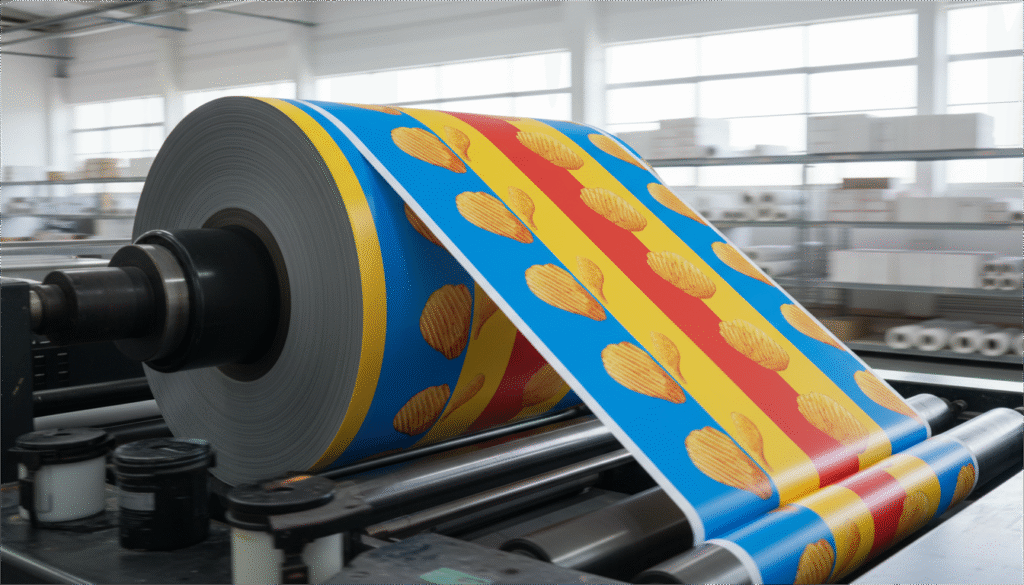
The process is perfect for printing on flexible materials fed from a roll. Most packaging uses these materials. This includes food bags, foil pouches, and the paper for shipping boxes. Flexo’s continuous feeding system and flexible plates are a perfect match for them.
Plastic films and aluminum foils are smooth. They also curl easily. A sheet-fed press can have problems with material jams. Screen printing is too slow. Flexo, however, uses a tension control system.
This system keeps the roll of material stable and tight during printing. Special inks also ensure the design sticks well to these slick surfaces.
For example, consider a beverage bottle label. A flexo press prints these labels at 200 meters per minute. The ink layer is thin, which saves money. The ink also dries very fast. This allows the labels to be cut immediately after printing.
Flexo is also ideal for corrugated paper. Corrugated packaging holding the largest share of the flexographic printing market in 2022 and is expected to maintain dominance. Many shipping boxes use a “pre-print” method. The press prints the design on a large roll of paper first. Then, a factory makes the box.
Flexo’s ink penetrates the paper quickly. This prevents white spots in the dips of the corrugated material. The speed is excellent for producing millions of boxes.
2. High Speed and Low Cost for Mass Production
Flexo is great for mass-market products. It delivers high capacity at a low cost.
Snacks, drinks, and soaps need millions or even billions of packages. Flexo’s speed is a huge benefit here. A press can run at 500 meters per minute.
That means it can print 500 one-meter-long food bags every minute. One flexo machine can produce what might take ten other machines a month to complete.
The cost advantages are also significant. Flexo plates can be reused many more times than offset plates. This lowers the cost over a long print run.
The process also uses less ink. Flexo applies a very thin ink layer. It can reduce ink consumption by 30% compared to offset printing.
This combination is valuable. It allows brands to meet urgent demand for big sales promotions.
3. Eco-Friendly and Safe for Packaging
Environmental rules for packaging are becoming stricter. Flexo printing helps companies meet these new standards.
The main reason is the ink. Flexo can use water-based inks, UV inks, and bio-based inks. These inks have very low levels of Volatile Organic Compounds (VOCs). Their VOC content is much lower than the oil-based inks of offset or the solvent-based inks of screen printing.
This makes flexo ideal for food-contact packaging. Its water-based inks can meet food safety standards, like those from the FDA 21 CFR 175.300.
This means they are safe for printing directly on chip bags or bread bags. There is no risk of harmful chemicals transferring to the food. For instance, a baby food brand can use flexo to print its foil pouches safely.
Flexo also supports recycling. The inks are compatible with materials like PE film and recycled paper. The printing does not interfere with the recycling process. This helps packaging comply with regulations like the EU’s directives on packaging waste(EU 94/62/EC).

Ready To get Custom Packaging ?
Contact us with a Lower Quantity
What are the Disadvantages of Flexographic Printing?
Flexographic printing has several key disadvantages. These weaknesses limit its use for certain types of jobs. Its main drawbacks relate to precision, cost on small runs, and color control.
1. Lower Print Quality for Fine Details
Flexo struggles with fine details. This is its biggest weakness. It cannot match the precision of offset printing for high-end graphics.
Small text often looks blurry. Words smaller than 6-point can have broken or fuzzy edges. This happens because the flexible plate distorts slightly under pressure.
Ink control is also less precise than in other methods. Smooth gradients can show visible steps or bands. The transition from one color to another is not perfectly seamless.
Finally, image resolution is lower. The process can lose the fine details in high-resolution photographs, like the texture of fruit or strands of hair. For these reasons, offset or digital printing is a better choice for jobs that need high precision.
2. High Cost for Small Batches
Flexo is not cost-effective for small print runs. The setup costs are high.
The main issue is the cost of the printing plates, which is a fixed expense. For a small job, the plate cost makes each individual item expensive.
Digital printing has no plate costs, so it is much better for small quantities. If a design needs to be changed, flexo requires brand new plates. This adds significant cost and delay. With digital, you just change the computer file.
Therefore, digital printing is the best choice for test runs or any job under 10,000 units. Flexo only becomes the cheaper option on very large runs, where the plate cost is spread across many thousands of items.
3. Difficulty with Color Alignment
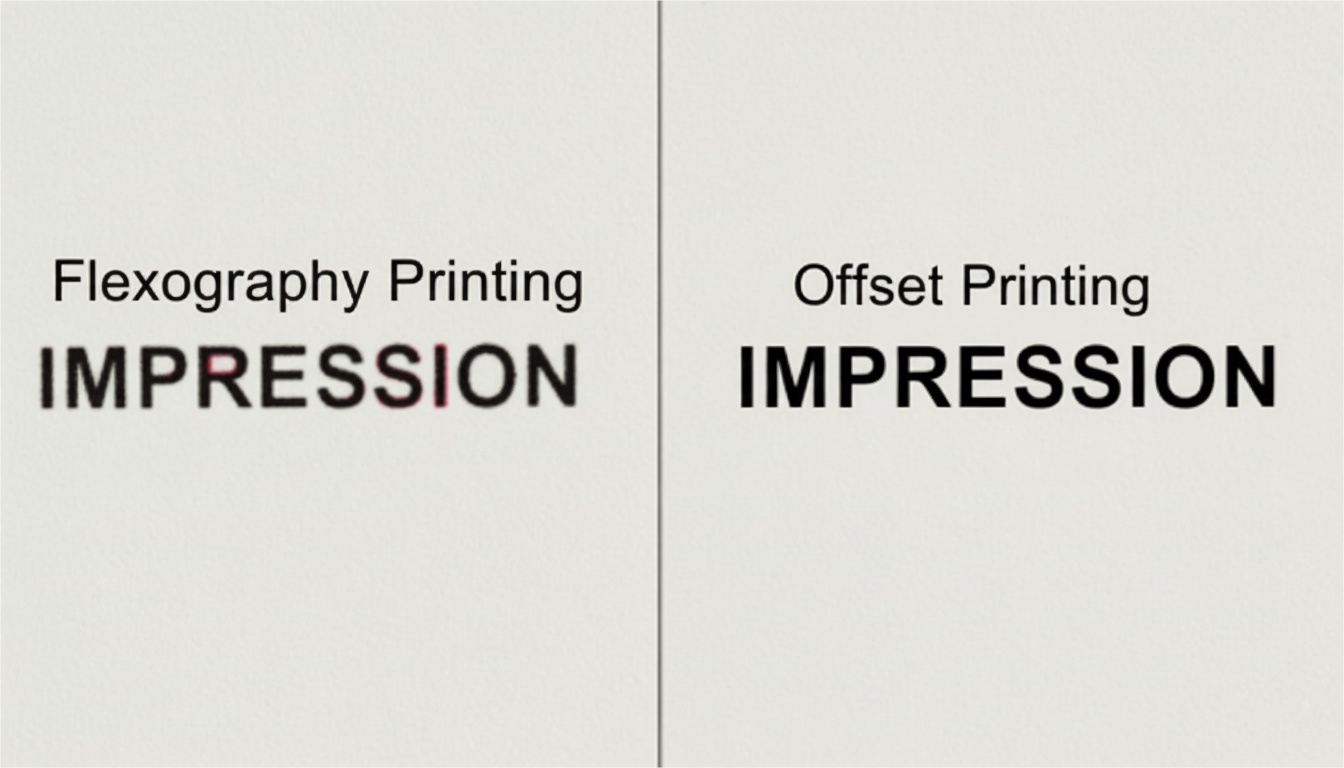
Aligning multiple colors perfectly can be difficult. This is called registration. The problem is worse when printing on thin materials or at very high speeds.
Colors can shift slightly. This creates a blurry edge or a visible gap between different colored areas. There are two main causes.
First, thin plastic films can stretch during printing, causing misalignment between color stations.
Second, the flexible plates are held by adhesive tape. They can move slightly during high-speed rotation. Offset plates are locked in place, so they are more stable.
Solving this requires expensive camera-guided systems. For jobs with many colors or precise elements like QR codes, it is important to confirm the printer has this technology. Otherwise, offset is a safer choice.
4. Weaker Color Consistency
Flexo offers less color stability than offset printing.
Matching specific brand colors, like a Pantone color, is difficult. The ink control system is less precise, so colors can look slightly off. This is a major problem for brands that need exact color matching.
Color can also vary from one print run to the next. This happens because ink batches can differ, and the anilox rolls wear down over time, delivering less ink.
A second batch of packages might look lighter than the first. This can make consumers question if the product is genuine. For this reason, offset is better for brands with strict color standards.
5. Limited Special Effects and Textures
Flexo prints a very thin layer of ink.
This thin layer prevents the creation of textured effects. It cannot produce a raised logo or a thick, glossy texture. Screen printing is needed for those effects.
It also works poorly with special inks, like fluorescent or glow-in-the-dark. These inks require a thick layer to be effective.
Finally, the thin ink layer provides a weak base for post-print finishes. A process like foil stamping may not adhere well and can flake off. If a package needs a unique texture or special effect, a different printing process is required.
When to Choose Flexographic Printing?
| Criterion | Best Use Case for Flexo |
| Material Type | Flexible, roll-fed materials (e.g., plastic films, foil, paper rolls). |
| Print Volume | High volume (over 100,000 units). |
| Environmental Needs | Food-safe or recyclable packaging requiring eco-friendly inks. |
| Delivery Speed | Urgent projects requiring very fast production and delivery. |
In practice, the decision to use flexo printing depends on three key factors. These are the material, the print volume, and any environmental requirements. When a project fits specific criteria, flexo is the best choice.
1. For Roll-Fed, Flexible Materials
Flexo is the right choice for printing on flexible materials that are fed from a roll.
This includes plastic films, aluminum foils, and large rolls of corrugated paper or adhesive labels. Offset presses cannot print continuously on these materials. Digital printing is too slow for the job.
2. For High-Volume Print Runs
Flexo is ideal for large print runs. Its advantages in speed and cost become clear with batches of 100,000 units or more. The larger the print run, the lower the cost per item. For a massive order of millions of packages, flexo’s cost per piece can be significantly lower than offset.
3. When Environmental Compliance is Needed
Choose flexo when environmental compliance is important. This is especially true for food-contact packaging or products designed to be recycled. Flexo’s water-based and UV inks can meet strict safety regulations. In contrast, the oil-based inks common in offset printing often cannot.
4. For Projects Requiring Fast Delivery
Flexo is also the best option for projects that need fast delivery. It is perfect for urgent jobs, like restocking popular products or preparing for a big e-commerce sale. A flexo press can be ten times faster than an offset press. This speed dramatically shortens the total delivery time.
Summary
In packaging, flexography does not replace other printing methods. It is not a substitute for offset, digital, or screen printing. Instead, it fills a specific and important gap in the market.
Choose flexographic printing when your project involves roll-fed materials like food bags, shipping boxes, or labels. It is the only efficient solution when you need to print these materials in high volumes, especially when environmental safety is a priority.
For other projects, understanding the differences in offset printing vs digital printing is key. Choose offset printing for high-quality graphics on flat materials, like gift boxes. Choose digital printing for small batches or custom orders. And for special textures, like a raised logo, choose screen printing.
For expert guidance on your next packaging project, contact Letai Printing.

I have honed my expertise in creating high-quality packaging solutions, bringing both innovation and efficiency to the field. I am passionate about delivering exceptional results and contributing to sustainable packaging practices.
- What is a CBD Box? The Ultimate Guide - June 9, 2026
- Bangle Box Ideas: Inspiring Designs for a Clutter-Free Space - June 8, 2026
- What is a Bangle Box? The Ultimate Guide - June 8, 2026
 English
  Español
  Deutsch
  Français
  Italiano
  日本語
日本語  한국어
한국어  Русский
  Português do Brasil
  العربية